You’re doing everything right. You’re eating well and moving your body. Yet, you feel off. Your energy is low, and your muscles are weaker.
You’re not imagining it. And you’re definitely not alone.
After 40, your body changes without telling you. Estrogen drops, and your metabolism slows. Building muscle becomes harder.
Science says women over 40 need 1.2 to 1.6 grams of protein per kilogram daily. This is more than the old 0.8 grams. For a 150-pound woman, that’s 81 to 109 grams a day. It’s not just how much, but when you eat it.
When you eat protein matters a lot. Most people eat more at dinner than breakfast. This pattern hurts your muscles and metabolism.
Breakfast is key for protein loading. Eating protein evenly across meals helps your muscles stay strong. This is the best time to eat protein for women over 40, backed by science.
This guide gives you the truth about protein timing. No hype or gimmicks. Just honest, research-backed advice for your body to work with you again.
Key Takeaways
- Women over 40 need 1.2 to 1.6 grams of protein per kilogram of body weight daily — well above the outdated 0.8-gram RDA.
- Protein timing plays a significant role in muscle preservation and metabolism after 40.
- Breakfast is the most important meal for protein loading, yet most women eat the least protein then.
- Spreading protein evenly across all meals beats eating the bulk of it at dinner.
- Declining estrogen during perimenopause makes muscle protein synthesis less efficient, increasing your protein needs.
- For a 150-pound woman, the daily target ranges from 81 to 109 grams of protein.
Understanding Protein Needs for Women Over 40
Your body changes as you get older. It doesn’t use protein the same way it did when you were younger. This is because of anabolic resistance, a natural part of aging. It means your muscles don’t grow and repair as easily.
To keep up, you need more protein in your meals. This helps you build muscle, just like when you were younger.
Getting enough protein is key. It affects your energy, how you feel, and even your clothes fit.
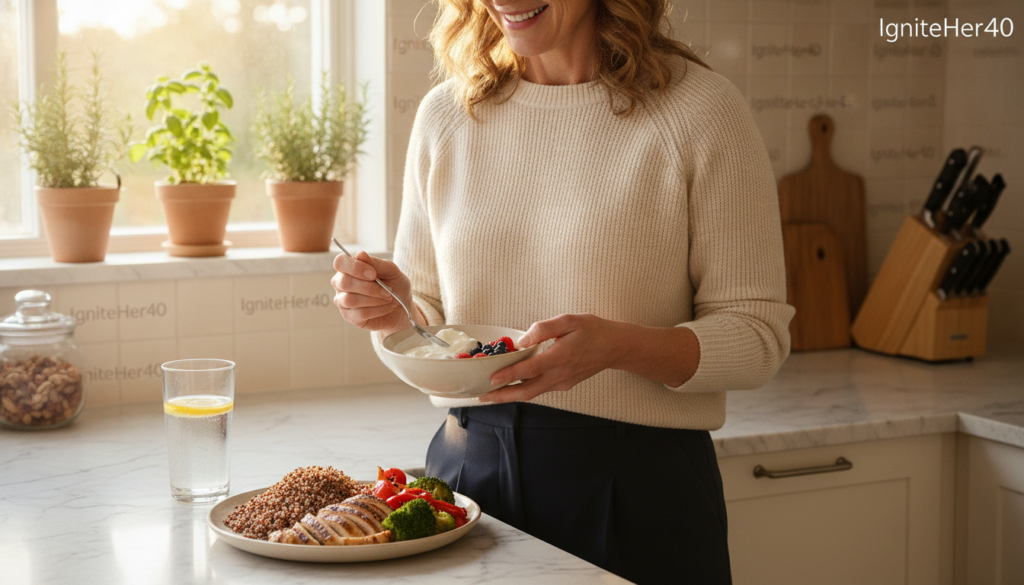
Why Protein Matters More as You Age
Protein is crucial for your body. It fixes tissues, boosts your immune system, and helps keep muscles strong. Without enough, you might feel tired, crave sweets, and lose muscle.
Studies in Clinical Nutrition show older adults need more protein to keep their muscles. It’s also important for feeling full and satisfied.
How Much Do You Actually Need?
Don’t follow old rules. Your protein needs depend on how active you are and what you want to achieve.
| Activity Level | Grams per Kilogram of Body Weight | Goal |
|---|---|---|
| Sedentary | 1.0 g/kg | General health |
| Moderately active | 1.2 g/kg | Muscle preservation |
| Strength training or fat loss | 1.4–1.6 g/kg | Building and retaining lean mass |
Smart Sources to Prioritize
Not all protein is the same. Look for sources with essential amino acids, which your body can’t make.
- Animal-based: Chicken breast, salmon, eggs, and Greek yogurt have all the amino acids you need.
- Plant-based: Mix beans with brown rice or lentils with quinoa for a full amino acid mix.
- Supplements: Quality whey protein or plant blends (pea, rice, hemp) are great for busy days.
Knowing what to eat is just the start. Next, we’ll talk about when to eat it. Timing your protein intake can boost its benefits even more.
Timing Protein Intake: What Does the Research Say?
You’ve probably heard about the “anabolic window” — that magical 30-minute period after a workout where you must eat protein or lose all your gains. Let’s talk about what the science actually says about protein timing and whether it truly matters for women over 40.
Overview of Protein Timing Studies
A large meta-analysis reviewing 23 studies and over 500 found something surprising. When researchers controlled for total daily protein intake, the exact timing of protein around workouts made no significant difference in strength or muscle growth. The strongest predictor of results? Simply eating enough protein each day.
That narrow anabolic window? The evidence doesn’t support it. What matters far more for muscle preservation is how you spread your protein across the day — not whether you chug a shake within minutes of your last rep.

Impact on Muscle Mass and Strength
Your muscles need repeated amino acids signals throughout the day. Loading up on 60 grams at dinner while eating toast for breakfast isn’t the strategy your body wants. Muscle protein synthesis plateaus at each meal, and your cells can only use so much at once.
For women over 40, hitting about 2.5 grams of leucine per meal is the threshold that fires up muscle building. That translates to roughly 30–35 grams of protein per meal — more than younger women typically need.
| Meal Pattern | Protein Per Meal | Leucine Threshold Met? | Muscle Signaling Effect |
|---|---|---|---|
| Skewed toward dinner | 10g / 10g / 50g | Only at dinner | Inconsistent, weaker response |
| Evenly distributed | 30g / 30g / 30g | Yes, all meals | Strong, repeated activation |
Metabolic Benefits of Spacing It Out
Spreading amino acids across meals does more than support muscle preservation. It supports steady metabolism throughout the day and helps regulate blood sugar — something that becomes increasingly important as hormonal shifts kick in during perimenopause and beyond.
- Aim for 30–35 grams of protein at breakfast, lunch, and dinner
- Include a protein-rich snack if meals are spaced more than 5 hours apart
- Don’t stress about post-workout timing — focus on daily totals and even distribution
Your muscles don’t respond to one big dose. They respond to consistent, repeated signals all day long.
The bottom line is simple: stop worrying about the clock and start paying attention to your plate at every meal. That’s the real game-changer for your body right now.
The Role of Protein in Hormonal Changes
Your hormones are changing. Your body now processes nutrients differently. The rules from your 30s don’t apply anymore. Knowing how hormonal changes affect your protein needs is key to feeling better every day.
How Menopause Affects Protein Needs
Menopause brings a drop in estrogen. This makes your body less good at building muscle. Your cells also find it harder to use protein for muscle.
This change happens slowly. You might not notice it at first. But over time, you lose muscle faster than before.
That’s why eating enough protein is crucial now. Studies in the Journal of Clinical Endocrinology & Metabolism show older women need more protein to build muscle like younger women do naturally.
Protein and Hormone Regulation
Protein does more than build muscle. It helps keep blood sugar steady and supports metabolism during hormonal changes. This means better energy, fewer cravings, and feeling full longer.
“Adequate protein intake helps buffer the metabolic disruption that comes with declining estrogen.” — Dr. Stacy Sims, women’s physiology researcher
If you’re on GLP-1 meds like Ozempic or Wegovy, this is even more important. Losing weight too fast without enough protein and strength training can lead to losing muscle mass.
Benefits of Protein during Perimenopause
Perimenopause can start years before your last period. During this time, focusing on protein is crucial for several reasons:
- It helps keep muscle when estrogen-driven muscle protein synthesis slows
- It keeps you feeling full, so you’re less likely to eat high-sugar foods
- It helps keep metabolism steady when it naturally slows down
- It helps control blood sugar swings caused by hormonal changes
Try to eat 25–40 grams of protein per meal. This helps your body during this transition. Your nutrition choices can help your hormones work better, too.
Breakfast: Starting the Day with Protein
Your body has been fasting all night. By morning, it’s ready to use nutrients. That’s why breakfast protein is key in your meal planning. It boosts your energy, focus, and keeps you full all day.

Why the Morning Meal Matters Most
Eating breakfast protein helps you feel full for hours. Registered dietitian Natalie Rizzo says active people should never skip morning protein. After fasting all night, your body is ready to use amino acids efficiently.
Skipping breakfast can lead to energy crashes and overeating later. It’s also bad for your brain.
Adding protein and fiber at breakfast helps control blood sugar. This is important for women over 40 who may gain weight and deal with hormonal changes.
Ideal Sources for Your Morning Plate
Go for 20–30 grams of breakfast protein. If you’re bigger or more active, aim for 30–40 grams. Here are some great options:
| Source | Protein (approx.) | Bonus Benefit |
|---|---|---|
| Greek yogurt (1 cup) | 15–20g | Probiotics for gut health |
| Hard-boiled eggs (3 large) | 18g | Quick, portable, budget-friendly |
| Cottage cheese (1 cup) | 25g | Calcium for bone support |
| Turkey sausage (3 links) | 14g | Low-fat, high satiety |
Quick Recipes You’ll Love
- Greek yogurt bowl: Mix plain Greek yogurt with berries, walnuts, and chia seeds. It’s packed with protein, fiber, and probiotics.
- Egg muffin cups: Whisk eggs with spinach and bell peppers, then bake in muffin tins. They’re perfect for quick meals.
- Cottage cheese toast: Spread cottage cheese on whole grain bread, add tomatoes and bagel seasoning.
These easy meals boost your metabolism and keep you full. They’re quick to make and start your day off right.
Protein Intake Before and After Workouts
Your muscles don’t grow during a workout. They grow when you’re resting. So, timing your protein intake around exercise is key for women over 40. It helps keep your muscles strong and your metabolism going.

Importance of Pre-Workout Protein
Having protein before you work out helps your body repair faster. A small meal or snack with 15–20 grams of protein about 60–90 minutes before exercise is best. This fills your blood with amino acids, which your muscles need to stay strong.
This is even more important if you’re eating fewer calories. Strength training with enough protein stops your muscles from shrinking.
Best Post-Workout Protein Sources
You don’t need a fancy shake every time. Real food like Greek yogurt, eggs, chicken, or fish works great. If you prefer a quick option, high-quality whey protein is a good choice. Research shows about 20 grams of protein right after is enough. More than 40 grams doesn’t offer extra benefits right away.
- Greek yogurt with berries (18–20g protein)
- Two whole eggs plus one egg white (17g protein)
- Whey protein shake with water or milk (20–25g protein)
- Grilled chicken breast, 3 oz (26g protein)
Timing for Optimal Recovery
Try to eat protein within two hours after your workout. Here’s a quick guide based on your body weight:
| Body Weight | Daily Protein Target | Post-Workout Goal |
|---|---|---|
| 100 lbs (45 kg) | 54–77 grams | 15–20 grams |
| 150 lbs (68 kg) | 82–116 grams | 20–25 grams |
| 200 lbs (91 kg) | 109–155 grams | 20–25 grams |
| 250 lbs (113 kg) | 136–192 grams | 20–25 grams |
Protein doesn’t replace the mechanical work your muscles need. You still have to lift the weight — protein just makes sure your body can rebuild from it.
If you’re doing resistance training four to five days a week, aim for the higher end of these ranges. Smart protein timing and hard work in the gym are key to keeping your muscles strong and your metabolism high in your 40s and beyond.
Snack Smart: Protein-Rich Options
You’ve got your protein covered at breakfast and lunch. But what about 3 p.m. when you feel tired? Smart snacking is key. For women over 40, a good snack is a strategy. It keeps your muscles fed with amino acids all day, stopping the energy dips.

Why Energy Dips Demand Better Fuel
After 40, your body builds muscle slower. Eating a big dinner with lots of protein isn’t enough. You need to spread amino acids throughout the day, including snacks. This keeps your muscles strong and stops energy crashes.
Best Protein Snacks for Women Over 40
Nutritionist Lisa Young suggests “perfect pair” snacks. These mix protein with fiber or healthy fats. Here are some top picks:
- Apple slices with 2 tablespoons of peanut butter
- Carrots and celery with hummus
- Greek yogurt topped with walnuts
- String cheese with whole-grain crackers
- Hard-boiled eggs with cherry tomatoes
| Snack | Protein (g) | Calories | Key Benefit |
|---|---|---|---|
| Greek yogurt with walnuts | 15 | 200 | High satiety, bone support |
| Apple with peanut butter | 8 | 190 | Steady blood sugar |
| Hard-boiled eggs (2) | 12 | 140 | Complete amino acids |
| String cheese with crackers | 10 | 180 | Portable, calcium-rich |
Making It Easy and Consistent
The trick is to plan snacks like you would lunch or dinner. Prep snack bags on Sunday. Keep hard-boiled eggs in the fridge. Store nut butter packets in your bag. Treating snacks as planned nutrition makes it easy to meet your protein goals without stress.
Balancing Protein with Other Nutrients
Protein is important, but eating too much of it can be bad. Your body needs a mix of nutrients, not just protein. Think of it like an ecosystem: protein is like the start, but fiber, healthy fats, and carbs keep things going all day.
Why a Well-Rounded Diet Matters
Too much protein can lead to missing out on fiber, healthy fats, and carbs. You need 25 to 35 grams of fiber daily for your gut and to feel full. Without these, you might feel tired and foggy. Dr. Lauri Wright says cutting out whole food groups can harm more than help.
How to Incorporate Carbs and Fats
Carbs are good for your thyroid. Eating too few can slow your metabolism and make you tired. Eat complex carbs like sweet potatoes and quinoa with your protein. Add healthy fats from avocado and nuts to feel full and absorb nutrients better.
Smart Meal Planning Tips
Meal planning doesn’t have to be hard. Here’s a simple guide to make balanced meals all day:
| Meal | Protein Source | Carb Source | Fat Source | Fiber Boost |
|---|---|---|---|---|
| Breakfast | Eggs (2 whole) | Oatmeal | Walnuts | Blueberries |
| Lunch | Grilled chicken | Quinoa | Olive oil dressing | Mixed greens |
| Dinner | Wild salmon | Sweet potato | Avocado | Roasted broccoli |
| Snack | Greek yogurt | Apple slices | Almond butter | Chia seeds |
Use protein powder when you’re in a rush, but choose real meals when you can. Your body likes variety, so give it what it needs.
Common Myths About Protein Consumption
There’s a lot of talk about protein, but much of it doesn’t apply to women over 40. Fitness influencers, supplement companies, and friends spread myths. These can confuse you or even lead you to overdo it.
Debunking What You’ve Been Told
One big myth is that more protein equals more muscle. But it’s not true. Studies in the Journal of the International Society of Sports Nutrition show that muscle growth stops after a certain protein intake. This is about 25 to 40 grams per meal for most people.
Adding more amino acids won’t help your muscles grow faster. Your body can’t use all the extra at once.
“The idea that you need 150 or 200 grams of protein daily comes from protocols designed for 200-pound bodybuilders in cutting phases — not women strength training a few days a week.”
The standard RDA of 0.8 grams per kilogram is just to avoid deficiency. It’s not the best for your health. Most active women over 40 need 1.2 to 1.6 grams per kilogram daily.
The “Perfect Window” Fallacy
Many people focus on finding the perfect time to eat protein. But the truth is, spreading your intake throughout the day is more important. Your body does best with a steady flow of amino acids at each meal.
Your Needs Are Unique
What works for your gym buddy might not work for you. Your needs depend on:
- Activity level and exercise type
- Current body composition goals
- Hormonal stage (perimenopause vs. postmenopause)
- Overall caloric needs
| Activity Level | Protein Per Kg (Daily) | Example for 150 lb Woman |
|---|---|---|
| Sedentary | 1.0–1.2 g | 68–82 g |
| Moderately Active | 1.2–1.4 g | 82–95 g |
| Highly Active | 1.4–1.6 g | 95–109 g |
Protein is powerful, but it’s not magical. Aim for enough protein at each meal and spread it out throughout the day. This approach helps with muscle preservation without the stress.
Tips for Incorporating More Protein in Daily Life
Understanding the science is one thing. But making it a daily habit is another. Small changes can make a big difference. Let’s explore real strategies that fit into your life, not just a dream version.
Meal Prep Strategies
Meal planning is key. Spend an hour on Sunday cooking protein-rich foods like grilled chicken, hard-boiled eggs, or seasoned ground turkey. Store them in containers for easy access. This way, you won’t reach for unhealthy snacks at 2 p.m.
Try to have 20 to 30 grams of protein per meal. This keeps you full and your energy steady all day.
Easy Ways to Boost Protein Intake
Begin your day with a protein-packed breakfast. Greek yogurt with berries and nuts is a great choice, offering over 20 grams of protein. Scrambled eggs with spinach are another excellent option.
If you’re on GLP-1 medications, eating protein at every meal is crucial. Pair it with strength training to protect your muscles during weight loss. On busy days, a quality protein powder can be a lifesaver. But remember, whole foods are essential for vitamins and minerals.
Keeping It Enjoyable and Delicious
This isn’t about eating boring chicken breast all day. Mix it up with lentil soup, shrimp stir-fry, cottage cheese with peaches, or a black bean and quinoa bowl. These options provide all the amino acids your body needs.
Track your body weight and activity level to find your ideal protein intake. Sedentary women may need less, while active women may need more. If you’re experiencing energy crashes and sugar cravings, it could be due to low protein.
Remember, this is educational information, not medical advice. Always consult your doctor for personalized guidance based on your health and history.
FAQ
How much protein do women over 40 actually need per day?
The Dietary Guidelines for Americans 2025-2030 suggest 1.2 to 1.6 grams of protein per kilogram of body weight daily for women over 40. For a 150-pound woman, that’s about 81-109 grams per day. Dr. Jolene Brighton says the old RDA of 0.8 grams per kilogram was just to prevent deficiency, not for optimal health or muscle preservation.
If you’re sedentary, aim for the lower end. If you’re strength training or losing fat, go for the higher end.
What is the best time to eat protein for women over 40?
Eating protein in the morning is key. After fasting overnight, your body is ready to use protein for energy and focus. Most adults eat more protein at dinner than at breakfast, but eating more in the morning is better for your heart health.
The best strategy is to have 20-35 grams of protein per meal across breakfast, lunch, and dinner.
Why does protein distribution across meals matter more than total daily intake?
Your body can only use so much protein at once. Muscle protein synthesis plateaus per meal. Eating a lot of protein at dinner isn’t as good as having it spread out throughout the day.
Think of it like this: muscles respond to repeated activation, not a single big dose. Women over 40 need about 30-35 grams of protein per meal to build muscle.
How does perimenopause change my protein needs?
Perimenopause affects your body’s ability to use protein. Your muscles become less responsive to protein signals. This is called anabolic resistance.
Research shows older adults need more protein to get the results younger people do. This change happens slowly, which is why it’s often unexpected. Eating enough protein helps control blood sugar, supports metabolism, and keeps you strong.
How many grams of protein should I eat at breakfast?
Aim for 20-30 grams of breakfast protein, or 30-40 grams if you’re larger or very active. Registered dietitian Natalie Rizzo says skipping morning protein is a missed chance, breakfast protein is important for active women.
Great options include Greek yogurt with berries and walnuts, hard-boiled eggs, or a quality protein smoothie. Pairing protein with fiber at breakfast helps manage blood sugar and keeps you full longer.
Do I really need a protein shake after every workout?
Not always. Unless you’re doing marathon training or serious heavy lifting four to five days weekly, a small protein-rich snack or meal within an hour or two post-workout is enough. The goal is to provide your muscles with the amino acids they need for repair and growth.
A high-quality whey protein shake can help hit the leucine threshold quickly, but Dr. Brighton is clear: protein doesn’t replace mechanical stimulus. You still need to challenge your muscles with load — protein simply supports the recovery process.
What are the best protein-rich snacks for women over 40?
Registered dietitian Lisa Young recommends “perfect pair” combinations that deliver protein plus staying power: carrots with hummus, apple slices with peanut butter, or cheese with whole-grain crackers. These combinations stabilize blood sugar and prevent the midafternoon crash that sends you reaching for sugar.
For women over 40 dealing with declining muscle protein synthesis efficiency, strategic protein snacking maintains consistent muscle signaling throughout the day — your muscles prefer steady, repeated doses over one massive evening serving.
Can I eat too much protein?
Yes — and it’s a real concern. Dr. Brighton warns that “more protein does not equal more muscle.” When you obsessively chase protein numbers, you risk crowding out fiber, phytonutrients, carbohydrates, and healthy fats that your body desperately needs.
Most women don’t need 150-200 grams daily — that comparison to 200-pound bodybuilders in cutting phases simply doesn’t apply. You should still be hitting 25-35 grams of fiber daily, eating leafy greens, berries, and whole grains. Carbohydrates also support thyroid function, so cutting them in favor of excessive protein can backfire with fatigue and brain fog.
What protein sources give me the best amino acid profile?
Animal proteins like chicken, fish, and eggs are complete proteins — they contain all essential amino acids your body needs in one package. If you’re plant-based, you’ll need to combine sources like beans with brown rice to get the full spectrum of amino acids.
Quality supplements can bridge the gap: whey protein is excellent for hitting the leucine threshold quickly, while blended plant proteins combining pea, rice, and hemp offer a complete profile. Use protein powder as insurance for busy days, but prioritize real, nutrient-dense whole foods as your foundation whenever possible.
How do I figure out my personal protein needs for meal planning?
Start by converting your body weight to kilograms (divide pounds by 2.2), then multiply by 1.2-1.6 depending on your activity level. A sedentary 150-pound woman would aim for about 81 grams daily, while the same woman doing regular strength training might target 109 grams.
Divide that total across your meals and snacks — roughly 30-35 grams protein per meal with 10-15 grams in snacks. For women using GLP-1 medications like Ozempic or Wegovy, maintaining adequate protein alongside strength training is essential to prevent lean mass loss during rapid weight loss. Track for a week to build awareness, then adjust based on how you feel. And remember — this is general guidance, not medical advice. Work with your doctor for personalized meal planning recommendations.