You know that feeling. You’re exhausted but your mind won’t stop. Your shoulders are tight, and your jaw hurts. It feels like your body is fighting you.
You’re not broken. You’re stressed. Stress in your 40s affects your body and mind. It makes you feel tense and anxious.
Yoga for stress relief in your 40s isn’t about fancy poses. It’s about moving with purpose and breathing deeply. Victoria Smith, PT, DPT from Hinge Health, says this helps calm your nervous system.
Studies show yoga helps with back pain, heart health, and sleep. It also builds strength and flexibility. Your body needs this right now.
This guide shows you nine poses for relaxation in your 40s. They’re easy, gentle, and effective. No experience needed. Just tools to help your body relax.
Key Takeaways
- Yoga poses for stress relief in your 40s work by shifting your nervous system from fight-or-flight to a calmer, more regulated state.
- Stress-reducing yoga poses improve flexibility, strength, bone density, and sleep quality—backed by research from Johns Hopkins Medicine.
- You don’t need to be flexible or experienced to start. Nine gentle poses are included for all levels.
- Yoga for relaxation in your 40s combines intentional movement with focused breathing for real, measurable results.
- Consistent practice helps reduce anxiety, ease chronic pain, lower inflammation, and support heart health.
- Modern hatha yoga focuses on poses that build strength, balance, and mindfulness—not performance.
Understanding Stress in Your 40s
Your 40s bring a mix of pressures. Career demands rise. Family duties grow. Your body reacts to stress in new ways. Over 40 million adults in the United States live with anxiety disorders, says the Anxiety & Depression Association of America. Many more face chronic stress without a diagnosis.
That’s why calming yoga poses for people in their 40s are recommended. But first, you need to know what’s happening in your body.
Physical and Emotional Changes
Stress in midlife isn’t just mental. It activates your fight-or-flight response. Your muscles tense. Your heart beats fast. Sleep becomes hard to find.
You might feel muscle spasms, jaw clenching, or trouble relaxing at night.
Here’s what chronic stress looks like:
- Persistent muscle tension in the neck, shoulders, and lower back
- Racing thoughts that won’t quiet down at bedtime
- Digestive issues that seem to appear out of nowhere
- Increased joint stiffness and body aches
Mindfulness yoga poses for stress relief target this overdrive. They activate your body’s “calm down” system.
The Impact of Stress on Women’s Health
Women in midlife face unique stressors. Hormonal shifts during perimenopause make stress worse. Cortisol levels can spike, affecting sleep, mood, and metabolism.
“The body keeps the score. Chronic stress doesn’t just affect your mind — it reshapes your physical health over time.” — Dr. Bessel van der Kolk
Research in Menopause: The Journal of The North American Menopause Society shows yoga benefits midlife women. It combines physical activity with mental focus. This combo helps manage stress at its source. Knowing these changes helps choose the right yoga for relief.
Benefits of Yoga for Stress Relief
Your body remembers every stressful moment. You might feel tight shoulders or a sore lower back. Yoga helps release this tension.
Yoga changes how your body reacts to stress. It moves you from a stressed state to a calmer one. This is good for your nervous system.
Studies show yoga is effective. The Journal of Alternative and Complementary Medicine found yoga boosts GABA levels more than walking. GABA helps calm anxiety and stabilize your mood.
Mind-Body Connection
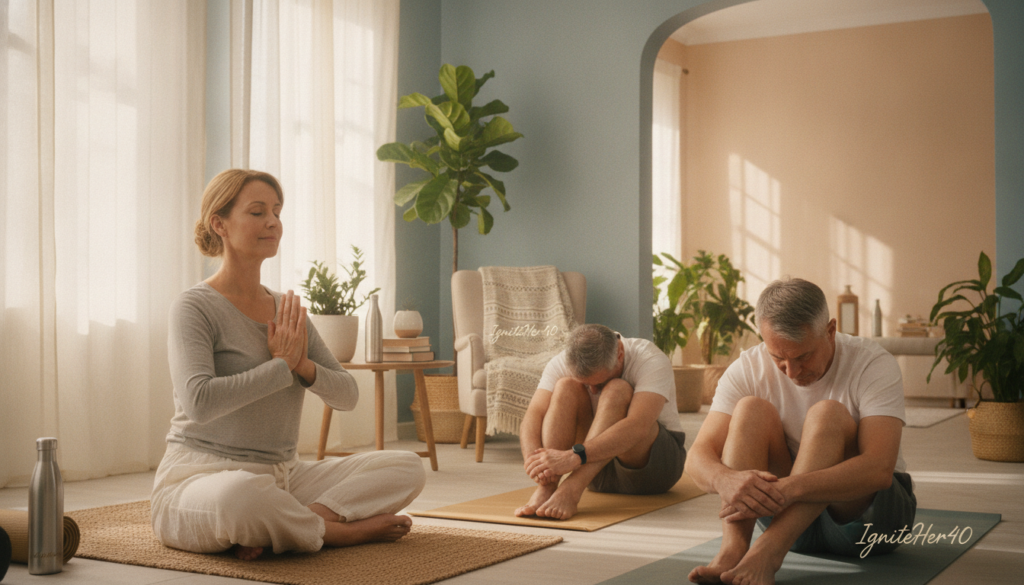
Yoga combines deep breathing with movement. This slows down your nervous system. Regular practice reduces pain sensitivity and stops constant alertness.
“Yoga is not about touching your toes. It’s about what you learn on the way down.” — Jigar Gor
Yoga helps you notice where you hold tension. This awareness is powerful. It lets you catch stress early.
Increased Flexibility and Strength
Yoga offers more than just stretching, says Johns Hopkins Medicine. It improves balance, muscle strength, and joint stability. It also boosts bone density and reduces inflammation.
- Better balance and full-body mobility
- Increased muscle strength and joint stability
- Improved bone density
- Reduced body-wide inflammation
- Better sleep quality — essential for stress recovery
The best yoga poses for managing stress in your 40s target tight areas. They build strength while releasing tension. You don’t need to be flexible to start. Just show up on the mat.
Essential Yoga Poses to Alleviate Stress
You don’t need a complicated routine to feel better. Just a few simple yoga poses can calm your nervous system quickly. These poses are easy, gentle on your joints, and very soothing.
Child’s Pose
Balasana is a very calming pose. Start by kneeling on the floor with your shins flat. Sit your hips back toward your heels.
Keep your feet together and spread your knees wide. Slide your arms forward and let your head and chest drop toward the ground.
Focus on slow, deep breathing. Each exhale helps release tension in your back. When you’re ready, walk your hands back and rise gently. This pose is great for reducing stress and anxiety because it asks for nothing but stillness.
Cat-Cow Stretch
This pose loosens your spine, shoulders, and hips. Start on hands and knees. Your wrists should be under your shoulders, and your knees under your hips.
On an inhale, arch your back and look up (cow). On an exhale, round your spine toward the ceiling and tuck your chin (cat). Move with your breath for five to ten rounds.
Research in the International Journal of Yoga shows that this movement reduces cortisol and eases muscle tension.
Legs Up the Wall
Lie on your back and swing your legs up against a wall. Scoot your hips as close to the base as feels comfortable. Let your heels rest gently, legs hip-distance apart.
“The best yoga pose is the one that lets gravity do the work for you.”
This pose promotes circulation, calms your heart rate, and invites stillness. It’s a quiet powerhouse among soothing yoga poses for individuals in their 40s.
| Pose | Primary Benefit | Hold Time | Difficulty Level |
|---|---|---|---|
| Child’s Pose | Back tension release | 1–3 minutes | Beginner |
| Cat-Cow Stretch | Spinal mobility | 5–10 breath cycles | Beginner |
| Legs Up the Wall | Nervous system calm | 5–15 minutes | Beginner |
Pair any of these poses with breathing techniques to deepen your stress relief even further.
Creating a Relaxing Yoga Environment
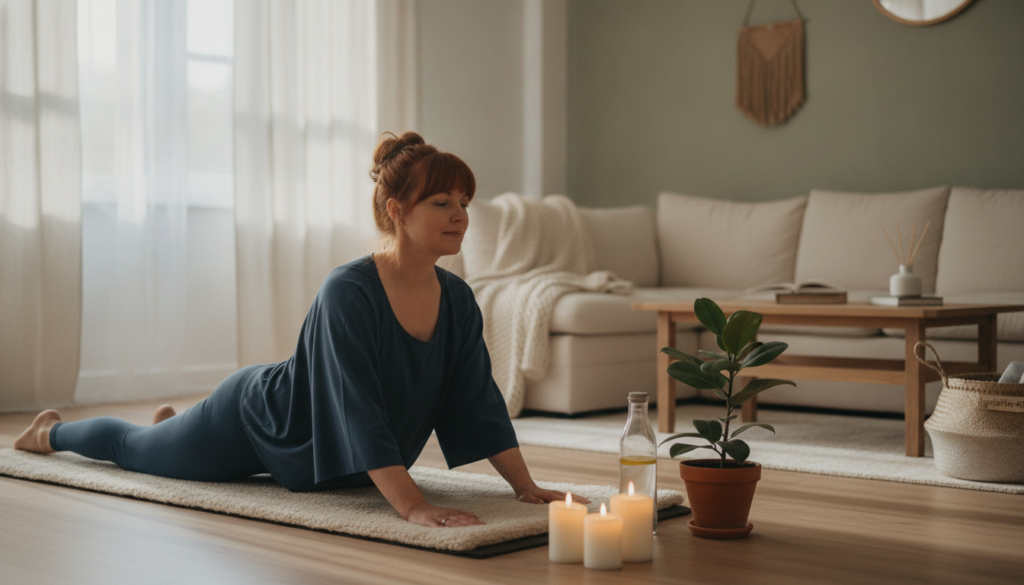
Your space matters more than you think. When you practice yoga poses for stress relief in your 40s, the room itself can either help you unwind or keep your nervous system on high alert. A few intentional choices turn any corner of your home into a place where your body wants to let go.
Setting Up Your Space
Start with a quiet room at a comfortable temperature. Swap overhead lights for soft, warm lamps or a salt lamp. Lay out your yoga mat on an even surface with enough room to stretch in every direction.
Props are your best friends—especally in midlife. They let you hold stress-reducing yoga poses longer without strain. Here’s what to keep within arm’s reach:
- Blankets folded under your thighs for Bound Angle Pose
- A yoga block under your forehead in Child’s Pose
- Pillows beneath your hips for deeper stretches
- A bolster or firm cushion for supported reclined poses
- An eye pillow to block light and deepen relaxation
If balance feels shaky in standing poses, hold onto a sturdy chair. There’s no shame in modifying. Building a restorative yoga routine means meeting your body where it is right now—not where it was at 25.
Essential Oils for Stress Relief
Scent triggers your brain’s relaxation response almost instantly. Diffuse calming essential oils about ten minutes before you begin. A few well-researched options:
| Essential Oil | Primary Benefit | Best Used For |
|---|---|---|
| Lavender | Reduces anxiety and lowers heart rate | Evening wind-down sessions |
| Bergamot | Eases tension and lifts mood | After-work stress relief |
| Clary Sage | Supports hormonal balance | Perimenopause-related stress |
Pair your chosen scent with steady, rhythmic breathing. This combination signals safety to your nervous system—making every stress-reducing yoga pose more effective. The goal is simple: create a space so soothing that showing up feels easy, night after night.
Incorporating Breathing Techniques
Your breath is a powerful tool for stress relief. When you practice yoga in your 40s, focus on breathwork. It helps your body relax and move away from stress.
Diaphragmatic Breathing
Start by lying on your back with knees bent and feet flat. Place one hand on your chest and the other on your belly. Breathe in slowly through your nose, letting your belly rise while your chest stays still.
Hold for a moment. Then, breathe out slowly, feeling your belly lower. This practice helps your body relax and recover.
Box Breathing
Box breathing, or sama vritti, involves equal counts. Breathe in for 4 counts, hold for 4, breathe out for 4, and hold again for 4. If this feels too much, just match your inhale and exhale lengths.
As you breathe out, release tension in your jaw, forehead, and shoulders. Breathe through your nose if it feels right, but do what’s most comfortable for you.
| Technique | How It Works | Best For | Difficulty Level |
|---|---|---|---|
| Diaphragmatic Breathing | Deep belly breaths activating the diaphragm | Calming the nervous system before sleep | Beginner |
| Box Breathing | Equal-count inhale, hold, exhale, hold cycle | Acute stress moments during the day | Beginner to Intermediate |
Long, slow breathing connects your body and mind. Use these techniques with yoga to manage stress better. Yoga Journal has great tips for improving your breathwork.
Combining Yoga with Mindfulness Practices
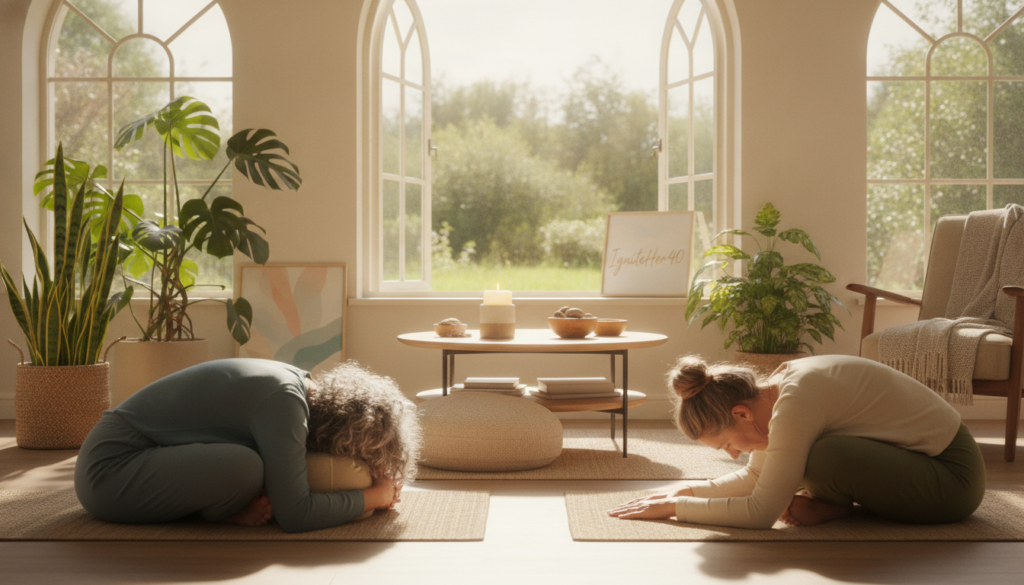
Yoga is special because it links breath to movement. This connection brings you into the present moment. Practicing mindfulness yoga poses helps you shift from stress to ease.
Andrea Powers, founder of Powers Yoga, explains how mindful movement relaxes your body. Slow breathing and gentle motion calm anxiety. Studies show yoga changes how your body handles stress.
From an Ayurvedic view, steady postures bring stability and rhythm. This counters anxiety’s erratic energy. Let your breath anchor you when thoughts arise. Unhurried inhales and exhales become your reset button.
Guided Meditation
Adding guided meditation to your yoga routine deepens your practice. Even a short body-scan meditation after yoga can lower stress hormones. Apps like Insight Timer and Calm offer free sessions for relaxation.
Journaling and Reflection
Write in a notebook after your practice. Note any physical or mental sensations. This builds self-awareness and helps you spot stress patterns early.
| Mindfulness Practice | Time Needed | Best Paired With | Key Benefit |
|---|---|---|---|
| Guided Body-Scan Meditation | 5–10 minutes | Savasana or Child’s Pose | Reduces cortisol, calms nervous system |
| Breath-Focused Awareness | 3–5 minutes | Cat-Cow Stretch | Anchors attention, slows heart rate |
| Post-Practice Journaling | 5–10 minutes | Any closing pose | Identifies stress patterns, builds self-awareness |
Eating the right foods and drinking teas can boost these benefits even more.
Nourishing Your Body for Better Stress Management
What you eat affects how your nervous system handles stress. Eating right is key for stress-relief yoga poses to work well. Think of food as the base under your yoga mat — without it, everything feels unstable.
Ayurvedic tradition says warm, grounding foods soothe a busy mind. Science agrees. A study in the Journal of Clinical Medicine (2020) found that eating well lowers cortisol and improves mood. Combining good food with yoga is a strong strategy for middle-aged adults.
Whole Foods to Include
Your nervous system needs certain nutrients to stay in balance. Focus on these:
- Magnesium-rich foods — dark leafy greens, pumpkin seeds, black beans
- Omega-3 fatty acids — wild salmon, walnuts, flaxseeds
- Complex carbohydrates — sweet potatoes, oats, quinoa
- B-vitamin sources — eggs, avocados, lentils
Herbal Teas for Relaxation
Between yoga, a warm herbal tea can keep calm vibes going. Here are some good choices:
| Herbal Tea | Key Benefit | Best Time to Drink |
|---|---|---|
| Chamomile | Reduces anxiety, promotes sleep | Evening, before bed |
| Ashwagandha | Lowers cortisol levels | Morning or afternoon |
| Lemon Balm | Eases restlessness and tension | Midday or evening |
| Passionflower | Calms nervous system activity | 30 minutes before sleep |
Eating well makes yoga more effective. You’re not just managing stress — you’re building real strength from within.
Addressing Common Stress Triggers
Stress in your 40s often comes from many places. Deadlines, caregiving, and household chores pile up. Yoga poses for stress relief in your 40s can help break this cycle.
Some poses target the spots where daily stress hides. We’ll explore how work-life balance and time management affect stress. We’ll also see which yoga movements help the most.
Work-Life Balance
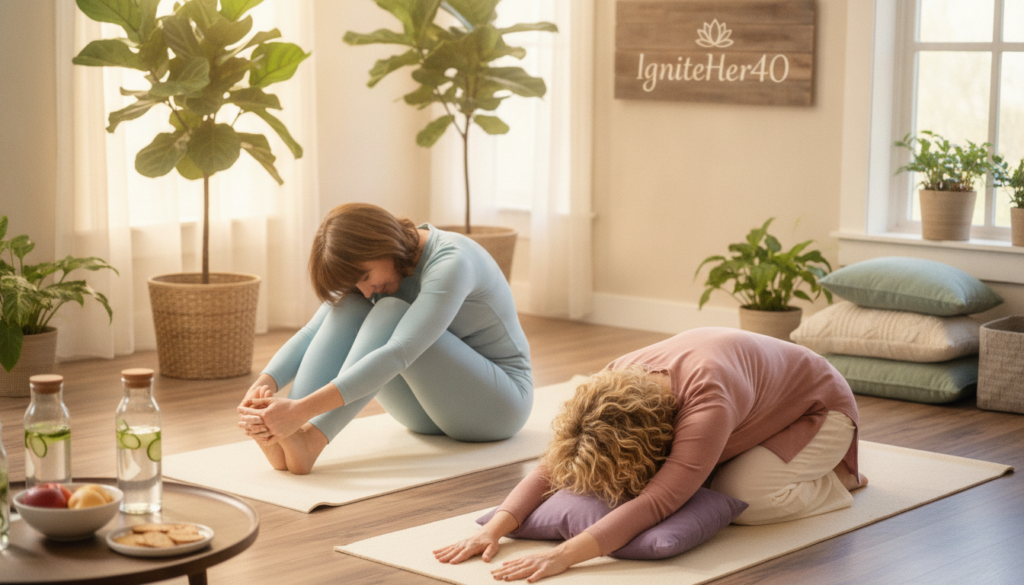
Long hours at a desk can tighten your hips and round your shoulders. Warrior I stretches your hips and supports your spine. Keep your abs tight but don’t arch your back.
Figure Four Stretch eases tension in your hips and glutes. Don’t push your knee down. Let each breath guide you deeper. This pose can relieve sitting stress in minutes.
Seal Stretch moves your back, hips, and shoulders gently. Your arms support your body, helping you release tension fully.
Time Management Strategies
You don’t need a long class to feel the benefits. A study in the International Journal of Preventive Medicine (2012) showed short yoga sessions lower cortisol. Try adding short yoga breaks to your day:
- A 5-minute Warrior I flow before your morning commute
- A Figure Four Stretch during your lunch break
- A Seal Stretch before bed to relax
| Pose | Best Time of Day | Primary Target Area | Duration |
|---|---|---|---|
| Warrior I | Morning | Hip flexors, lower back | 2–3 minutes per side |
| Figure Four Stretch | Midday | Hips, glutes | 2–3 minutes per side |
| Seal Stretch | Evening | Back, hips, shoulders | 3–5 minutes |
Combining these yoga poses with smart scheduling can make stress relief a habit. Add this to the supplements we’ll discuss next for a complete approach.
The Role of Supplements in Stress Support
Yoga is a great way to reduce stress naturally. But, as you get older, your body might need more help. Supplements can help keep your nervous system balanced, working with your yoga.
Remember, supplements are not a magic cure for stress. They are meant to supplement your efforts. They don’t replace the hard work you do on your mat or in the kitchen.
Magnesium and B Vitamins
Magnesium helps relax muscles and balance your nervous system. A 2017 study in Nutrients showed magnesium can lower anxiety. If you’re still feeling tight or restless, low magnesium might be the issue.
B vitamins, like B6, B12, and folate, boost energy and mood. Without enough, you might feel tired, even with a good yoga practice.
Herbal Adaptogens
Adaptogens, such as ashwagandha, rhodiola, and holy basil, come from ancient medicine. Studies show ashwagandha can lower cortisol levels. A 2019 study in Medicine found it reduced stress in adults over eight weeks.
“Adaptogens help the body resist stressors of all kinds, whether physical, chemical, or biological.” — Dr. Brenda Powell, Center for Integrative Medicine, Cleveland Clinic
Here’s a quick look at how these supplements compare:
| Supplement | Primary Benefit | Common Form | Suggested Timing |
|---|---|---|---|
| Magnesium Glycinate | Muscle relaxation, calm nerves | Capsule or powder | Evening, before bed |
| Vitamin B Complex | Energy and mood support | Capsule | Morning with food |
| Ashwagandha | Cortisol reduction | Capsule or powder | Morning or evening |
| Rhodiola Rosea | Mental fatigue relief | Capsule | Morning on empty stomach |
Combine these supplements with yoga and healthy eating for a complete plan. Always check with your doctor before starting any new supplement. Your needs are special.
Finding a Community for Support
Practicing calming yoga poses for people in their 40s doesn’t have to be alone. Connecting with others who share your experience can make stress relief feel less isolating. A supportive community keeps you motivated and reminds you that you’re not alone.
Local Yoga Classes
Look for qualified yoga instructors in your area who focus on gentle or restorative styles. Michelle Rogers, a certified personal trainer at Reachable Fitness virtual studio, leads Gentle Yoga classes. Her students find the practice empowering, combining physical movement and mental focus for well-being.
When choosing a class, look for these qualities in an instructor:
- Certification from a recognized yoga training program (200-hour minimum)
- Experience working with adults over 40
- Willingness to offer modifications for joint or mobility concerns
- A teaching style that prioritizes mindfulness yoga poses for stress relief over intense physical challenge
Online Support Groups
Can’t make it to a studio? Digital options bring the community to you. Hinge Health offers app-based exercise therapy with a personal care team. You access therapeutic stretches on your own schedule—no commute required.
Online communities on platforms like Facebook Groups and Reddit host thousands of women practicing mindfulness yoga poses for stress relief. These spaces let you share wins, ask questions, and learn from others navigating the same stage of life.
You deserve a space where your experience is understood, not dismissed. That’s what the right community gives you.
Whether in person or online, surrounding yourself with people who practice calming yoga poses for people in their 40s creates a feedback loop of encouragement. Start with one class or one group. That single step can shift everything.
Expert Resources for Further Reading
You’ve learned about stress-relief yoga poses for middle-aged adults in this guide. Now, it’s time to dive deeper. The right resources can help you create a practice that fits your life and body perfectly. Here are trusted places to continue learning.
Trusted Health Websites
Not every wellness website is worth your time. Stick with sources that have peer-reviewed research backing them. The Mayo Clinic, Cleveland Clinic, and the National Institutes of Health all publish great content on yoga’s benefits for stress relief.
Johns Hopkins Medicine has found that yoga can reduce inflammation, improve sleep, and support heart health. The American Psychological Association is a great resource for understanding how stress affects your body. Yoga Journal offers detailed guides on pose modifications and breathing techniques, perfect for finding the best yoga poses for managing stress in your 40s.
| Resource | Focus Area | Best For |
|---|---|---|
| Mayo Clinic | Peer-reviewed yoga research | Evidence-based health info |
| Johns Hopkins Medicine | Yoga for pain, sleep, heart health | Condition-specific guidance |
| Yoga Journal | Pose instructions and modifications | Building a home practice |
| American Psychological Association | Stress and mental health | Understanding stress triggers |
Recommended Books on Yoga and Stress
Academic journals like the International Journal of Yoga and Stress and Health publish research on yoga’s effects on GABA levels and stress reactivity. These aren’t light reads, but they’re worth exploring if you want to understand the science behind your practice.
Yoga teacher Andrea Powers suggests poses like Child’s Pose, Legs Up the Wall, and seated forward bends for anxiety relief. Blue Cross Blue Shield studies show that regular yoga improves flexibility, muscular strength, and stress reduction.
Arming yourself with quality information is one of the smartest things you can do. Before diving into supplements or professional support, make sure your knowledge base is rock solid.
Important Considerations and Medical Guidance
This information is meant to help and inform you, not replace your doctor. Yoga can help with stress and anxiety in your 40s. But, it’s not a substitute for medical advice or a treatment plan. Your body is different, and what works for one person might not work for another.
This Is Not Medical Advice—Consult Your Doctor
If you’re new to exercise or have a health condition, talk to your doctor first. Not every yoga pose is right for everyone. Using chairs, blocks, pillows, and blankets can make yoga safer and more accessible.
Modifying poses is not a sign of weakness. It’s a sign of smart self-care. A physical therapist can help you find poses that are right for you without risking injury.
When to Seek Professional Help
Yoga is great for managing stress, but it has its limits. If anxiety, depression, or stress is affecting your sleep, relationships, or daily life, seek help from a mental health professional. They can help decide if yoga is part of your treatment plan.
You deserve a comprehensive support plan, not just one piece. A mental health professional can help you get the right treatment for your needs.
FAQ
Why is stress so different in your 40s compared to earlier decades?
Your body goes through big hormonal changes in midlife. This changes how you handle stress. Anxiety affects over 40 million U.S. adults, with women in their 40s facing unique stressors.
Chronic stress becomes more common, even without an anxiety diagnosis. Stress shows up as muscle spasms and racing thoughts. Your yoga poses should be gentle and match your body’s needs.
How does yoga actually help with stress relief—is there real science behind it?
Yes, there’s real science. Yoga increases GABA levels more than walking. Lower GABA levels are linked to anxiety and mood disorders.
Victoria Smith, PT, DPT from Hinge Health says movement with intention releases tension. Yoga shifts your nervous system to a calmer state. Johns Hopkins Medicine confirms yoga eases back pain and improves sleep quality.
It also influences emotional regulation pathways. So, yoga for relaxation in your 40s is backed by research, not just good vibes.
What are the best yoga poses for managing stress in your 40s if you’re a beginner?
Start with three foundational poses. Child’s Pose (Balasana) soothes stress and releases tension in your back. Cat-Cow (Marjaryasana-Bitilasana) loosens your body by syncing movement with breath.
Legs Up the Wall (Viparita Karani) is a low-effort posture that allows stillness. Andrea Powers recommends these poses for people in their 40s. They support your body’s natural relaxation response.
Do I need special equipment or a perfect space to practice stress-relief yoga at home?
Not at all. A yoga mat or any comfortable surface is enough. Use pillows, chairs, or blankets for modifications.
Your environment matters more than your equipment. Find a quiet space with a comfortable temperature. The goal is creating conditions for relaxation and steadiness.
What breathing techniques work best alongside soothing yoga poses for individuals in their 40s?
Two techniques stand out. Diaphragmatic breathing calms your nervous system. Lie on your back and breathe slowly, focusing on your belly.
Box breathing (sama vritti) uses equal counts. If equal breathing feels stressful, focus on breathing slowly. Use whatever method feels most comfortable.
As Yoga Journal emphasizes, long, slow, deep breathing links body and mind, reducing stress and anxiety.
Can mindfulness yoga poses for stress relief actually help with anxiety, or do I need medication?
Yoga can manage anxiety symptoms through breathing and movement. It reduces pain sensitivity and improves sleep quality. It also builds self-awareness.
From an Ayurvedic perspective, holding steady postures cultivates stability. But, yoga should complement professional care, not replace it. If you’re experiencing persistent anxiety or depression, consult your healthcare provider.
How does nutrition support yoga’s stress-relief benefits for middle-aged adults?
Nutrition enhances yoga’s stress relief. Focus on whole foods that support nervous system regulation. Herbal teas provide relaxation support between yoga sessions.
Research indicates magnesium supports muscle relaxation and nervous system regulation. B vitamins support energy metabolism and mood. Herbal adaptogens may help your body adapt to stress. But never rely on a single supplement as a cure.
What modifications make yoga poses to reduce stress and anxiety in your 40s safer if I have pain or limited mobility?
Not all classic yoga poses suit everyone. Use a chair for balance in tree pose or warrior poses. Place a pillow under your hips during seal stretch.
Rest your forehead on a block in child’s pose. Tuck a blanket behind your knees in happy baby if your hands don’t reach your feet. For hip flexor stretches like warrior I, keep your abdominal muscles gently engaged and avoid arching your lower back.
Working with a physical therapist ensures your exercises have the right challenge level. Modify freely—accessible yoga is effective yoga.
Where can I find reliable classes and community support for practicing yoga in my 40s?
Michelle Rogers leads gentle yoga classes at her Reachable Fitness virtual studio. Her classes are popular among midlife and older adults. Hinge Health offers an exercise therapy program through their app with a personal care team.
Search for qualified yoga teachers in your area for in-person instruction. Online communities also provide shared experiences from others practicing yoga for stress relief in their 40s. For trusted research and further reading, Mayo Clinic, Cleveland Clinic, NIH, Johns Hopkins Medicine, and Yoga Journal all offer evidence-based resources.