You lie in bed at 2 a.m., staring at the ceiling. Your mind won’t stop. Your body feels wired and exhausted at the same time. You’ve tried the lavender pillow spray. You’ve cut the caffeine. You’ve done every breathing exercise on YouTube. And still — sleep feels like something that belongs to a younger version of you.
You’re not imagining this. Menopause insomnia is real, and it hits hard. Shifting hormones disrupt the very brain chemistry that once let you drift off easily. It’s not a willpower problem. It’s a biology problem.
Here’s something that might surprise you: up to 60% of adults don’t get enough magnesium. This mineral is the fourth most plentiful one in your body, and it plays a starring role in calming your nervous system. Think of it as your body’s built-in natural sleep aid — no sedatives required.
Magnesium for sleep works because it helps shift your body out of stress mode. It activates your parasympathetic nervous system — the “rest and digest” side. It slows your heart rate, eases tension in your muscles, and supports melatonin production. Your brain gets the signal that it’s safe to let go.
Two forms keep showing up in every conversation about sleep support: magnesium glycinate and magnesium citrate. They’re not the same thing. They work differently in your body, absorb at different rates, and feel different when you take them. Picking the wrong one can mean the difference between restful sleep and a 3 a.m. bathroom trip.
So which one actually works for menopause insomnia? Let’s break it down — honestly, clearly, and without the marketing fluff.
Key Takeaways
- Magnesium is the body’s natural relaxant, calming the nervous system and supporting melatonin production for better sleep.
- Up to 60% of adults are magnesium-deficient, and low levels are strongly linked to poor sleep quality.
- Magnesium glycinate and magnesium citrate are the two most popular forms used as a natural sleep aid, but they work quite differently.
- Menopause insomnia has biological roots — declining hormones disrupt the sleep pathways magnesium helps regulate.
- Magnesium for sleep works by activating the parasympathetic nervous system, shifting the body from “fight or flight” into rest mode.
- Choosing the right form matters — absorption, side effects, and how each interacts with your body after menopause are all important factors.
Understanding Magnesium’s Role in Sleep
Your body needs magnesium for over 300 important reactions. It helps your muscles, nerves, and blood sugar levels. Yet, nearly half of Americans don’t get enough. When levels drop, you might feel it most at night.

The Importance of Magnesium for Health
Magnesium is key for strong bones, a healthy heart, and a strong immune system. It helps prevent muscle cramps and restless sleep. It also helps your body relax and digest, which is important for rest.
How Magnesium Affects Sleep Quality
Here’s what magnesium does for sleep:
- Helps make melatonin, the sleep hormone
- Regulates GABA, a calmness neurotransmitter
- Keeps cortisol (stress hormone) levels in check
Studies show magnesium’s benefits. The CARDIA study found those with high magnesium intake slept better. Research on magnesium L-threonate improved deep sleep, mood, and energy.
“Sleep is the golden chain that ties health and our bodies together.” — Thomas Dekker
Finding the right magnesium dosage and absorption is crucial. Different forms of magnesium work at different rates. This is important when choosing a supplement for sleep after menopause.
| Magnesium Function | Impact on Sleep | Key Mechanism |
|---|---|---|
| Melatonin synthesis | Regulates sleep-wake cycle | Activates enzymes needed for melatonin production |
| GABA regulation | Promotes calmness and relaxation | Binds to GABA receptors to quiet neural activity |
| Cortisol management | Reduces nighttime stress response | Buffers HPA axis overactivity |
| Muscle relaxation | Decreases cramping and restlessness | Regulates calcium flow in muscle cells |
What is Magnesium Glycinate?
Magnesium glycinate is a special type of magnesium. It’s bonded to glycine, an amino acid that helps you relax. This makes it easy for your body to absorb and gentle on your stomach. If you’ve had trouble with other magnesium types, this one might be a game-changer.

Why This Form Stands Out
Glycinate does more than just provide magnesium. Glycine helps calm your brain by supporting GABA activity. This can quiet those late-night thoughts that keep you awake.
Here’s why it’s great for sleep:
- It’s absorbed quickly, unlike cheaper forms
- It calms your nervous system without upsetting your stomach
- It helps with stress-related sleep issues and mental chatter
- It’s gentle, even for those with sensitive stomachs
A 2012 study in the Journal of Research in Medical Sciences showed magnesium helps older adults sleep better. The glycinate form is popular because it supports sleep without upsetting your stomach.
Potential Side Effects
The bad news is rare. The most common side effect is daytime drowsiness. So, take it at night, not in the morning.
| Side Effect | Likelihood | What to Do |
|---|---|---|
| Drowsiness | Mild to moderate | Take before bedtime only |
| Stomach discomfort | Rare | Try taking with food |
| Nausea | Very rare | Reduce dosage and reassess |
One thing to note: magnesium glycinate is pricier than basic forms. But, you’re paying for better absorption and fewer stomach problems. For many women over 40 looking for a natural sleep aid, it’s worth the cost.
What is Magnesium Citrate?
Magnesium citrate is a type of magnesium that combines with citric acid. It’s common in stores. It absorbs at a moderate rate, which is okay.
Many women start with it for sleep issues after menopause.
This form is closely linked to your digestive system. This is important when choosing why you’re taking it.

Benefits Worth Knowing
Magnesium citrate does two things. It helps you relax at night and keeps your digestion regular. If you have constipation after menopause, this helps with both.
- Promotes bowel regularity when taken at night
- Comes in powder form — easy to stir into warm water or milk as a soothing bedtime ritual
- Absorbs better than magnesium oxide, a cheaper but less effective option
- Widely available and budget-friendly
But, it’s less calming than magnesium glycinate. If you want deep sleep, this might not be the best choice.
Potential Side Effects
Now, let’s talk about the side effects of citrate. The main one is loose stools. At higher doses, it can act as a laxative, drawing water into your intestines. Some women may experience this even at standard doses.
| Dose Range | Digestive Impact | Sleep Support |
|---|---|---|
| 100–200 mg | Mild; usually well-tolerated | Gentle relaxation |
| 300–400 mg | Moderate; loose stools possible | Moderate calming effect |
| 400+ mg | Strong laxative effect likely | Diminished by GI discomfort |
Start with a low dose. Give your body a week to adjust before increasing. This way, you can manage any side effects. Your body will tell you what works best.
Comparing Magnesium Glycinate and Citrate
So, you’ve learned about each form’s benefits. Now, let’s compare them. When dealing with menopause insomnia, choosing the right magnesium form is crucial. It affects how quickly you feel better.
Two main factors are absorption and sleep improvement. Let’s explore these further.
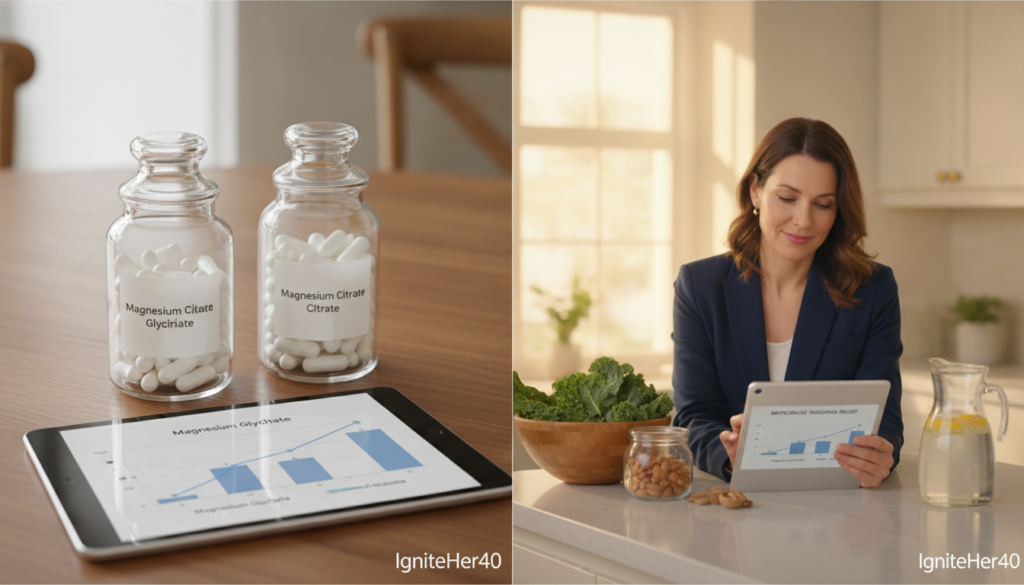
Absorption Rates of Each Form
Not all magnesium is the same. Glycinate has a high absorption rate. The glycine amino acid helps your body absorb more magnesium.
Citrate has a moderate absorption rate. It’s good, but not as effective as glycinate.
Here’s a quick comparison to make things clear:
| Feature | Magnesium Glycinate | Magnesium Citrate |
|---|---|---|
| Absorption Rate | High | Moderate |
| Stomach Tolerance | Very gentle | May cause loose stools |
| Best For | Sleep and stress relief | Sleep plus digestion support |
| Laxative Effect | Minimal | Notable |
| Average Cost (30-day supply) | $12–$20 | $8–$15 |
Efficacy in Promoting Sleep
For menopause insomnia, glycinate is often the better choice. It calms your nervous system and supports GABA, helping you relax at night.
Citrate is good for digestion and sleep. But, its laxative effect can disrupt sleep if it hits at the wrong time.
For most women struggling with sleep after menopause, glycinate is the form worth trying first.
Magnesium threonate crosses the blood-brain barrier, making it promising for anxiety-driven sleeplessness. It’s pricier and delivers less magnesium per dose. Your ideal dosage depends on your unique needs.
How Magnesium Affects Women After Menopause
Menopause brings big changes to your body. Magnesium is key in helping you adjust. It affects your bones, mood, and sleep.
Many adults, including postmenopausal women, don’t get enough magnesium. This can lead to weaker bones, more anxiety, and poor sleep. These are challenges you’re already facing.

Sleep Challenges Post-Menopause
Menopause insomnia is real. Hormone changes mess with your sleep cycle. Night sweats and cortisol spikes make it hard to sleep well.
Stress makes it even tougher. Your body’s stress system can get too active. Magnesium helps calm this down, making it easier to relax.
“Sleep disturbances affect up to 60% of postmenopausal women, making it one of the most common and undertreated symptoms of this life stage.” — The Journal of Clinical Sleep Medicine
The Role of Magnesium in Hormonal Balance
Magnesium helps with hormone production and regulation. It affects sleep by managing cortisol and GABA, your brain’s calm neurotransmitter.
This means fewer wake-ups at night and less restless sleep. It also helps with mood swings, giving you a better base for sleep.
- Supports bone mineral density after estrogen decline
- Helps regulate cortisol and reduce nighttime stress response
- May decrease the frequency of nighttime awakenings
- Aids mood stability during hormonal transitions
Knowing how magnesium works in your body helps you pick the right form. The next section will guide you on dosage.
Recommended Dosages for Sleep
Finding the right magnesium dosage is key. Too little won’t help, and too much can cause issues like loose stools. It’s all about finding that perfect amount.
The NIH says adults should not take more than 350mg of magnesium from supplements daily. Studies show that 300–400mg of elemental magnesium is best for sleep. “Elemental” means the actual magnesium your body absorbs, not the total weight of the compound.
Magnesium is a great natural sleep aid. Take it 1–2 hours before bed. Your body uses it every day, so regular use is best.
Guidelines for Magnesium Glycinate
Glycinate is easy on the stomach. You can start with a full dosage without worrying about stomach issues. Here’s a good starting point:
- Begin with 200mg of elemental magnesium nightly
- Increase to 300–400mg after one week if needed
- Take it with a small snack for steady absorption
- Track your sleep quality in a simple journal
Glycinate combines magnesium with glycine, a calming amino acid. This makes it extra effective for relaxation.
Guidelines for Magnesium Citrate
Citrate absorbs well but can cause diarrhea. So, start with a lower dose to avoid this.
| Week | Glycinate Dosage | Citrate Dosage |
|---|---|---|
| Week 1 | 200mg elemental | 150mg elemental |
| Week 2 | 300mg elemental | 200mg elemental |
| Week 3+ | 300–400mg elemental | 250–350mg elemental |
Always check your supplement label for the elemental magnesium amount — not just the compound weight. If you can handle citrate, it’s a good natural sleep aid at a slightly lower dose. Pay attention to how your body reacts.
User Reviews: Glycinate vs. Citrate
Real experiences from real women matter. Dosage guidelines and absorption rates are helpful, but hearing what actually happened when someone took a supplement? That’s where you get the full picture. Women over 40 share a lot about their magnesium journeys in online communities and wellness forums. Their feedback reveals some clear patterns worth knowing before you choose your form.
Positive Experiences with Glycinate
Women dealing with stress-related insomnia rave about glycinate. They report deeper sleep, fewer nighttime awakenings, and a sense of calm that kicks in right at bedtime. Many say they feel a difference within just a few nights — if they were previously low in magnesium.
One pattern stands out: digestive comfort. Women who tried other forms first often switched to glycinate because it didn’t upset their stomachs. Full effects tend to build over two to four weeks of consistent use. That’s an important detail. Give it time.
Positive Experiences with Citrate
Citrate fans appreciate a dual benefit. It supports relaxation at night and helps with regularity — something many postmenopausal women struggle with quietly. Some women love mixing citrate powder into warm water or herbal tea as a calming bedtime ritual.
That said, users do mention citrate side effects like loose stools or mild cramping when they take too much too quickly. Starting with a lower dose and increasing slowly seems to be the common wisdom shared across forums.
| User Feedback Category | Glycinate | Citrate |
|---|---|---|
| Sleep Improvement Timeline | 2–5 nights for initial effects | 1–2 weeks for noticeable change |
| Digestive Comfort | Very well tolerated | May cause loose stools at higher doses |
| Most Praised Benefit | Deeper, uninterrupted sleep | Sleep support plus improved regularity |
| Preferred Format | Capsules at bedtime | Powder in warm beverages |
Your body is unique. What works beautifully for one woman may need adjusting for you. Keep that in mind as you explore potential interactions with any medications you’re currently taking.
Potential Interactions with Medications
Before choosing a magnesium dosage for sleep, think about your medications. Magnesium can affect how your body absorbs certain drugs. Also, some medications might lower your magnesium levels without you noticing.
Common Medications to Consider
Some medicines don’t mix well with magnesium supplements. The right timing and dosage of magnesium can impact how well your medications work.
Here are the key ones to watch:
- Antibiotics (tetracyclines, fluoroquinolones) — magnesium can reduce their absorption, making treatment less effective.
- Bisphosphonates (bone-loss drugs) — magnesium taken at the same time can block their absorption. Take them at least 60 minutes apart.
- Levothyroxine (thyroid medication) — magnesium can interfere with its absorption. Take them 2–4 hours apart.
- Calcium supplements — they compete with magnesium for absorption. Large doses of magnesium with small doses of calcium can increase competition.
- Diuretics and proton pump inhibitors — they can lower your magnesium levels. You might need to adjust medications and supplements to avoid absorption problems.
| Medication | Interaction Type | Recommended Spacing |
|---|---|---|
| Antibiotics | Reduced drug absorption | 2–3 hours apart |
| Bisphosphonates | Blocked drug absorption | At least 60 minutes |
| Levothyroxine | Reduced drug effectiveness | 2–4 hours apart |
| Calcium supplements | Competitive absorption | 2–3 hours apart |
Consultations with Healthcare Providers
If you have kidney disease, are pregnant, or breastfeeding, talk to your doctor before starting magnesium supplements. This isn’t optional — it’s essential.
Start with a lower magnesium dosage when taking medications. Inform your provider about all supplements you’re taking. They can adjust timing, change doses, or recommend stopping one product to protect absorption of another.
Excessive magnesium intake can cause diarrhea, nausea, lethargy, impaired kidney function, and low blood pressure — so more is not always better.
Getting your magnesium dosage right means considering everything else you’re taking. Next, we’ll explore smart ways to increase magnesium intake through food and proper supplement timing.
Tips for Maximizing Magnesium Intake
Getting enough magnesium for sleep isn’t just about popping a pill. What you eat and when you supplement both matter. Your body uses up magnesium every day through stress, sweat, and normal activities. Let’s explore how to keep your levels up.
Dietary Sources of Magnesium
Eating whole foods is a smart start. They give you magnesium and other nutrients that help your body use it better. Pumpkin seeds are a great choice — just one ounce has about 150mg of magnesium plus tryptophan. Tryptophan helps your body make serotonin and melatonin, natural sleep aids.
Here’s a quick look at top magnesium-rich foods:
| Food | Serving Size | Magnesium (mg) | Bonus Benefit |
|---|---|---|---|
| Pumpkin Seeds | 1 ounce | 150 | Tryptophan for melatonin production |
| Cooked Spinach | 1 cup | 80 | Folate for nervous system support |
| Almonds | 1 ounce | 75 | Healthy fats for steady blood sugar |
| Dark Chocolate (70–85%) | 1 ounce | 65 | Antioxidants and mood support |
| Black Beans | ½ cup | 60 | Fiber for gut health |
| Avocado | 1 medium | 58 | Potassium for muscle relaxation |
Supplemental Forms and Timing
If you’re using magnesium for sleep, timing is key. Take your supplement 30 to 60 minutes before bed with water or herbal tea. This lets your body absorb it before you sleep.
Being consistent is more important than getting it perfect. Your body doesn’t store magnesium like it does vitamin D. You need to take it every day. Choose a time, pair it with a bedtime routine, and stick to it. This way, you’ll see real results over time.
A 2023 review in the journal Nutrients confirmed that consistent magnesium supplementation improved both sleep onset and sleep quality in adults over 50.
Personalizing Your Magnesium Choice
No two bodies are the same. Your best magnesium pick depends on your life right now. This includes your stress, gut health, sleep, and other supplements. If you’re dealing with menopause insomnia, the right supplements can help a lot.
Factors to Consider Based on Lifestyle
Ask yourself a few honest questions. Is your biggest struggle restless sleep, digestive issues, or racing thoughts at 2 a.m.? Each concern points to a different form. A detailed comparison of magnesium types can help you find the best fit.
Pairing magnesium with certain nutrients can boost results. Consider these combinations:
- Zinc — supports hormone balance and deeper rest when taken alongside magnesium
- Ashwagandha — helps manage cortisol and builds stress resilience
- L-theanine and glycine — amplify magnesium’s calming effects on the nervous system
- Vitamin B6 — aids magnesium absorption and neurotransmitter production
- Short-term melatonin — resets circadian rhythms while magnesium provides ongoing daily support
If a sensitive stomach is part of your story, glycinate or bisglycinate will be gentlest. Women with racing nighttime thoughts may benefit from magnesium threonate, which crosses the blood-brain barrier more effectively.
Consulting Professionals for Personalized Advice
Before stacking supplements, talk to your doctor — if you take blood pressure medication, thyroid drugs, or antibiotics. Ask for an RBC magnesium test instead of standard serum magnesium. It gives a much more accurate picture of your actual levels.
The goal isn’t to take the most supplements. It’s to take the right ones for your body, right now.
Testing vitamin D, fasting glucose, and hsCRP alongside magnesium levels helps you and your provider track whether menopause insomnia and restless sleep are truly improving. This is not just on paper, but in how you feel each morning.
Conclusion: Finding the Right Magnesium for You
When it comes to magnesium glycinate vs citrate for sleep, glycinate is better for most women after menopause. It’s absorbed quickly by the body. The glycine in it helps you relax, making it great for sleep without upsetting your stomach.
If your stomach is sensitive, citrate might be a better choice. But for sleep, glycinate is the better option.
It might take a while to notice the difference. Most women see better sleep in two to four weeks of daily use. It’s important to take it every day, not just when you remember.
Start with a small dose and see how you feel. Then, you can adjust as needed.
Eating foods like pumpkin seeds, dark chocolate, and leafy greens is a good start. But, it’s hard to get enough magnesium from food alone, if you’re already low. Supplements can help fill the gap.
What works for you depends on your body, stress, and how you react to things. Supplements can affect you differently based on your health and what you’re taking.
Remember, this isn’t medical advice. Your body is different, and supplements can work differently for everyone. Always talk to your doctor before starting or changing your magnesium routine. They can help create a plan that’s right for you.
FAQ
Which form of magnesium is best for sleep — glycinate or citrate?
Magnesium glycinate is best for sleep, mainly for women with restless sleep or menopause insomnia. It’s absorbed well, calms the nervous system, and supports GABA levels. It also won’t upset your stomach.
The glycine in it helps you relax. Magnesium citrate is good for digestion but not as strong for sleep.
What is the right magnesium dosage for improving sleep quality?
Aim for 200–400mg of elemental magnesium daily. The NIH says adults shouldn’t take more than 350mg from supplements. Start with 150–300mg and increase slowly.
Studies show 300–400mg can improve sleep quality. Make sure to check the elemental magnesium on the label, not the total weight.
When should I take magnesium for the best sleep results?
Take magnesium 1–2 hours before bed for best absorption. This helps calm your nervous system and supports melatonin production.
Consistency is key, as your body regularly loses magnesium. You’ll see benefits in 2–4 weeks of daily use.
Can magnesium help with menopause-related sleep problems?
Yes, magnesium helps with menopause sleep issues. It supports mood, sleep quality, and overall well-being. It also helps with stress and hormone balance.
It may reduce nighttime awakenings and support bone health, which is important for postmenopausal women.
What are the citrate side effects I should know about?
Citrate can cause loose stools or diarrhea, more in some than others. Start with low doses to see how you react. If you’re taking it for sleep, this side effect can be a problem.
Many women switch to glycinate or bisglycinate for better sleep without digestive issues.
How does magnesium for sleep actually work in the body?
Magnesium acts as a natural relaxant. It helps make melatonin and regulate GABA, promoting calmness. It also relaxes muscles and slows your heart rate.
The CARDIA study found high magnesium intake reduces short sleep duration by 36%.
Are there foods that can boost my magnesium levels naturally?
Yes, foods like pumpkin seeds, spinach, almonds, dark chocolate, black beans, and avocados are rich in magnesium. These can help, but most women need supplements too.
Can I take magnesium with other supplements for better sleep?
Yes, some combinations are great. Zinc and magnesium together improve sleep quality. Ashwagandha and L-theanine also enhance magnesium’s effects.
Melatonin can help reset your sleep cycle, while magnesium provides ongoing support. Magnesium L-threonate is good for racing thoughts but is more expensive.
Who should avoid magnesium supplements or talk to a doctor first?
People with kidney disease should talk to a doctor before taking magnesium. Diuretics, proton pump inhibitors, and antibiotics can interact with magnesium. Pregnant and breastfeeding women should also consult a healthcare provider.
Some medications increase magnesium needs, so monitoring is crucial. Always start with low doses when combining magnesium with medications.
How long does it take for magnesium to improve my sleep?
Some notice benefits quickly, but full effects take 2–4 weeks. Consistency is more important than the dose. Take it 1–2 hours before bed and give your body time to adjust.
What’s the difference between magnesium glycinate and bisglycinate?
Both are effective for sleep, with high absorption and minimal stomach upset. Bisglycinate has two glycine molecules, offering similar benefits. Both are good choices for sleep support.
The main difference is with citrate or oxide, where absorption and side effects vary more.