You used to bounce back easily. But after 40, things changed. Your joints started to talk, and your energy dropped. The old routines no longer worked.
This frustration is real. Your body is changing, but it’s not failing you. It needs a smarter approach that builds you up.
The best workouts for women over 40 are about training smart. Use functional movements like goblet squats and planks. Just a yoga mat and a single dumbbell are all you need to start.
Good fitness routines for women in their 40s focus on core strength and moderate resistance. You don’t need fancy gear or long gym sessions. Just exercises that challenge you but are doable, and a plan you can stick to.
This guide offers honest, science-backed choices. No hype or unrealistic promises. Just what your body needs today.
Key Takeaways
- The best workouts for women over 40 prioritize functional movements, joint protection, and progressive strength building.
- A basic circuit using bodyweight exercises and a single dumbbell can deliver serious results — start with 2 rounds of 10 reps and build from there.
- Core engagement before every exercise is essential to prevent injury and get the most from each movement.
- Effective fitness routines for women in their 40s combine strength training, cardio, and flexibility work throughout the week.
- Rest and recovery matter just as much as the workout itself — your muscles rebuild during downtime, not during reps.
- Proper nutrition and hydration directly impact your workout performance and how quickly your body bounces back.
Understanding Your Body After 40
Your body at 42 is different from what it was at 28. That’s okay — it’s just changed. Understanding these changes is key to finding the right exercises for women over 40.
What Changes Occur?
Starting in your late 30s, you lose muscle mass at a rate of 3–8% per decade. Bone density also drops. The CDC says adults should do muscle-strengthening activities two days a week. After 40, this is even more important.
Balance and coordination start to decline. Recovery takes longer. You might feel sore for days after a workout that used to feel easy. This is why tailored workout plans for females over 40 are so important.
Hormonal Shifts and Their Impact
Perimenopause can start as early as your mid-30s. As estrogen levels drop, you lose a key protector for muscle and bone. Estrogen helps with collagen production, joint health, and building lean tissue.
Here’s a quick look at what changes and why it matters for your training:
| Change | Cause | Training Impact |
|---|---|---|
| Muscle mass decline | Aging + lower estrogen | Strength training becomes essential |
| Bone density loss | Reduced estrogen levels | Weight-bearing exercises protect bones |
| Slower recovery | Hormonal fluctuations | Rest days and sleep are non-negotiable |
| Reduced balance | Neuromuscular aging | Stability work prevents falls and injuries |
Knowing these shifts puts you in the driver’s seat. You’re not broken — your body just needs a different approach now.
Benefits of Working Out in Your 40s and Beyond
Your body is changing, and that’s true. But, this decade can be incredibly strong. A good fitness plan for women in their 40s doesn’t just slow down aging. It actually makes you stronger every day.
Enhancing Overall Health
Strength training helps keep muscle mass. After 40, you lose about 3–8% of muscle each decade without it. This slows down your metabolism.
A good fitness plan focuses on muscles for posture, balance, and stability. Think of your glutes, core, and back. Strengthening these keeps you upright, mobile, and independent for years.
Regular exercise brings many benefits:
| Health Benefit | What It Means for You | Timeframe to Notice |
|---|---|---|
| Increased metabolic rate | Burn more calories at rest | 4–6 weeks |
| Improved bone density | Lower fracture risk | 3–6 months |
| Better balance and coordination | Fewer falls, more confidence | 2–4 weeks |
| Improved cardiovascular health | Lower blood pressure and heart disease risk | 4–8 weeks |
Boosting Mental Well-Being
Exercise is a top natural mood booster. A 2023 British Journal of Sports Medicine study showed it’s more effective than meds or therapy for depression and anxiety.
Your 40s bring big changes—career shifts, parenting, relationship changes. A regular workout routine gives you structure and stress relief. You feel less stressed and more capable after each session.
Movement isn’t punishment for what you ate. It’s a celebration of what your body can still do—and will keep doing.
This mental clarity improves your life in many ways. You sleep better, make better decisions, and show up better for others. That’s the real power of a fitness plan for women in their 40s—it changes how you feel, not just how you look.
Types of Workouts Women Over 40 Should Consider
Exercise changes as you get older, and hitting 40 is a big milestone. Your body needs a mix of exercises that protect your joints, build bone density, and boost your confidence. The best workouts for women over 40 focus on strength, cardio, and flexibility.
Building Muscle That Matters
Strength training is non-negotiable after 40. You lose muscle mass with age, about 3–8% each decade, studies show. Exercises like squats, deadlifts, and rows work many muscles at once. They help you do everyday tasks better.
Single-leg exercises, like lunges and step-ups, improve balance and agility. Working your upper body strengthens your arms and engages your core. This helps support your spine and pelvis every day.
Getting Your Heart Rate Up
Cardio doesn’t have to be hard. Walking, cycling, swimming, and dance classes are great options. Aim for 150 minutes of heart-healthy activity each week. Choose what you like to make it easier to stick with.
Staying Supple and Steady
Flexibility and balance exercises help prevent falls and keep you flexible. Yoga and Pilates are excellent for women over 40. They improve posture, joint mobility, and stability. Just 10 minutes of stretching daily can make a big difference.
| Workout Type | Key Benefit | Frequency Per Week |
|---|---|---|
| Strength Training | Builds lean muscle, protects bones | 2–3 sessions |
| Cardio | Heart health, mood boost | 3–5 sessions |
| Flexibility & Balance | Joint mobility, fall prevention | Daily or 3–4 sessions |
Combining strength, cardio, and flexibility workouts leads to lasting results. It keeps your body strong and confident in daily life.
Best Strength Training Workouts
Strength training is key for your body after 40. You lose muscle mass with age, but you can slow it down. These exercises build muscle, protect bones, and boost metabolism.
Bodyweight Exercises
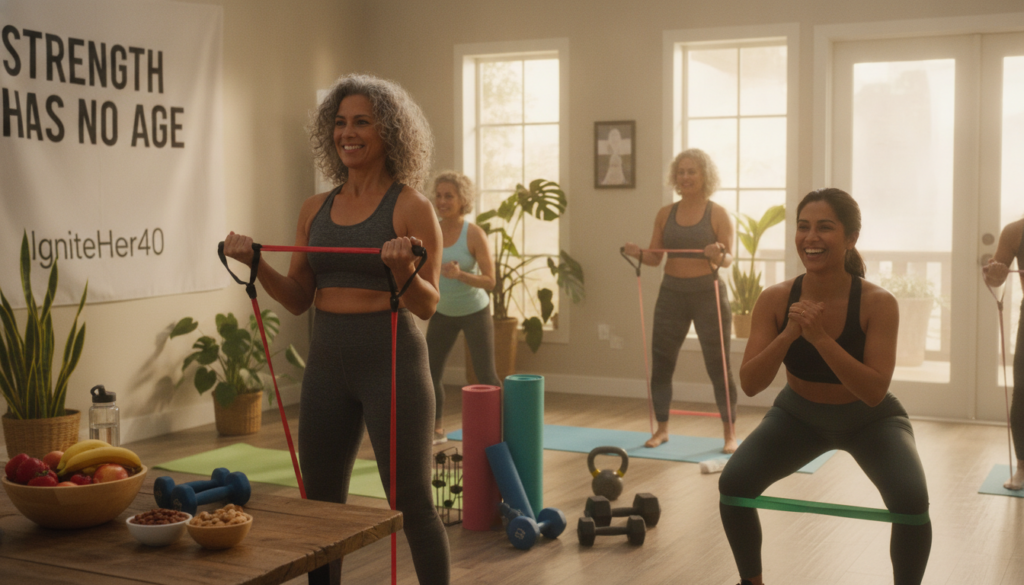
No gym membership is needed. Your body is enough to build strength.
- Squats — target your quads, glutes, hamstrings, and core. Start with bodyweight and aim for 3 sets of 10–12 reps.
- Push-ups — engage your chest, shoulders, triceps, and core. Modify against a wall or sturdy chair if needed.
- Lunges — try forward, reverse, and lateral variations. They fire up your glutes and quads from every angle.
- Planks — hold for 30 seconds to one minute. They strengthen the deep core muscles that support your spine.
Resistance Bands
Bands are portable, joint-friendly, and surprisingly challenging. Fokky resistance bands offer up to 56 kg of resistance and come with handles — perfect for rows and bicep curls. They’re among the most practical optimal exercises for women over 40 who train at home.
Free Weights
Dumbbells let you progressively increase your load, which is essential for muscle growth. Look for hexagonal dumbbells (like the Homcom 2×10 kg set) that won’t roll away mid-set. Unbound dumbbells are designed with a smaller grip and rubber-coated handles, making them a smart fit for women’s hands.
| Equipment | Best For | Recommended Sets x Reps |
|---|---|---|
| Bodyweight | Beginners, travel, at-home training | 3 x 10–12 |
| Resistance Bands | Joint-friendly progressive resistance | 3 x 8–12 |
| Free Weights | Building muscle and bone density | 3 x 8–12 |
“Muscle is the organ of longevity.” — Dr. Gabrielle Lyon, board-certified physician and muscle-centric medicine advocate.
Pick one approach or mix all three. The key is consistency — two to three sessions per week is enough to see meaningful changes in how you feel and move.
Recommended Cardio Workouts
Cardio doesn’t have to be hard. After 40, it’s more about quality than quantity. Aim for polarized training—80% easy pace, 20% high intensity. This boosts blood sugar control, reduces belly fat, and builds muscle.
Your workouts can last from 18 to 45 minutes. Use apps like Apple Fitness+ and Peloton for quick classes. Choose what feels best for you.
Walking and Hiking
Walking is a great cardio workout. A brisk 30-minute walk raises your heart rate without hurting your joints. Hiking adds a challenge with elevation changes.
Try adding two 20-second sprints into your walk. These short bursts are powerful.
Cycling for Endurance
Cycling is easy on your knees and boosts your heart health. Ride outdoors or on a stationary bike. Sprint intervals on a bike can boost your fitness.
Swimming as a Low-Impact Option
Swimming is gentle on your joints. The water supports your body while you work hard. It’s perfect for a gentle yet effective workout.
- Walk or hike 3–4 days per week at an easy pace
- Add 1–2 sprint interval sessions on the bike or in the pool
- Keep cardio sessions short enough to protect recovery
- Mix in fun activities like pickleball for variety
Start where you are. Even two short sprints in a walking session can shift your fitness trajectory.
Flexibility and Balance Workouts for Stability
Strength and cardio are important. But don’t overlook flexibility and balance. They keep you moving with confidence every day. These routines protect your joints, prevent falls, and support everyday movements like bending and climbing stairs.
As you age, stability training becomes non-negotiable. Your body’s sense of space decreases. Training it keeps you steady and strong.
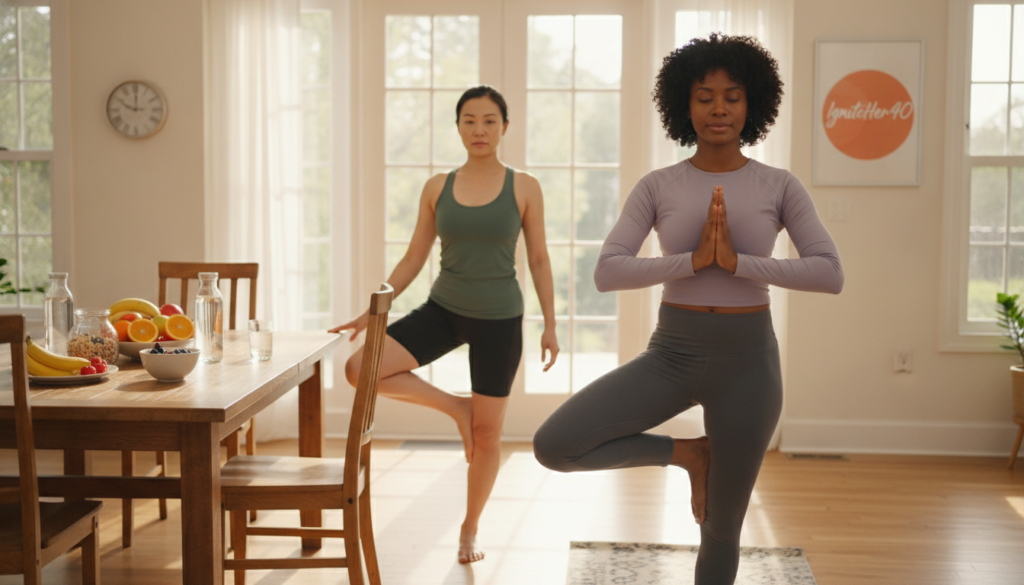
Yoga Practices
Yoga improves flexibility, balance, and body awareness. You don’t need to spend hours. Even 15 minutes can make a big difference. Apple Fitness+ offers yoga classes for all levels, perfect for busy schedules.
Start with poses like warrior II, tree pose, and cat-cow stretches. These work your hips, spine, and core while improving balance. Studies in the International Journal of Yoga show yoga reduces stress and improves joint mobility in midlife women.
Pilates Essentials
Pilates focuses on deep stabilizing muscles. These muscles protect your spine and pelvis. Weighted Pilates workouts are great for building single-leg power, essential for walking and climbing stairs.
Try this move as part of your effective fitness routines for women in their 40s:
- Side plank: Lie on your side. Prop yourself on your forearm. Lift your hips until your body forms a straight line. Hold for 15–30 seconds per side.
- Keep your hips, knees, and feet stacked and aligned.
- Easier version: keep your lower knee on the mat.
- Harder version: support yourself on your hand or lift your top leg.
| Exercise | Primary Benefit | Difficulty Level |
|---|---|---|
| Tree Pose (Yoga) | Single-leg balance | Beginner |
| Side Plank (Pilates) | Core and hip stability | Intermediate |
| Warrior II (Yoga) | Hip flexibility and leg strength | Beginner |
| Weighted Roll-Up (Pilates) | Spinal mobility and core control | Intermediate |
Combining these workouts with strength and cardio creates a balanced routine. It supports your body from every angle.
Combining Workouts for Optimal Results
Just one exercise isn’t enough. The best workouts for women over 40 mix strength, cardio, and flexibility. This balanced mix leads to lasting changes in your body.
Let’s figure out how to fit this into your life, not someone else’s.
Full Body Routine Ideas
A circuit workout is great for training your whole body quickly. Try these six exercises in order, doing 10–12 reps each:
- Goblet squat
- Reverse lunge
- Plank pass-through
- Side plank hold
- Single-arm overhead press
- Single-arm row
After finishing all six, rest for 60–90 seconds. Do the circuit two to three times. This keeps your heart rate up and builds strength.
Weekly Workout Plans
Women over 40 should have at least two strength workouts a week. Add cardio and rest days too. Apps can help plan your workouts:
| App | Key Feature | Cost |
|---|---|---|
| Ray | Adaptive plans based on your energy, equipment, and existing activities | Free with premium options |
| Sweat | Structured women-led programs with progressive plans | ~$20/month |
| Future | One-on-one human coaching for personalized weekly programming | $50 first month, $199/month after |
Choose a plan that respects your recovery. Don’t push too hard without rest. A well-planned week lets your muscles recover and grow.
Importance of Rest and Recovery
Even with the best fitness plan for women in their 40s, rest is key. It’s not laziness; it’s where real progress happens. Your muscles grow and repair between workouts, not during.
After 40, your energy and soreness levels change. It’s not because you’re failing. Adjust your workouts to fit your life. Maybe do 45 minutes one day and 18 minutes the next. Mix home and gym sessions to stay flexible.
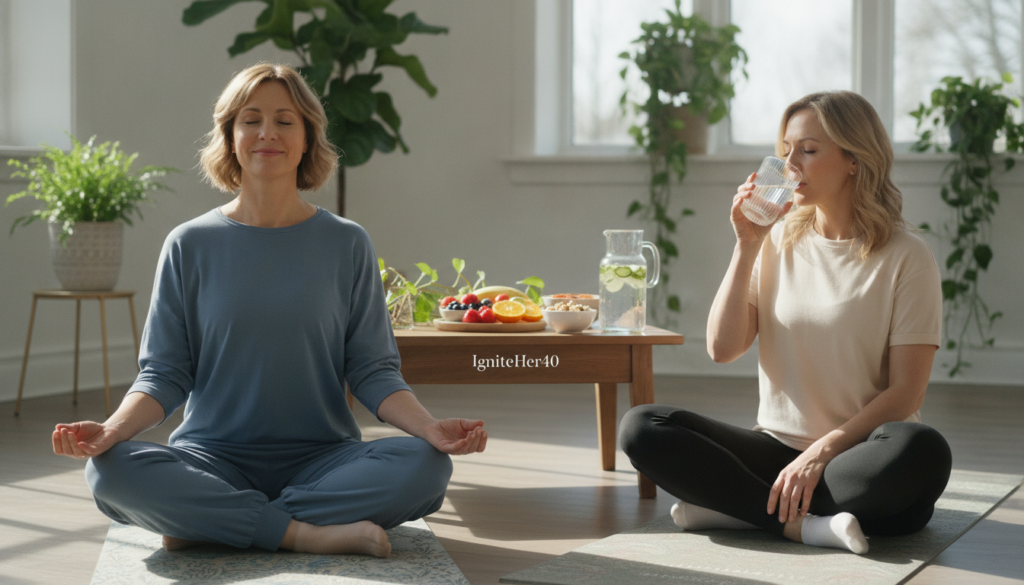
Understanding Muscle Rejuvenation
Strength training causes tiny muscle tears. Rest lets those muscles rebuild stronger. Studies in the Journal of Strength and Conditioning Research show adults over 40 need 48–72 hours to recover between intense workouts.
Skipping this recovery time can lead to overtraining, fatigue, and injuries. Any good fitness plan for women in their 40s should challenge you and allow for recovery.
“Rest days are not optional. They are part of the program.” — Dr. Stacy Sims, exercise physiologist and author of Next Level
The Role of Sleep and Nutrition
Sleep is crucial for recovery. Aim for 7–9 hours each night. Deep sleep boosts human growth hormone, helping repair tissues and regulate metabolism.
Good nutrition is also vital. Protein helps rebuild muscles, and anti-inflammatory foods reduce soreness.
| Recovery Factor | What to Aim For | Why It Matters |
|---|---|---|
| Sleep | 7–9 hours nightly | Triggers growth hormone release for muscle repair |
| Protein Intake | 25–30g per meal | Supports muscle protein synthesis after exercise |
| Rest Days | 2–3 per week | Prevents overtraining and reduces injury risk |
| Hydration | Half your body weight in ounces daily | Aids nutrient transport and joint lubrication |
Don’t believe in “no days off.” Your body needs balance. Listen to it.
Natural Ways to Enhance Your Workouts
What you eat and drink is as important as your workouts. Eating real, whole foods is key for women over 40. You don’t need expensive supplements. Your kitchen is your best gym partner.
Whole Foods for Fueling Your Body
Think of food as information for your muscles. Before a workout, eat complex carbs. Oatmeal, sweet potatoes, and whole grain toast give you energy without a crash. Eat these 60 to 90 minutes before your workout.
After a workout, your muscles need protein to repair. Greek yogurt, eggs, and lean chicken are great choices. Add anti-inflammatory foods like berries, leafy greens, and fatty fish like salmon. These foods help reduce soreness and speed recovery.
“Let food be thy medicine and medicine be thy food.” — Hippocrates
| Timing | Best Foods | Why It Works |
|---|---|---|
| Pre-Workout (60–90 min before) | Oatmeal, sweet potatoes, bananas | Sustained energy from complex carbs |
| Post-Workout (within 30 min) | Greek yogurt, eggs, chicken breast | Protein supports muscle repair |
| Daily Recovery | Blueberries, spinach, wild salmon | Anti-inflammatory compounds reduce soreness |
Hydration with Natural Drink Options
Skip sugary sports drinks. Your body wants simple hydration. Plain water is usually enough. For longer or more intense workouts, try coconut water for natural electrolytes.
Herbal teas like peppermint or ginger help with digestion and reduce inflammation. Fresh fruits and vegetables like watermelon and cucumbers also help with hydration. Staying hydrated keeps your joints lubricated and your energy stable, making every workout count.
Supplements and Nutritional Support
Combining the best exercises for women over 40 with the right nutrition is key. Your workouts need fuel that matches your effort. Let’s explore what your body needs and where to find it.
Important: This is not medical advice. Talk to your doctor before starting any supplement regimen.
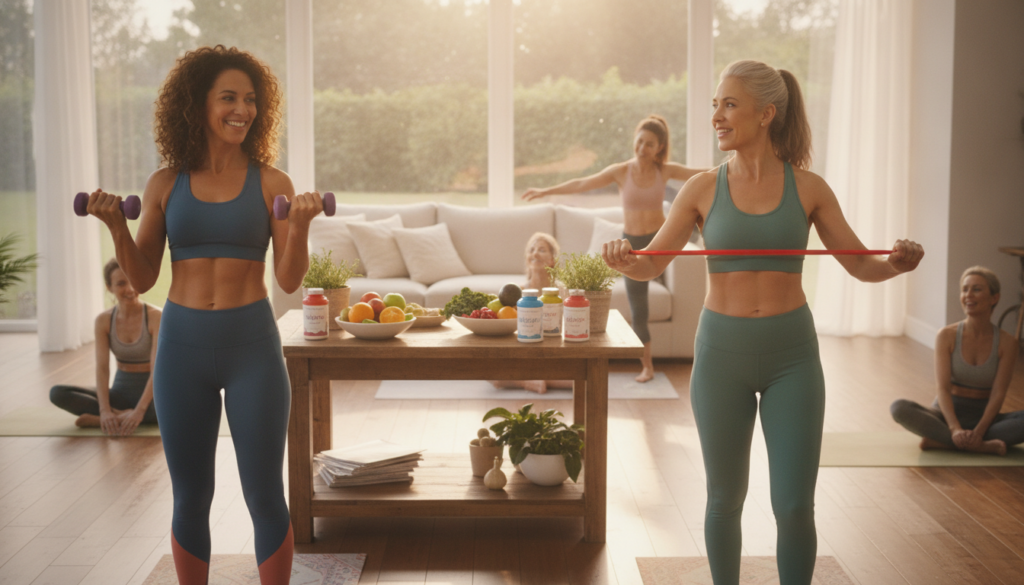
Types of Supplements to Consider
After 40, getting some nutrients from food can be tough. Here are some backed-by-science options to discuss with your doctor:
- Calcium + Vitamin D — These two help keep bones strong, which gets weaker after 40.
- Omega-3 Fatty Acids — Fish oil or algae-based supplements reduce inflammation and support joints.
- Protein Powder — Whey or plant-based options help meet protein needs for muscle repair.
- Magnesium — Supports muscle function, recovery, and sleep quality.
- B-Complex Vitamins — Boosts energy metabolism, which can slow down during hormonal changes.
The Mayo Clinic and NIH offer guidance on dosing and safety.
Whole Food Alternatives for Nutrients
While supplements fill gaps, whole foods should be your first choice. When you’re doing the best exercises for women over 40, these foods offer powerful support:
| Nutrient | Whole Food Source | Serving Suggestion |
|---|---|---|
| Calcium | Greek yogurt, cheese, fortified plant milk | 1 cup daily |
| Omega-3s | Salmon, sardines, mackerel | 2–3 servings per week |
| Protein | Chicken breast, lentils, eggs | 25–30g per meal |
| Magnesium | Pumpkin seeds, dark chocolate, spinach | 1 oz seeds or 1 cup cooked greens |
| B Vitamins | Whole grains, chickpeas, nutritional yeast | Incorporate into daily meals |
“Let food be thy medicine” sounds cliché — but your plate is the most powerful supplement shelf you own.
Eating well and exercising aren’t separate goals. They’re two sides of the same coin. Pairing smart nutrition with workout-enhancing strategies creates a sustainable plan.
Success Stories and Testimonials
Numbers on a scale tell one story. But real women living in stronger bodies tell a much better one. Targeted fitness programs for females in their 40s are changing lives every single day. The proof is in the people, not the marketing.
Real-Life Inspirations
Look at what women just like you are accomplishing. They’re doing it through structured, supportive programs:
| Name | Age | Key Result |
|---|---|---|
| Sara (Burlington, ON) | 45 | Down two dress sizes; says she “feels like 30” |
| Angie Busby-Bross | 48 | Lost more than 15 inches; physical, mental, and spiritual shift |
| Erin | 40 | Dropped 9 inches using HIIT and resistance training |
| Jillian Henderson | 52 | Fits into high school shorts; less bloating, more energy |
| Karen | 51 | Climbed 20 km with ~35,000 steps in a single outing |
| Rocio Vizcarra | 43 | Recovered from chronic leg injury; thriving at 43 |
These aren’t outliers. They’re everyday women who committed to targeted fitness programs for females in their 40s. You can read their full journeys through real BUFFnation success stories shared by the women themselves.
Community Engagement for Motivation
Accountability changes everything. Online platforms like Caroline Idiens’ Circuits community show that connection keeps people showing up. Certified trainers like Jen Rizzuto (NASM-CPT, Pn1) bring proper form and expert guidance right to your screen.
You don’t need to do this alone. Women like Sheila Bairos, who celebrated her 51st birthday feeling healthy, fit, and fabulous, credit community and consistency above all else. That sense of belonging? It’s the secret ingredient no supplement can replace.
When you surround yourself with women who refuse to quit, giving up stops being an option.
Finding the right group can be the difference between starting over every January and building a lifestyle that sticks.
Conclusion: Embrace Your Fitness Journey
Your body changes after 40, and that’s true. But you can still build strength, flexibility, and endurance. The right fitness routines for women in their 40s are achievable and enjoyable.
Finding Joy in Movement
The best workout plan is one you can stick to. It doesn’t have to be the toughest one online. Choose activities like lifting, walking, yoga, or cycling that you enjoy.
Consistency is key, not perfection. Fitness should be a way to care for your body, not just another task. It should make you feel good, not stressed.
Looking for app support? Choose one that fits your style. Ray offers AI coaching that adjusts to your pace. Sweat has women-led programs for your goals. Apple Fitness+ brings studio classes home. Peloton keeps you motivated with instructor energy.
A good app makes fitness routines feel manageable. It guides you so you feel strong after each session. It doesn’t overwhelm you.
Life is demanding right now. Career, family, hormones, sleep — it all adds up. But staying strong is crucial. It’s not a luxury, it’s a priority.
So, eat well, rest when needed, and move in ways that make you happy. You can do this, one workout, one day at a time.
FAQ
What are the best workouts for women over 40 to maintain muscle mass?
Women in their 40s should focus on strength training. This includes bodyweight exercises, free weights, and functional movements. Try goblet squats, reverse lunges, and plank pass-throughs.
Side planks, single-arm overhead press, and single-arm rows are also great. These exercises work many muscles at once. This is key since muscle loss starts in the late 30s.
The CDC suggests doing muscle-strengthening activities 2 days a week. A circuit-based routine is a good way to meet this goal.
How does perimenopause affect my fitness, and what should I do about it?
Perimenopause leads to faster muscle and bone loss due to less estrogen. Strength training is more important than ever. It helps keep your metabolism up and bones strong.
Calcium and vitamin D are also key for bone health. Pairing your workouts with the right nutrition is crucial.
What are the top exercises for women over 40 who are complete beginners?
Start with simple exercises. Use a yoga mat and a single dumbbell. Try goblet squats, reverse lunges, and plank pass-throughs.
Do side planks, single-arm overhead press, and single-arm rows too. As a beginner, do 10 reps of each for 2 rounds. The weight should be challenging but manageable.
Remember to engage your core before starting any exercise. This includes your pelvic floor and diaphragm. As you get more confident, aim for 12 reps for 3-4 rounds.
How often should I work out in my 40s, and how long should sessions be?
Aim for strength training 2 days a week, with cardio on the other days. But remember, life can be unpredictable. Some days you might only have 18 minutes to work out.
The goal is to be consistent, not to push too hard. Aim for enough challenge to see strength gains, but also enough rest to recover. A workout that fits your life is the best one.
What are the best cardio options that won’t wreck my joints?
Low-impact cardio is best for your joints. Try walking, hiking, cycling, or swimming. These activities keep your heart healthy without putting too much strain on your joints.
Platforms like Peloton offer cycling and walking classes. Apple Fitness+ has treadmill and cycling classes. Adding activities like pickleball to your routine can also be beneficial.
How do I know which fitness app is right for me?
Look for an app that makes strength training feel achievable. Ray offers adaptive AI coaching. Sweat has structured workout programs led by women. Apple Fitness+ has high-quality yoga and Pilates classes.
Peloton provides instructor-driven motivation. Future offers personalized weekly plans with a human coach. Choose an app that makes you feel confident and supported.
What should I eat before and after workouts to support muscle recovery?
Before working out, eat complex carbs like oatmeal or sweet potatoes. They provide steady energy. After, focus on protein from sources like Greek yogurt or lean meats.
Include anti-inflammatory foods like berries and fatty fish in your diet. Stay hydrated with water, coconut water, and herbal teas. Whole foods are better than supplements for essential nutrients.
Do I need supplements as part of my tailored workout plan for females over 40?
Some supplements can help, but whole foods should always be first. Calcium and vitamin D are important for bone health. Omega-3s reduce inflammation.
Protein powder can help meet your protein needs. Magnesium and B-complex vitamins support muscle function and energy. Always talk to your doctor before starting supplements.
How important are flexibility and balance exercises in my routine?
Flexibility and balance exercises are essential. They help prevent falls and maintain mobility. Try side planks, single-leg movements, yoga, and Pilates.
Apple Fitness+ offers yoga and Pilates classes. Weighted Pilates workouts are great for single-leg activities. Even small exercises like side planks can make a big difference.
How do I stay motivated and consistent with my fitness routine?
Motivation comes from a structured routine that fits your life. Community support is key. Join platforms like Caroline’s Circuits for ongoing accountability.
Caroline Idiens’ book *Fit at 50* offers a structured starting point. Apps like Ray adapt to your schedule and energy levels. Focus on consistency, not perfection. Stay strong to enjoy life’s demands.