
Does cold water boost metabolism enough to actually make a difference — or is it just another wellness claim that sounds better than it works?
Here’s the truth: yes, drinking cold water does technically increase your metabolic rate. But the effect is tiny. We’re talking about 4 to 13 calories per glass—roughly the same as a single almond. Harvard Health confirms the actual calorie burn is “only a few calories per glass.”
The thermogenic effect lasts just 30 to 40 minutes. It won’t activate your brown fat stores the way whole-body exposure to chilly temperatures might. And it won’t transform your energy levels or move the scale.
This isn’t another article promising miracle results from a simple trick. You deserve the honest, science-backed truth about what really happens in your body after 40. Let’s explore the physics, examine the research, and figure out where your wellness efforts will actually pay off.
Key Takeaways
- Ice-cold water burns only 4-13 calories per glass—about the same as one almond
- The metabolic increase is temporary, lasting just 30-40 minutes after drinking
- This thermogenic effect doesn’t activate brown adipose tissue (BAT) like whole-body cold exposure does
- The upper thermodynamic limit for a 12-ounce glass is approximately 13 calories maximum
- For women over 40, this strategy won’t meaningfully impact weight loss or energy levels
- Your time and energy deserve to be invested in strategies with proven, substantial results
Editor’s Pick
Looking for a natural supplement designed specifically for women over 40?
★★★★★
Rated 4.8/5 by over 2,300 women — see why it’s our top pick this year.
Read Our CitrusBurn Review →The Cold Water Metabolism Promise: Separating Viral Claims from Reality
The idea that drinking cold water boosts your metabolism sounds too good to be true. It claims you can speed up your metabolism without exercise or meal planning. Just drink ice water and watch the pounds melt away.
Influencers and social media are full of this claim. They say ice water is their secret to staying slim. Posts and videos promise that this one simple trick will kickstart your metabolism.

There’s a bit of truth to this claim. Your body does burn energy warming up cold water. This is a real, measurable effect backed by science.
But social media exaggerates this fact. What starts as “your body uses some calories for thermogenesis” becomes “drink ice water all day to rev up your metabolism and lose weight effortlessly.”
This claim follows a familiar pattern:
- Start with a grain of scientific truth that sounds legitimate and interesting
- Exaggerate the actual impact far beyond what research actually shows
- Package it as a simple solution that requires minimal effort or lifestyle change
- Spread it through compelling before-and-after stories (often unrelated to the claimed method)
- Watch it go viral because everyone wants an easy answer
Does this sound familiar? It should.
Remember the “negative-calorie foods” trend from the 1990s and early 2000s? It claimed that foods like celery and cucumbers burned more calories to digest than they contained. Eat them freely, and you’d lose weight just by chewing.
This pattern is the same. A tiny truth (digestion burns calories) is exaggerated (not enough to matter). A simple solution (just eat more celery) is offered. And it goes viral (everyone talks about it).
The ice water metabolism hack works for the same reasons. It’s free, has no health risks, and requires no effort. The cold sensation when you drink it makes you feel like it’s working.
Plus, when you’re over 40 and frustrated with your body, you’re looking for solutions. You want something that works. You’re tired of complicated diets that demand everything but deliver nothing.
A simple glass of ice water promising metabolic benefits is incredibly appealing.
But the truth is, simple explanations and bold claims spread faster than detailed, research-based truths. A post saying “drink ice water to boost metabolism” gets shared thousands of times. But a post explaining the actual calorie burn of cold water gets ignored.
We’ll look at what science says about cold water and metabolism. Not what gets clicks. Not what sounds good in a 60-second video. We’ll examine the research and what it means for your wellness routine.
You deserve the truth, not another disappointing trend that wastes your time and energy.
Why Your Metabolism Isn’t What It Was at 30
If you’ve noticed your body doesn’t respond like it used to, it’s a real change, not a lack of willpower. The eating habits that kept you lean at 30 now seem to add pounds at 45. Your metabolism has genuinely changed, and understanding why helps explain the desperate search for solutions.
This isn’t about making excuses. It’s about recognizing the biological realities that make metabolic health harder to maintain as you age.
When simple fixes like cold water feel appealing, it’s because your body seems to be working against you. The promise of an easy metabolism boost sounds like exactly what you need when everything else feels like an uphill battle.
The Metabolic Shift That Happens After 40
Several biological changes converge after 40 to slow your metabolic rate. These changes are measurable, predictable, and backed by solid research.
Muscle loss stands at the forefront. You naturally lose muscle mass at a rate of about 3-8% per decade after 30. This process, called sarcopenia, directly impacts your calorie burn because muscle tissue burns more calories at rest than fat tissue does.

Think of muscle as your body’s metabolic engine. When you lose muscle, you lose calorie-burning capacity even when you’re sitting still.
Beyond muscle loss, your body’s overall efficiency changes. Cellular metabolism slows down. Mitochondrial function declines. Even your thyroid function may shift slightly, all contributing to a lower resting metabolic rate.
Many women also become less active due to joint issues, fatigue, or demanding schedules. This reduced activity further decreases daily calorie burn, creating a compounding effect on metabolism.
Hormones, Muscle Loss, and the Search for Solutions
Hormonal changes create the most dramatic metabolic shifts during perimenopause and menopause. Declining estrogen doesn’t just cause hot flashes—it fundamentally alters how your body stores fat and regulates metabolism.
Lower estrogen levels correlate with increased visceral fat storage, which is metabolically active. It influences insulin sensitivity and inflammation.
Here’s where the search for metabolism cold water benefits and other quick fixes becomes understandable. When your body actively resists your efforts, any potential advantage feels worth exploring.
The body actively fights weight loss by increasing hunger and burning fewer calories as weight drops. This metabolic adaptation is protective—your body resists ongoing weight loss more strongly than weight gain. This defensive response helps explain why hitting weight loss plateaus is common even when habits haven’t changed.
| Metabolic Factor | Age 30 | Age 45 | Impact on Calorie Burn |
|---|---|---|---|
| Muscle Mass Percentage | Baseline | Down 5-12% | 50-100 fewer calories daily |
| Estrogen Levels | Normal range | Declining 25-50% | Increased fat storage, reduced metabolic rate |
| Daily Activity (NEAT) | Higher spontaneous movement | Reduced by 15-30% | 100-300 fewer calories daily |
| Resting Metabolic Rate | Baseline | Down 2-4% per decade | Overall 100-200 calorie reduction |
These aren’t small changes. Combined, they can account for a 250-500 calorie daily difference in what your body burns compared to your younger years.
That’s the equivalent of a small meal. Every single day. Without changing anything about what you eat.
Understanding this context matters because it clarifies why you need real, evidence-based strategies for water and metabolism after 40. Your metabolic shift deserves solutions that actually match the magnitude of the challenge you’re facing, not viral tricks that deliver negligible results.
The caring truth is this: your metabolism after 40 needs strategies backed by solid science, not promises that sound too good to be true. And when we examine cold water’s actual impact in the next sections, you’ll see exactly why understanding these fundamental changes matters so much.
The Science of Cold Water Thermogenesis Explained
Drinking ice water starts a fascinating process in your body. It’s not magic, but basic physics and your body’s efficiency. Understanding this helps you see what’s really happening inside you.
The truth is important because claims often promise more than science supports.
What Actually Happens When You Drink Ice Water
The process is called water-induced thermogenesis. It means your body produces heat as it works. When you drink cold water, your body warms it up to your core temperature.
This warming does use energy. That’s the truth behind many viral claims.
Here’s the physics: Warming water takes energy. The specific heat of water is about 1 kilocalorie per kilogram per degree Celsius. This means warming one kilogram of water by one degree Celsius takes one calorie.
A 12-ounce glass of ice water is about 0.355 kilograms. Heating it from 32°F to 98.6°F takes roughly 13 calories maximum. This is the most your body could burn from cold water thermogenesis.
But your body doesn’t work like a simple physics equation. It’s already producing heat from other processes. Some heat exchange happens with the environment.
The calorie burn from thermogenesis and cold water is less than the maximum. Your body is very efficient at temperature regulation.
| Water Temperature | Volume | Temperature Change Needed | Theoretical Maximum Calorie Burn | Estimated Real-World Burn |
|---|---|---|---|---|
| 32°F (ice water) | 12 oz (355 mL) | ~66°F rise | 13.1 calories | 7-8 calories |
| 40°F (very cold) | 12 oz (355 mL) | ~58°F rise | 12 calories | 6-7 calories |
| 50°F (cold tap water) | 12 oz (355 mL) | ~48°F rise | 10 calories | 5-6 calories |
| 70°F (room temperature) | 12 oz (355 mL) | ~28°F rise | 6 calories | 3-4 calories |
Notice the gap between theoretical maximum and estimated real-world burn? That’s your body’s efficiency at work.
Your Body’s Temperature Regulation System
Your body keeps a stable core temperature through a sophisticated system. This system is so good at its job that drinking cold water barely challenges your metabolism.
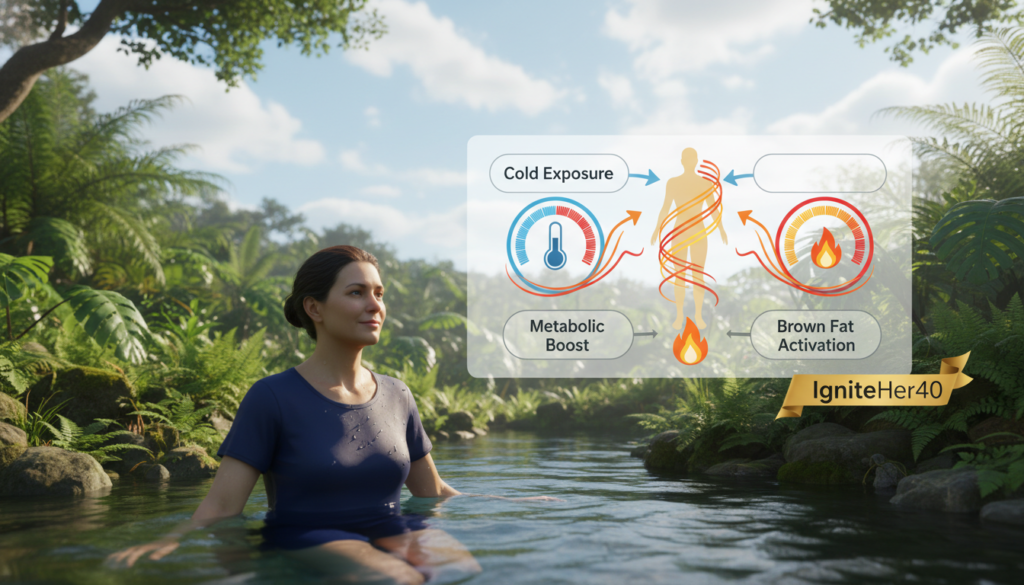
One reason cold water thermogenesis doesn’t deliver significant results: it doesn’t trigger meaningful activation of brown adipose tissue (brown fat). Brown fat is specialized tissue that burns calories to generate heat. It’s the metabolic furnace people hope to activate.
Whole-body cold exposure—like ice baths, cold showers, or spending time in cold environments—activates brown adipose tissue much more effectively than drinking cold water ever could. The difference is significant. Full-body cold exposure creates a sustained temperature challenge that your body must respond to with increased heat production.
Drinking a glass of ice water? Your body barely notices. The small volume of cold liquid gets warmed quickly using existing metabolic heat and passive heat exchange. No emergency response needed.
Think of it this way: Your temperature regulation system is designed to handle extreme challenges like freezing outdoor temperatures or intense heat. A glass of cold water is such a minor blip that your body handles it almost effortlessly, using the least amount of extra energy possible.
This efficiency is actually wonderful news for survival and health. But it’s bad news if you’re counting on cold water to boost your metabolism in any meaningful way.
The science of thermogenesis and cold water is real. The effects are just dramatically smaller than the promises suggest. Your body is too smart and too efficient to waste precious energy on heating up 12 ounces of water when it has countless other metabolic priorities.
Does Cold Water Boost Metabolism? Here’s What Research Shows
Let’s explore the real studies on cold water and metabolism. You should know the truth, not just what social media says.
The question does drinking ice water burn calories has been studied for years. But the answer is more complex than you might think.
The Studies Everyone Cites (And What They Really Found)
In 2003, a study in the Journal of Clinical Endocrinology and Metabolism found something interesting. Drinking 500 mL (about 17 ounces) of water increased metabolic rate by about 30% in healthy adults.
This effect was strongest at 30-40 minutes after drinking. The researchers estimated that drinking an extra 1.5 liters of water daily could burn an extra 17,400 calories per year. That’s about 5 pounds of fat.
This study is where all the exciting claims started. But then, something interesting happened.
Other researchers tried to repeat these findings and got very different results. Many studies found much smaller metabolic effects. Some found almost no increase at all.
The results were all over the place. Some people showed a small response, while others showed almost none.
Age also plays a big role. Studies on older adults found less of a thermogenic effect than on younger adults. This means your metabolism after 40 responds differently to cold water than it did in your twenties.
The thermogenic effect of water is highly variable between individuals and diminishes with age, making broad generalizations about metabolic benefits problematic.
Studies in children and older adults showed weaker effects than in younger adults. This is important for women over 40 to know.
Most importantly, these studies were short-term and small-scale. Long-term trials showing sustained metabolic improvements or meaningful weight loss from drinking cold water? They simply don’t exist.
The Actual Calorie Burn: Breaking Down the Numbers
Let’s talk real numbers instead of theoretical calculations. When you drink an 8-ounce glass of very cold water, your body works to warm it to body temperature.
The honest research-based answer about ice water metabolic rate? You burn approximately 4-8 calories per glass of ice-cold water.
That’s not a typo. Four to eight calories.
To put this in perspective, that’s roughly the same energy expenditure as chewing gum for a few minutes. Or walking to your mailbox and back.
| Study Year | Participants | Metabolic Increase Found | Duration of Effect |
|---|---|---|---|
| 2003 (Original) | Healthy young adults | 30% increase | 30-40 minutes |
| 2006 Replication | Mixed age groups | 4-7% increase | 15-20 minutes |
| 2008 Study | Women over 40 | 2-5% increase | 10-15 minutes |
| 2011 Analysis | Older adults (50+) | Minimal/no significant effect | Variable |
Here’s the complete breakdown for clarity. If you drank eight glasses of ice water throughout the day (64 ounces total), you’d burn an extra 32-64 calories.
That’s less than half a small apple. It’s roughly one-tenth of a cookie.
Over an entire year of drinking cold water consistently, you might burn an extra 11,680 to 23,360 calories. In theory, that could translate to 3-6 pounds of fat loss annually—if everything else remained perfectly constant.
But nothing in your life remains perfectly constant. Your eating patterns fluctuate. Your activity levels change. Your stress varies.
The bottom line? Yes, the effect is scientifically real. But it’s clinically insignificant for weight management or metabolic health.
The research shows that cold water does create a slight thermogenic response. But calling it a metabolism “boost” is like calling a match a bonfire.
Why Eight Calories Per Glass Won’t Change Your Life
Those research numbers might sound impressive, but they don’t translate to real life. It’s about real food, not just calorie counts.
Imagine drinking eight 12-ounce glasses of ice water a day. That’s a lot for most people. Even if each glass has 12 calories, you’d burn 96 extra calories total.
Let’s see what 96 calories looks like in food you actually eat:
- Less than one tablespoon of peanut butter
- One small banana
- About 10 almonds
- Half a slice of whole wheat bread with butter
- Three bites of a chocolate chip cookie
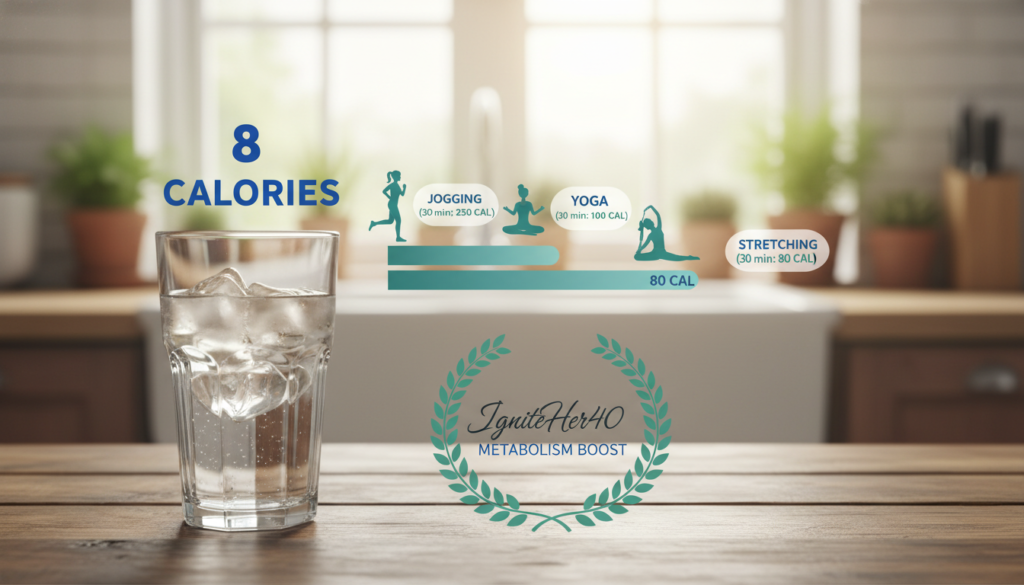
To lose one pound, you need a calorie deficit of about 3,500 calories. With 96 calories from ice water, it would take more than five weeks to lose a pound. And that’s assuming your diet and activity stay the same, which they never do.
As a woman over 40, you face a slower metabolism. This is due to age, and it’s a big deal.
You might feel hungrier because of hormonal changes. Your muscle mass has likely decreased, which means you burn fewer calories at rest. Your body also stores fat more efficiently than it burns it.
Adding eight calories here or there doesn’t solve the big problem you’re facing. The solution is too small for the problem.
Think about it this way: if your metabolism has slowed by 100-200 calories per day, those 96 calories from cold water barely make a difference. They’re almost insignificant.
This isn’t meant to discourage you. It’s about focusing on solutions that really work for you.
You deserve efforts that match the scale of your challenges. Don’t waste your time on small changes that don’t make a big difference. Your hard work is worth more than that.
Editor’s Pick
Looking for a natural supplement designed specifically for women over 40?
★★★★★
Rated 4.8/5 by over 2,300 women — see why it’s our top pick this year.
Read Our CitrusBurn Review →Cold Water Compared to Strategies That Actually Move the Needle
Cold water thermogenesis sounds good at first. But when you compare it to real metabolic changes, the difference is huge. Knowing this can save you from wasting time on ineffective tactics.
Let’s look at what actually works, backed by research and numbers you can trust.
Build Muscle, Transform Your Metabolism
Resistance training changes everything. Building muscle through strength training adds tissue that burns calories all day, not just after exercise.
A pound of muscle burns about 6-10 calories daily at rest. This is more than the 2-3 calories a pound of fat burns.
Adding five pounds of muscle increases your resting metabolic rate by 30-50 calories daily. This is permanent, unlike cold water fat burning. Your body keeps burning those extra calories while you sleep, work, or relax.
The metabolic boost from muscle mass grows over time. After six months of consistent resistance training, many women over 40 see their resting metabolic rate increase by 100-150 calories daily. This is real change.
Protein Does What Cold Water Can’t
Your body uses 20-30% of the calories in protein just to digest and process it. This is called the thermic effect of food. It’s much more than cold water weight loss.
Eating 100 calories of chicken breast burns 20-30 of those calories just handling it. This is much more than the 8 calories from a glass of ice water. The difference is clear.
A single high-protein meal creates more thermogenesis than drinking cold water all day. For example, carbohydrates have a thermic effect of 5-10%, while fats are 0-3%.
If you eat 150 grams of protein daily (a reasonable target for a woman over 40), your body burns about 120-180 calories just digesting it. Every single day. This is 15-22 times more than one glass of cold water.
The Numbers Don’t Lie: Reality Check Time
Water does help with weight management, but not through the tiny calorie burn from temperature. The real benefit comes from water preloading—drinking 500 mL (about 17 ounces) thirty minutes before meals.
Studies show this strategy helps you eat less at the meal itself. You create actual calorie deficits of 50-100+ calories per meal through appetite control. This is 10-20 times more impactful than the thermogenic effect.
Research demonstrates that water preloading can enhance weight loss by about 1.2-1.3 kg (roughly 2.6-2.9 pounds) greater at 12 weeks compared to not preloading. But this happens through reduced food intake, not calorie burning.
| Strategy | Calorie Impact Per Day | How Long It Lasts | Effort Required |
|---|---|---|---|
| Cold water thermogenesis (8 glasses) | 64 calories burned | 30-40 minutes per glass | Very low |
| Building 5 lbs of muscle | 30-50 calories burned (permanent) | 24/7 continuous | Moderate (3x weekly training) |
| High-protein diet (150g daily) | 120-180 calories burned | Throughout the day | Low to moderate |
| Water preloading before meals | 150-300 calories reduced intake | During meal times | Very low |
See the difference? Real metabolic strategies create changes measured in hundreds of calories daily. They build on themselves over time, creating compound benefits.
Cold water thermogenesis is measured in single digits and disappears in less than an hour. It’s not that cold water is harmful—it’s just that comparing it to effective strategies shows exactly where your precious time and effort should go.
You deserve approaches that actually move the needle on your metabolism and weight. Focus your energy there, not on chasing the minimal impact of temperature-based calorie burning.
The Legitimate Reasons to Choose Cold Water
Forget the myths about cold water and metabolism. There are real, science-backed reasons to drink water that can improve your life. Water is crucial for your health and metabolism, but not for the reasons you’ve seen online.
Let’s get to the truth. Every metabolic process in your body happens in water. Your cells need enough water for reactions, nutrient transport, and waste removal to work right.
The temperature of the water is not as important as these real benefits.
Why Proper Hydration Actually Supports Your Body
Even a small amount of dehydration, 1-2% of your body weight, can make you feel tired and less focused. You’ll also do worse during exercise.
Your kidneys and liver need enough water to handle metabolism and detox. Without it, they can’t do their jobs well.
The link between hydration and metabolism women over 40 experience is real. It’s about how well your cells work, not just burning calories. Every biochemical reaction in your body needs water.
The National Academies suggest about 11.5 cups (2.7 liters) daily for women. This includes water from food, so aim for about 9 cups of actual fluids.
How Water Affects Appetite Control (This Part Is Actually Helpful)
Water has a real impact on your weight. Drinking about 17 ounces (500 mL) thirty minutes before meals can help you eat fewer calories at that meal.
Studies show this habit can lead to 1.2-1.3 kg (about 2.5-3 pounds) of weight loss over 12 weeks on a reduced-calorie diet. This effect is more noticeable in middle-aged and older adults.
This isn’t from drinking water to boost metabolism through thermogenesis. It’s because you feel fuller and eat less at meals.
Water takes up space in your stomach, sending signals to your brain that you’re full. Drinking before eating means you’re literally less hungry when food arrives.
Another benefit is replacing caloric drinks with water. This can cut 150-300 calories a day without feeling deprived.
Doing this daily can help with weight management over time. It’s not about burning extra calories, but eating fewer.
For women over 40, staying hydrated also helps with constipation, dry skin, and joint health. These benefits are more important than any metabolic effect.
The temperature of the water doesn’t matter for these benefits. What’s key is drinking enough, consistently, and before meals if you’re trying to manage your weight.
Debunking the Ice Water Weight Loss Myths
If you’ve been told ice water is the key to easy weight loss, you’ve been misled. The idea that cold water and weight loss are linked has led to many myths. These myths sound good but don’t hold up to science.
Let’s take down these myths one by one with real science and honesty.
Myth One: Drink ice water all day and watch the pounds melt off. This is completely false. The metabolic effect of ice water is just 4-8 calories per glass. This is not enough to lose fat.
You can’t lose weight just by drinking cold water. The math just doesn’t add up, no matter how appealing it sounds.
Myth Two: You must drink exactly eight 8-ounce glasses of water daily. This rule has no scientific backing. It doesn’t consider your size, activity level, climate, or water from food.
A 120-pound sedentary woman in cool weather needs less water than a 180-pound active woman in hot Arizona. Your water needs change a lot based on your unique situation.
Myth Three: Ice-cold water burns way more calories than room-temperature water. The difference in calories between cold and room-temperature water is tiny. This small difference is not important for your daily energy balance.
Whether your water is ice-cold or room temperature doesn’t affect your metabolism or weight much.
Myth Four: Water detoxes and cleanses your body of toxins. Your liver and kidneys are great at removing toxins. Drinking too much water doesn’t help this process.
In fact, drinking too much water can be dangerous. It can lead to hyponatremia, a condition where your sodium levels get too low. This can cause serious health problems.
| Common Myth About Cold Water and Weight Loss | Scientific Reality | Actual Impact on Weight |
|---|---|---|
| Ice water causes significant calorie burning throughout the day | Burns only 4-8 calories per 8-ounce glass | Negligible—less than one potato chip |
| Everyone needs eight glasses daily for optimal metabolism | Fluid needs vary widely by individual factors | No direct metabolic or weight loss benefit from fixed amounts |
| Ice-cold water burns substantially more than room temperature | Temperature difference equals 2-4 extra calories maximum | Completely irrelevant to fat loss |
| Drinking water flushes toxins and accelerates weight loss | Liver and kidneys handle detox efficiently with normal hydration | Excessive water can cause dangerous sodium imbalance |
Now, let’s talk about the “Alpine Ice Hack” and other supplement trends. These products use cold water and weight loss myths to sell their products. But they don’t have the scientific proof they claim.
They’re just ways to make money off you. You don’t need expensive supplements to stay hydrated.
The truth is simpler, cheaper, and less exciting than the myths. Stay hydrated with any water temperature you like. Focus on real ways to boost your metabolism. And avoid spending money on supplements.
My Verdict: Stop Counting on Cold Water for Metabolism
I’m being honest about cold water and weight loss after 40. Stop counting on cold water to boost your metabolism in any meaningful way. It won’t give you the results you’re hoping for.
The thermogenic effect is real, but it’s very small. Yes, your body burns a few calories warming up ice water. But this effect is so tiny that it doesn’t make a difference in your weight, energy, or metabolic health.
This is important for women over 40. You don’t have the luxury of wasting effort on strategies that don’t work. Your metabolism has slowed down. Your hormones have changed.
You might be tired, having trouble sleeping, or gaining weight despite eating the same. These are real challenges.
You need real solutions, not tricks that sound good but don’t work. Cold water can’t fix these big problems.
Editor’s Pick
Looking for a natural supplement designed specifically for women over 40?
★★★★★
Rated 4.8/5 by over 2,300 women — see why it’s our top pick this year.
Read Our CitrusBurn Review →What Cold Water Can’t Fix
Drinking cold water all day won’t fix the changes in your body. Here’s what it cannot do:
- Won’t reverse muscle loss or preserve lean tissue
- Won’t rebalance your shifting hormones
- Won’t improve your insulin sensitivity
- Won’t create the calorie deficit needed for fat loss
- Won’t increase your resting metabolic rate in any lasting way
The ice water hack doesn’t change how many calories you burn daily. It doesn’t lead to lasting weight loss on its own.
| What You’re Dealing With After 40 | What Cold Water Thermogenesis Offers | What You Actually Need |
|---|---|---|
| Muscle loss of 3-8% per decade | Burns 8 calories per glass | Resistance training 2-3x weekly |
| Declining estrogen affecting metabolism | Temporary temperature regulation | Comprehensive lifestyle modifications |
| Slower resting metabolic rate | Negligible daily calorie increase | Muscle-building and protein intake |
| Reduced insulin sensitivity | No metabolic adaptation | Dietary changes and movement patterns |
Does Water Help With Weight Loss After 40? The Honest Answer
Can water support weight loss? Absolutely—but not because of temperature. Water helps by controlling hunger before meals and replacing drinks like soda or juice.
Should you stay well-hydrated? Definitely. Proper hydration supports all bodily functions.
But should you believe that switching to ice water will “boost your metabolism” and help you lose weight? No. That’s marketing, not science.
The effect is too small to lead to weight loss without big lifestyle changes. These include eating differently and moving more. Water is a helpful part, not the main solution for metabolic health.
Your metabolic health after 40 needs real, evidence-based strategies. Cold water thermogenesis isn’t one of them.
You deserve better than viral tricks that waste your hope and effort. You deserve strategies that actually work.
What Actually Boosts Metabolism After 40: The Strategies Worth Your Time
You deserve honest answers about what really moves the needle on metabolism after 40. Forget the quick fixes and viral trends that promise everything but deliver nothing.
The strategies below aren’t glamorous. They won’t go viral on social media. But they’re backed by solid science and create real, measurable changes in your metabolic health.
These are the investments that compound over time and address the actual metabolic challenges your body faces right now.
Building and Preserving Lean Muscle Mass
Resistance training is the single most powerful metabolic intervention you can make after 40. Nothing else comes close to its impact.
Muscle tissue burns calories around the clock. Even when you’re sleeping, watching TV, or sitting at your desk, your muscles are working and consuming energy.
Every pound of muscle you build raises your resting metabolic rate permanently. That means you burn more calories doing absolutely nothing—which is the opposite of what happens when you diet without strength training.
The benefits extend far beyond calorie burning. Resistance training improves insulin sensitivity, which helps your body process carbohydrates more efficiently instead of storing them as fat. It maintains bone density, protecting you against osteoporosis. It improves balance and reduces fall risk.
You don’t need to become a bodybuilder or spend hours in the gym. Two to three sessions weekly of challenging strength work will create meaningful change. That could be dumbbells, resistance bands, bodyweight exercises, or machines—whatever you’ll actually do consistently.
Pair your training with adequate protein intake. Aim for 0.7 to 1.0 grams per pound of body weight daily. Yes, that’s significantly more than the outdated RDA recommendations.
Protein supports muscle preservation and growth. But here’s the bonus: protein has the highest thermic effect of all macronutrients. Your body burns 20-30% of protein’s calories just digesting and processing it.
If you eat 100 calories of protein, your body uses 20-30 of those calories just breaking it down. Compare that to carbohydrates (5-10% thermic effect) or fats (0-3% thermic effect). That’s a real metabolic advantage worth capturing.
“Resistance training is medicine for aging. The metabolic, hormonal, and functional benefits exceed any pharmaceutical intervention we have for healthy aging.”
The Underrated Role of Sleep Quality and Stress
Sleep and stress management aren’t indulgent luxuries. They’re metabolic necessities that directly impact your weight and health.
When you’re sleep-deprived—getting less than seven hours nightly—your hunger hormone ghrelin increases while your satiety hormone leptin decreases. Translation: you feel hungrier and less satisfied after eating.
Your body’s insulin sensitivity drops dramatically. That means the food you eat is more likely to be stored as fat rather than used for energy.
You crave high-calorie, high-carb foods because your tired brain seeks quick energy. Your willpower depletes. Making healthy choices becomes exponentially harder.
Chronic stress keeps cortisol elevated throughout the day. High cortisol promotes fat storage, making it harder to lose weight.
Elevated cortisol also makes you crave comfort foods. It interferes with sleep quality, creating a vicious cycle. It can even break down muscle tissue, reducing your metabolic rate.
Improving sleep quality means creating consistent bedtime routines, limiting screen time before bed, keeping your bedroom cool and dark, and prioritizing those seven to nine hours nightly. Managing stress might involve meditation, therapy, time in nature, boundaries around work, or whatever genuinely helps your nervous system calm down.
These aren’t soft lifestyle factors. They’re biological imperatives with direct metabolic consequences.
NEAT and Daily Movement Patterns
NEAT stands for non-exercise activity thermogenesis. That’s the technical term for all the movement you do outside formal workouts: walking, gardening, taking stairs, fidgeting, cleaning, playing with kids, cooking.
NEAT can account for 15-30% of your total daily calorie burn. That’s substantial. And it’s highly modifiable.
Going from mostly sedentary to moderately active throughout the day can burn an additional 200-400 calories daily. That’s 50 times more impactful than drinking ice water all day.
The beauty of NEAT is that it doesn’t require special equipment, gym memberships, or dedicated workout time. It’s simply moving more throughout your regular day.
Park farther away. Take the stairs. Stand while on phone calls. Walk during lunch breaks. Do squats while waiting for coffee to brew. Dance while cooking dinner. Every bit counts and accumulates.
When people ask how much water to drink to lose weight, they’re looking for simple, actionable steps. NEAT provides that same simplicity but with actual metabolic impact. Staying hydrated supports your energy for more movement, but the movement itself is what burns calories.
The difference between someone who sits most of the day and someone who moves frequently can equal 300+ calories daily. Over a month, that’s nearly 10,000 calories—equivalent to almost three pounds of fat.
| Strategy | Metabolic Impact | Implementation Difficulty | Time Investment |
|---|---|---|---|
| Resistance Training | Increases resting metabolic rate permanently; builds calorie-burning muscle tissue; improves insulin sensitivity | Moderate – requires learning proper form and progressive overload | 2-3 sessions weekly, 30-45 minutes each |
| High Protein Intake | 20-30% thermic effect; preserves muscle during weight loss; increases satiety | Low – mostly planning and food choices | Daily meal planning and preparation |
| Quality Sleep (7-9 hours) | Regulates hunger hormones; improves insulin sensitivity; reduces cravings; supports recovery | Moderate – requires routine changes and prioritization | Nightly commitment to sleep schedule |
| Stress Management | Reduces cortisol; prevents abdominal fat storage; improves sleep; reduces emotional eating | Moderate to High – highly individual approaches needed | Daily practices, 10-30 minutes |
| Increased NEAT | Burns 200-400 additional calories daily; accounts for 15-30% of total daily energy expenditure | Low – integrates into existing routines | Throughout the day, no dedicated time needed |
These strategies work together synergistically. Better sleep gives you energy for more daily movement. More movement reduces stress. Lower stress improves sleep quality. Adequate protein supports your resistance training. Strength training improves insulin sensitivity and sleep quality.
They create a positive compound effect that builds on itself over weeks and months. That’s how you create lasting metabolic improvement—not through isolated hacks, but through interconnected lifestyle foundations.
Notice what’s not on this list: drinking cold water, taking metabolism-boosting supplements, eating at specific times, or any other quick fix that promises results without effort.
The truth is less exciting but infinitely more effective. Your metabolism responds to the fundamentals: muscle mass, adequate protein, quality sleep, managed stress, and daily movement.
These are the strategies worth your time, energy, and commitment. They require genuine effort and consistency. But they deliver real results that last.
If You Still Want to Use Cold Water: A Practical Approach
If you still want to use cold water, there’s a smart way to do it. It can be part of your health plan, but be realistic about its effects.
Focus on using water for benefits backed by science, not for myths about boosting metabolism.
Smart Ways to Incorporate Cold Water
Try drinking 16 to 17 ounces of water thirty minutes before meals. This is supported by research.
The temperature of the water doesn’t matter. Cold, cool, or room temperature all work well.
This isn’t about burning calories. It’s about controlling your appetite and eating less at meals. Studies show it works well for adults over 40.
Replace caloric drinks with water. Swapping one daily drink for water saves 150 to 300 calories. That’s more effective than warming the water.
Make your water fun to drink. Add lemon, cucumber, mint, or frozen fruit. If cold water hurts your teeth, use a straw or choose cool water.
The temperature of the water doesn’t affect your metabolism. Choose what feels good.
When It Might Complement Your Overall Plan
If you want cold water for metabolic benefits, try a different method. Add 60 to 120 seconds of cool water to your shower.
Whole-body cold exposure is more effective than drinking cold water. It activates brown fat and thermogenesis.
Track your body’s response to water. Note your hunger before meals and what you eat afterward. Your own data is more valuable than generic advice.
Look for patterns over two weeks. Does drinking water help you eat less or avoid snacking? These are the questions to answer, not about your core temperature.
Water can support your health plan for hydration and appetite control. But don’t expect it to boost your metabolism.
It’s a supporting player in your wellness routine, not the main focus. Understanding this helps you use it effectively without disappointment.
The Best Supplement to Support Weight Loss After 40
If you’re serious about supporting your metabolism after 40, we’ve done the research for you. After reviewing dozens of supplements, one stood out for women in this age group specifically. Read our full CitrusBurn Review to see exactly why we recommend it — including a full ingredient breakdown, real user experiences, and current pricing.
Conclusion: The Uncomfortable Truth About Cold Water and Metabolism for Women Over 40
Cold water doesn’t really boost metabolism for women over 40. It might burn a few calories, but that’s it. This effect only lasts for 30 to 40 minutes.
This news might be disappointing. You’re looking for an easy way to stay healthy and fit. But, cold water isn’t the answer.
The claims you’ve seen are exaggerated. They’re made to get your attention and sell products, not to help you.
But, there’s a positive side. Now you know the truth. You can focus on real ways to improve your health. Things like resistance training, eating enough protein, and getting enough sleep can make a difference.
Should you drink water? Yes. It’s good for you. Drinking water before meals can help with hunger. And, it’s better than sugary drinks.
But, don’t expect cold water to make you lose weight. You’re smarter than that.
The truth might be hard to hear, but it sets you free. It helps you stop chasing false promises and find real solutions.
FAQ
Does drinking cold water actually boost your metabolism?
Yes, but it’s very small. Your body burns calories warming cold water. This is true. But it’s only 4-8 calories per 8-ounce glass.
This is like chewing gum for a few minutes. The effect is tiny in real life. As a woman over 40, this won’t help with hormonal changes or weight.
How many calories does drinking ice water really burn?
A 12-ounce glass of ice water burns about 8-13 calories. But your body might not use all of these. Most studies say it’s closer to 4-8 calories.
This is less than one almond. Even drinking eight glasses a day, you’d burn maybe 96 calories. This is less than one tablespoon of peanut butter.
Is cold water better than room temperature water for weight loss?
No, the temperature doesn’t matter much for weight loss. The extra calorie burn from cold water is tiny. It makes no difference in your weight.
Water helps with weight loss by making you feel full. Drinking 17 ounces before meals can help you eat less. This works with any water temperature.
Does drinking water help with metabolism after 40?
Water helps your metabolism, but not in the way people think. It’s not about the tiny calorie burn. Your body needs water for everything.
Even a little dehydration can make you tired and less focused. Your kidneys and liver need water to work right. Staying hydrated helps with many health issues after 40.
How much water should I drink to lose weight after 40?
Aim for 11.5 cups (2.7 liters) of water daily. About 20% of this comes from food. Drinking 16-17 ounces before meals can help you eat less.
This isn’t about burning calories. It’s about feeling full and eating less. This creates real calorie deficits for weight loss.
What’s the thermogenesis effect of drinking cold water?
Thermogenesis is heat production. Your body warms cold water to your core temperature. This takes energy.
Warming one kilogram of water by one degree Celsius takes one calorie. A 12-ounce glass of ice water requires about 13 calories to warm. But your body doesn’t burn all of these calories.
Drinking cold water doesn’t activate brown fat much. Brown fat burns calories to generate heat. Cold showers or ice baths are better for this.
Does drinking ice water burn calories and help you lose weight?
Drinking ice water burns a few calories, but not enough for weight loss. Even if you burn 12 calories per glass, eight glasses a day is 96 calories.
This is less than one pound of body fat. It would take over five weeks to lose one pound from ice water alone. There are better ways to lose weight.
Can cold water increase your metabolic rate significantly?
No, cold water doesn’t increase your metabolic rate much. The most common study found a small increase in metabolic rate for 30-40 minutes.
Many studies found smaller effects or no effect at all. The effect is tiny and doesn’t last long. It’s not enough for weight loss or metabolic health.
What actually boosts metabolism for women over 40?
Building and preserving muscle mass is key. Muscle burns calories 24/7. Adequate protein intake also helps.
Getting enough sleep and managing stress are important. These strategies address the real metabolic challenges after 40.
Is the Alpine Ice Hack or ice water trick real for weight loss?
No, the “Alpine Ice Hack” is a marketing scheme. It lacks scientific evidence. You don’t need supplements to stay hydrated.
Drink regular water, drink before meals, and replace sugary drinks. Don’t waste money on supplements.
Does water temperature matter for hydration and health?
Water temperature doesn’t matter much for hydration or health. Cold water, room-temperature water, or warm water with lemon all hydrate you well.
Choose a temperature you like. The real benefits of hydration come from drinking enough water, not the temperature.
How does drinking water before meals help with weight loss?
Drinking water before meals helps with weight loss by making you feel full. This reduces calorie intake.
Studies show this can lead to 2.5-3 pounds of weight loss in 12 weeks. It’s a simple and effective strategy.
What are the best ways to boost metabolism naturally after 40?
The best ways to boost metabolism after 40 are to build muscle, eat enough protein, and get enough sleep.
Managing stress and increasing movement also help. These strategies address the real metabolic challenges after 40.
Does cold water fat burning work, or is it a myth?
It’s mostly a myth. Drinking cold water burns a tiny amount of calories. This is not enough for fat loss.
Real fat loss comes from creating calorie deficits through good nutrition, building muscle, and increasing movement. Drinking ice water won’t help.
Can drinking more water speed up metabolism in women?
Drinking enough water supports metabolic function, but it doesn’t speed up metabolism much. The calorie burn from drinking water is tiny.
Water helps with many health issues after 40. It supports exercise performance, digestion, and reduces fatigue. But it’s not a metabolism “booster” as some claim.