You used to fall asleep easily. Your jeans fit. Your energy lasted all day. But around 40, your body started changing without your say-so.
Dealing with weight gain, mood swings, fatigue, or irregular periods? You’re not alone. Hormones like estrogen and progesterone change after 35. This affects your metabolism, sleep, and mental clarity.
Most wellness brands won’t tell you the truth. There’s no magic pill for this. But what you eat really matters. Your body makes hormones from fats in your diet. Fiber helps remove excess estrogen. Protein keeps blood sugar stable, which helps control cortisol.
Chronic stress, poor sleep, lack of exercise, thyroid issues, and perimenopause can mess with your hormones. You can’t control everything. But you can change what you eat. Hormone-balancing foods are real, not just marketing.
This guide offers natural ways to balance hormones backed by science. No false promises. Just practical nutrition advice for your body now.
Key Takeaways
- Hormonal shifts after 35 affect metabolism, mood, sleep, and energy — and diet plays a direct role in managing these changes.
- Your body uses healthy fats, fiber, and protein to produce and regulate hormones, making food choices a powerful tool.
- Foods that promote hormone balance in your 40s include cruciferous vegetables, fatty fish, nuts, seeds, and fermented foods.
- Hormone-balancing foods work by providing essential fatty acids, supporting gut health, and helping clear excess estrogen.
- Natural remedies for hormone balance start with your plate but should be paired with quality sleep, stress management, and professional guidance when needed.
- No single superfood fixes hormonal imbalance — consistent, nutrient-dense eating patterns create real change over time.
Understanding Hormonal Changes in Your 40s
Your 40s bring changes you can feel but can’t explain. Fatigue hits harder. Sleep gets patchy. Your mood swings without warning. These aren’t random—they’re hormonal. Understanding what’s happening inside your body is the first step toward feeling like yourself again.
The Importance of Hormone Balance
Hormones act as chemical messengers. They control your metabolism, mood, energy, appetite, and stress response. Even a small shift in one hormone can ripple through your entire system. That’s why hormonal health isn’t just about reproduction—it touches every part of how you function daily.
Your endocrine system depends on proper nutrition to produce and regulate these messengers. A hormone-friendly diet gives your body the raw materials it needs. Sleep matters just as much. Seven to eight hours each night helps regulate cortisol (your stress hormone), somatotropin (growth hormone), and leptin (the hormone that controls hunger). Regular exercise reduces insulin resistance and boosts hormone receptor sensitivity.
Common Shifts During This Decade
In your 40s, perimenopause typically begins. Estrogen and progesterone levels become unpredictable. Some months they spike; other months they drop. This creates a cascade of symptoms:
- Irregular periods and heavier flows
- Increased belly fat and slower metabolism
- Brain fog and difficulty concentrating
- Night sweats and disrupted sleep
- Changes in nutrient absorption, like calcium and B vitamins
Your stress response patterns shift too. Cortisol stays elevated longer, making recovery from daily pressure feel harder than it used to.
According to the North American Menopause Society, most women enter perimenopause between ages 40 and 44, with hormonal fluctuations lasting four to eight years on average.
The good news? Eating for hormone balance can ease many of these transitions. The nutrient-rich foods we’ll explore next give your body real support—not quick fixes, but steady fuel for hormonal health that lasts.
Nutrient-Rich Foods for Hormonal Support
What you eat in your 40s is crucial. The best foods for hormonal health are simple, whole foods. They’re packed with nutrients your body needs.

Leafy Greens and Cruciferous Vegetables
Spinach, kale, and Swiss chard are full of magnesium. This mineral helps ease PMS symptoms and supports your endocrine system. Think of magnesium as a calm-down signal for your body.
Cruciferous vegetables like broccoli and cauliflower contain indole-3-carbinol (I3C). This compound helps your liver clear out excess estrogen. When estrogen builds up, it can cause bloating and mood swings. These veggies help support hormone levels naturally.
Whole Grains and the Power of Fiber
Fiber is your secret weapon. Soluble fiber binds to excess estrogen in your gut, making sure it gets excreted. It supports a healthy gut microbiome and prevents insulin resistance.
Quinoa and oatmeal are great choices. Quinoa stabilizes blood sugar, preventing insulin spikes that throw your hormones off balance.
| Fiber-Rich Food | Fiber per Serving | Key Benefit |
|---|---|---|
| Chia Seeds (2 tbsp) | 10g | Supports estrogen excretion |
| Lentils (1 cup cooked) | 15.6g | Steadies blood sugar |
| Raspberries (1 cup) | 8g | Rich in antioxidants |
| Oatmeal (1 cup cooked) | 4g | Gentle on digestion |
| Flax Seeds (2 tbsp) | 4g | Contains phytoestrogens |
Adding these hormone-balancing nutrients doesn’t mean changing your whole diet. Start with small changes each week. Your body will thank you.
Proteins That Help Stabilize Hormones
Your body needs amino acids to make peptide hormones. These hormones control energy, stress, and reproduction. You can’t make these amino acids by yourself. You must get them from food.
Eating quality protein all day is a great way to balance hormones. This is very important as your metabolism changes in your 40s.

Lean Meats and Fish Options
Fatty fish like salmon, mackerel, and sardines are great for hormone balance. They have omega-3 fatty acids that reduce inflammation and help with mood. A study in the European Journal of Clinical Nutrition shows omega-3s can also lessen menstrual pain and support hormones.
Eggs are also good for you. They have protein, healthy fats, and choline. Choline is good for your brain and hormone production. Lean chicken breast is another good choice for amino acids without too much fat.
Plant-Based Proteins for Hormonal Harmony
You don’t need meat at every meal to keep hormones balanced. Foods like lentils, chickpeas, and quinoa are great. Greek yogurt is also a good choice because it has protein and probiotics.
Probiotics help your gut health. A healthy gut is important for hormone processing.
| Protein Source | Key Nutrient | Hormonal Benefit |
|---|---|---|
| Salmon | Omega-3 fatty acids | Reduces inflammation, supports mood |
| Eggs | Choline, healthy fats | Supports brain and hormone production |
| Greek Yogurt | Probiotics, protein | Improves gut-hormone connection |
| Lentils | Fiber, plant protein | Stabilizes blood sugar and energy |
Aim to include a protein source at each meal. Eating protein at every meal keeps your energy steady. It gives your body what it needs without any crashes or slumps.
Healthy Fats and Their Role
Your body needs fat to make hormones. It’s that simple. Steroid hormones like estrogen, progesterone, and cortisol are made from cholesterol and fatty acids. Skipping healthy fats in your 40s is like trying to build a house without lumber. Quality fats should be a main part of your diet.
Healthy fats do more than fuel hormone production. They fight inflammation, improve insulin sensitivity, and keep your endocrine system running smoothly. Let’s look at the best sources to include in a hormone-friendly diet.

Avocados and Olive Oil Benefits
Avocados are full of monounsaturated fats that support estrogen and progesterone. One avocado gives you potassium, fiber, and B vitamins — all important in your 40s.
Extra virgin olive oil is another powerhouse. It’s rich in oleic acid and polyphenols, reducing inflammation at the cellular level. A 2020 study in Nutrients showed it supports healthy endocrine function. Drizzle it on salads or use it for low-heat cooking.
Nuts and Seeds for Hormonal Health
Nuts and seeds are key for hormone balance in your 40s. Here’s a quick breakdown of what each offers:
| Food | Key Nutrients | Hormonal Benefit |
|---|---|---|
| Almonds | Vitamin E, magnesium | Reduces inflammation, supports estrogen metabolism |
| Walnuts | Omega-3 fatty acids | Lowers cortisol, supports brain health |
| Flaxseeds | Lignans, omega-3s | Balances estrogen levels through phytoestrogens |
| Pumpkin Seeds | Zinc, magnesium | Supports thyroid function and progesterone |
| Sunflower Seeds | Selenium, vitamin E | Aids thyroid hormone regulation |
| Chia Seeds | Omega-3s, fiber | Stabilizes blood sugar and insulin response |
Try sprinkling a mix of these on your morning yogurt or blending them into smoothies. Small handfuls make a big difference when you’re eating for hormone balance every day. Paired with proteins, these fats create a solid nutritional foundation for your hormones.
Fruits That Support Hormonal Balance
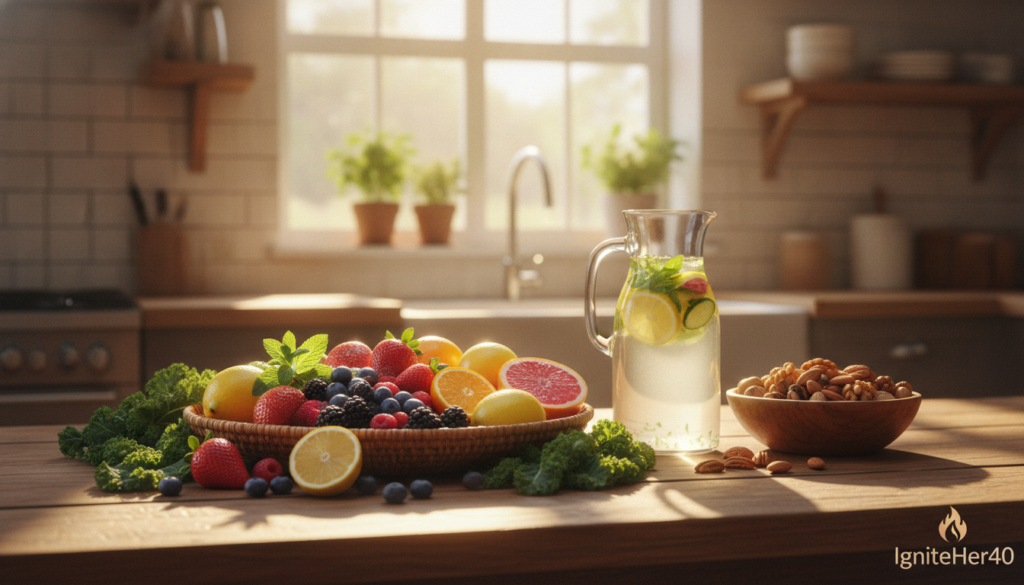
Fruits are great for you, and some are even better for hormonal health in your 40s. They have vitamins, fiber, and plant compounds. These help protect your cells from damage caused by hormonal changes.
Colorful fruits are like signals. Each color means different nutrients. Reds, blues, purples, and oranges all help in their own way.
Berries Packed with Antioxidants
Blueberries, strawberries, and raspberries are full of antioxidants. They fight inflammation and help your adrenal glands. This is important for managing stress and hormones.
A 2020 study in Nutrients showed berries reduce oxidative stress in women. They’re easy to find and eat, making them great for hormonal balance.
| Berry Type | Key Nutrient | Hormonal Benefit |
|---|---|---|
| Blueberries | Anthocyanins | Reduces oxidative stress |
| Strawberries | Vitamin C | Supports adrenal function |
| Raspberries | Fiber and ellagic acid | Helps stabilize blood sugar |
Citrus Fruits and Their Effects on Mood
Oranges, grapefruits, and lemons are full of vitamin C and flavonoids. These help make serotonin, which keeps your mood stable. When estrogen levels drop in your 40s, serotonin can too.
Eating citrus fruits regularly is a simple way to support hormone levels. Try berries with breakfast and citrus as a snack. Small, consistent choices make a big difference.
The Impact of Fermented Foods
Your gut does more than just digest food. It affects how your body makes and uses hormones, like estrogen. When your gut’s balance is off, hormone signals can get mixed up. That’s why fermented foods are great for hormone balance in your 40s.
Think of your gut as a hormone factory. A healthy gut helps break down estrogen well. But an unbalanced gut can mess with nutrient absorption and hormone work. Fermented foods add live probiotics to keep your gut in check.

Yogurt and Kefir for Gut Health
Greek yogurt is full of Lactobacillus and Bifidobacterium probiotics. These support a healthy gut. A good gut means better hormone production. Kefir, with its 61 different bacteria and yeast, is even more powerful for hormone balance.
- Choose plain, unsweetened Greek yogurt to avoid added sugars
- Opt for kefir with live active cultures listed on the label
- Pair with prebiotic-rich leafy greens to feed beneficial gut bacteria
Sauerkraut and Kimchi Benefits
These fermented veggies are full of nutrients your body needs. Sauerkraut has vitamin C, vitamin K, and fiber, plus probiotics. Kimchi adds anti-inflammatory compounds from garlic, ginger, and chili, helping your gut and hormone metabolism.
| Fermented Food | Key Probiotic Strains | Hormonal Benefit |
|---|---|---|
| Greek Yogurt | Lactobacillus, Bifidobacterium | Supports estrogen metabolism |
| Kefir | Up to 61 strains | Enhances nutrient absorption |
| Sauerkraut | Lactobacillus plantarum | Reduces gut inflammation |
| Kimchi | Lactobacillus kimchii | Boosts microbiome diversity |
A 2021 study published in Cell by Stanford researchers found that a diet high in fermented foods increased microbiome diversity and decreased markers of inflammation in just 10 weeks.
Start with a small amount, like a few spoonfuls of sauerkraut or a cup of kefir daily. Your gut and hormones will thank you. Adding these to a diet rich in healthy fats and fruits is key for hormonal health in midlife.
Beverage Choices for Hormonal Wellness
What you drink is just as important as what you eat. When you’re focusing on hormone balance, your drink choices can help or hurt. The right drinks calm your nerves, give you antioxidants, and keep you hydrated. These are key in your 40s.
Herbal Teas and Their Calming Effects
Stress can mess with your hormones. Herbal teas like chamomile, peppermint, and spearmint can help you relax and sleep better. Spearmint tea has been shown to lower androgen levels in women. These teas are great for unwinding in the evening.
“Hydration isn’t just about water — it’s about choosing beverages that actively work with your body, not against it.”
Drinking water all day can help with symptoms like hot flashes and brain fog. Try to drink at least eight glasses a day.
Green Tea and Antioxidant Properties
Green tea is a top choice for hormonal health. It’s full of EGCG, an antioxidant that boosts metabolism and may balance estrogen. Drink 2–3 cups a day to keep caffeine under 200–300 mg. Too much caffeine can stress your adrenal glands and mess with cortisol.
| Beverage | Caffeine Content | Key Benefit | Best Time to Drink |
|---|---|---|---|
| Green Tea | 25–50 mg per cup | Rich in EGCG antioxidants | Morning to early afternoon |
| Chamomile Tea | 0 mg | Promotes relaxation and sleep | Evening |
| Spearmint Tea | 0 mg | May reduce excess androgens | Anytime |
| Water | 0 mg | Supports all bodily functions | Throughout the day |
Remember, alcohol can mess with sleep and block nutrient absorption for hormone production. If you drink, do it in moderation, even more so during hormonal changes. Your body will appreciate it.
Supplements That May Aid Hormone Balance
Sometimes, eating well isn’t enough. Your body in your 40s might need extra help. Certain supplements can fill nutritional gaps and support your hormones.
Omega-3 Fatty Acids
Your body can’t make omega-3s on its own. You must get them from food or supplements. Fatty fish like salmon and sardines are great for hormone support. But if you’re not eating fish often, a quality fish oil supplement can help.
Omega-3s reduce inflammation, which can disrupt hormones. Research in the American Journal of Clinical Nutrition shows they help with mood and may ease menstrual pain. This is crucial when hormones are changing.
Vitamin D and Its Role in Hormonal Health
Vitamin D acts like a hormone, affecting estrogen, progesterone, and thyroid function. Many women over 40 are deficient, often without realizing it, during fall and winter.
Getting your levels checked is a smart first step. A simple blood test shows where you stand.
Beyond these two, several other nutrients are important for hormone balance:
| Supplement | Food Sources | Key Benefit |
|---|---|---|
| Magnesium | Spinach, dark chocolate | Alleviates PMS symptoms |
| Zinc | Pumpkin seeds, chickpeas | Supports testosterone production |
| B Vitamins | Whole grains, eggs | Stabilizes blood sugar levels |
| Selenium | Brazil nuts, sunflower seeds | Supports thyroid function |
| Ashwagandha | Supplement form | Regulates cortisol and adrenal recovery |
Supplements can be powerful — but they work best with whole foods. Before adding anything new, read the next section on getting professional guidance tailored to your body.
Getting Professional Guidance
Eating foods that promote hormone balance in your 40s is a great start. But sometimes, your body needs more help. That’s when a healthcare provider is crucial. Knowing when to ask for help can save you a lot of time and trouble.
When to Consult a Healthcare Provider
Listen to your body. If you’re tired all the time, gaining or losing weight without trying, feeling moody, or having irregular periods, see a doctor. These signs might mean your hormones are out of balance. You can check out resources from the Mayo Clinic, Cleveland Clinic, and the National Institutes of Health before your visit.
A healthcare provider can do tests to check your hormone levels. They’ll then make a plan just for you. This might include special foods, natural remedies, lifestyle changes, or hormone therapy. Places like Renaissance Healthcare for Women offer personalized care, including nutrition advice. The right professional will guide you, not give a generic solution. You can learn about balancing your hormones naturally before your appointment.
If you’re changing your diet a lot or are unsure about your nutritional needs, get professional advice. A specialist can tell you exactly what your body needs. Remember, this article is not a substitute for medical advice. Your healthcare provider knows your health history and needs best.
FAQ
What are the best foods that promote hormone balance in your 40s?
Foods that help balance hormones include leafy greens and cruciferous veggies. These are rich in magnesium and support estrogen. Fatty fish like salmon and mackerel are great for omega-3s. Also, eat fiber-rich foods like flaxseeds and lentils, and healthy fats from avocados and olive oil. Don’t forget probiotic-rich foods like Greek yogurt and kefir. These foods help your endocrine system during perimenopause.
Why do hormonal changes become more noticeable in your 40s?
Hormones like estrogen and progesterone start to fluctuate more after 35. Your metabolism slows down, and nutrient absorption changes. Even small hormonal shifts can cause big changes like fatigue, weight gain, and mood swings. It’s your body’s natural transition, and eating the right foods can help.
How does fiber help with hormone balance?
Fiber is a powerful tool for hormone balance. It binds to excess estrogen in your gut, helping it get excreted. It also prevents insulin resistance and supports a healthy gut microbiome. Great sources include raspberries, blackberries, chickpeas, lentils, chia seeds, flax seeds, oatmeal, and quinoa.
What role do healthy fats play in a hormone-friendly diet?
Healthy fats are essential for hormone production. Without them, your body can’t make hormones like estrogen and testosterone. Avocados balance estrogen and progesterone levels. Nuts like almonds and walnuts provide vitamin E, reducing inflammation. Flaxseeds contain lignans that mimic estrogen, helping balance hormone levels.
Which proteins are best for supporting hormonal health?
Protein is key for hormone production. Eggs provide balanced fats, proteins, and choline for brain health. Salmon is high in omega-3s that may reduce menstrual pain. Greek yogurt is rich in probiotics for gut-based hormone production. Lean chicken breasts and plant-based options like lentils are also good. Eating quality protein throughout the day keeps energy levels steady.
How does gut health affect hormone balance?
Your gut microbiome is crucial for hormone production and regulation. It metabolizes estrogen and maintains balance. An imbalanced gut can disrupt hormone signaling and nutrient absorption. Probiotic-rich foods like Greek yogurt and sauerkraut support digestive health and hormone metabolism. Leafy greens feed beneficial bacteria, enhancing gut’s role in hormonal balance.
Can green tea really help with hormone balance?
Green tea has EGCG, a powerful antioxidant that supports metabolism and may balance hormone levels. Limit intake to 2-3 cups daily to avoid excessive caffeine. Herbal teas provide calming effects without caffeine. Proper hydration also supports bodily functions and may help with symptoms like hot flashes.
What supplements may support hormone balance in your 40s?
Omega-3 fatty acids reduce inflammation and support mood stability. Vitamin D supports various bodily processes. Magnesium alleviates PMS symptoms. Zinc supports testosterone production, and selenium is crucial for thyroid function. Turmeric has anti-inflammatory properties, and adaptogens like ashwagandha or maca root regulate cortisol. Always discuss supplements with your healthcare provider before starting.
How much sleep do you need to support hormonal health?
Aim for seven to eight hours of sleep nightly for hormone balance. Sleep controls cortisol, somatotropin, and leptin. Shortchanging sleep disrupts these hormones, leading to other imbalances. Alcohol can also affect sleep quality and how your body processes food, so drink in moderation.
When should you see a doctor about hormonal imbalances?
See your doctor for sudden, severe, or worsening symptoms like fatigue, weight changes, mood swings, anxiety, depression, or irregular periods. Seek guidance for significant perimenopausal symptoms, major dietary changes, or nutritional uncertainty. Organizations like the Mayo Clinic, Cleveland Clinic, and NIH offer hormone health resources. Renaissance Healthcare for Women provides comprehensive menopause care, including personalized nutrition. Remember, this info is not medical advice, and a healthcare provider can give personalized recommendations.