
The signs of hormonal imbalance in women over 40 are often dismissed as “just aging” — but your body is actually sending you important signals worth paying attention to.
You wake up tired, even after a full night’s sleep. Your favorite jeans are too tight, despite eating the same. You get annoyed easily, over small things.
When you talk to your doctor, they say “It’s just part of aging.” But these aren’t just signs of aging. They’re your body’s way of telling you something’s wrong.
These symptoms need to be taken seriously, not ignored. This article will explain what’s really happening, which hormones might be out of balance, and what you can do to feel better.
Key Takeaways
- Persistent exhaustion, unexplained weight gain, and mood swings are common indicators your body needs support, not normal aging
- Chemical messengers regulate metabolism, mood, sleep, and reproductive health throughout your body
- Hormone changes after 40 during perimenopause and menopause can create recognizable patterns you can address
- Early identification of these body signals helps prevent long-term health complications
- Science-backed strategies exist to restore balance and help you feel like yourself again
- Your concerns are valid and deserve proper medical attention and personalized solutions
Editor’s Pick
Looking for a natural supplement designed specifically for women over 40?
★★★★★
Rated 4.8/5 by over 2,300 women — see why it’s our top pick this year.
Read Our CitrusBurn Review →Why Signs of Hormonal Imbalance in Women Over 40 Get Worse With Age
If you’ve noticed changes in your body after 40, you’re not imagining things—your hormones are actively transitioning. Around age 40, women often begin to notice shifts in mood, energy, sleep, and metabolism that feel frustratingly unpredictable.
Your body isn’t broken—it’s entering a natural biological phase. Your ovaries gradually produce less estrogen and progesterone as part of the shift toward menopause. This transition phase is called perimenopause, and it’s when most perimenopause symptoms after 40 begin to appear.
Perimenopause can last anywhere from a few years to a full decade before your periods stop completely. During this time, your hormone levels don’t decline steadily like you might expect. Instead, they swing wildly up and down, creating an unpredictable pattern that explains why your symptoms can change dramatically from month to month.

One month you might feel relatively normal. The next month you’re dealing with insomnia, irritability, and weight that appears seemingly overnight. These fluctuations are characteristic menopause hormone changes that affect nearly every woman differently.
Understanding the relationship between ageing and hormones in women over provides crucial context for managing this transition effectively.
The impact extends far beyond your reproductive system. Estrogen and progesterone have receptor sites throughout your body—in your brain, bones, heart, skin, and digestive system. When these hormones fluctuate, they trigger changes across multiple body systems simultaneously.
| Hormonal Phase | Age Range | Estrogen Pattern | Common Experiences |
|---|---|---|---|
| Pre-Perimenopause | Under 40 | Consistent monthly cycles | Predictable periods, stable mood and energy |
| Early Perimenopause | 40-45 | Occasional fluctuations | Irregular cycles, mood shifts, sleep changes |
| Late Perimenopause | 45-52 | Significant unpredictable swings | Hot flashes, weight gain, brain fog, skipped periods |
| Menopause | Average age 51 | Consistently low levels | No periods for 12 consecutive months |
The unpredictability of these hormonal fluctuations makes perimenopause symptoms after 40 challenging. You can’t always predict when symptoms will strike or how intense they’ll be. This variability is completely normal during this transition.
Your brain is very sensitive to these shifts. Estrogen influences serotonin production, which affects mood regulation. It also impacts your hypothalamus, the brain region controlling body temperature—explaining those sudden hot flashes.
Here’s what matters most: while menopause hormone changes are a natural part of aging, severe symptoms that interfere with your daily life are not something you just have to accept. The intensity of your symptoms doesn’t have to match the intensity of the transition.
Understanding what’s happening in your body is the first step toward getting the support you need. Recognition empowers you to take proactive steps toward restoring balance and navigating this transition with your health and sanity intact.
Are Your Symptoms “Just Aging” or Hormonal Imbalance?
Aging doesn’t mean suffering. Your body changes in your 40s and beyond. This is just normal biology.
But, there’s a big difference between normal changes and symptoms that really bother you. Knowing this is key when dealing with hormone changes after 40.
Normal aging might mean needing reading glasses or seeing more gray hairs. But it shouldn’t mean feeling miserable every day.
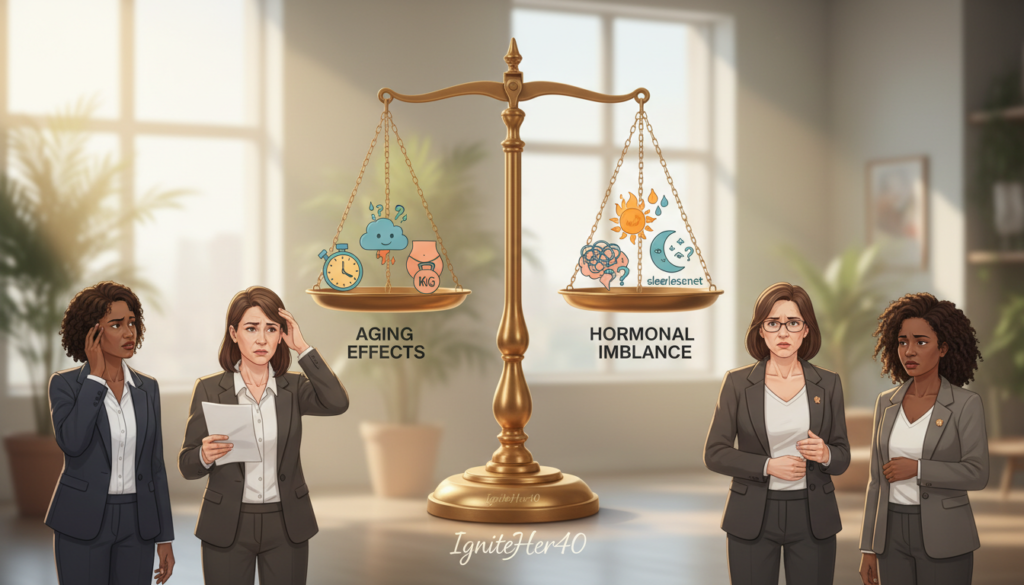
If you’re dealing with these issues, it’s more than just getting older:
- Gaining 15-20 pounds without changing your diet or exercise
- Feeling so tired that sleep doesn’t help, and you struggle by afternoon
- Having mood swings that hurt your relationships or work
- Losing a lot of hair every time you shower or brush
- Having brain fog that makes you forget words or miss appointments
- Having trouble sleeping and feeling wired at 2 AM
These aren’t normal aging. They’re symptoms of perimenopause that show you need to look at your hormone levels.
Too many women hear “that’s just what happens after 40” from doctors who don’t look deeper. This ignores real, treatable conditions as just aging.
You know your body best. If something feels off, trust your gut.
Hormonal imbalances are treatable conditions, not life sentences. The medical world is catching up, but you might need to speak up for yourself.
Normal hormone changes after 40 are gradual and can be managed with lifestyle changes. But hormonal imbalance causes symptoms that disrupt your life and don’t get better with basic self-care.
If you’ve tried to sleep more, eat better, and manage stress but your symptoms don’t improve, your body is trying to tell you something. Your hormones might need professional help.
Knowing which symptoms need more investigation gives you the power to get the care you deserve. You’re not being dramatic, you’re not imagining things, and you’re definitely not “just getting old.”
Your symptoms are real. They need attention. And most importantly, they can be addressed when you understand what’s happening in your body.
What Are the Most Common Signs of Hormonal Imbalance Women Over 40 Experience?
Hormonal imbalance shows up in many frustrating ways. It’s not just one symptom. It’s a mix of changes that seem to happen overnight. These signs are often mistaken for stress or normal aging, but they’re actually your body’s way of saying something’s off.
Understanding these symptoms can help you take action. It’s not about ignoring them or pushing through. It’s about listening to your body and getting the support it needs.
The four symptoms below are common in women in their 40s. They’re not flaws or things to just get through. They’re signs that your body needs attention and care.

Unexplained Weight Gain and Hormonal Belly Fat
You’re eating the same and exercising, but the scale keeps going up. And that extra weight settles around your midsection, known as “hormonal belly fat.”
This weight gain is due to declining estrogen. It changes how your body stores fat. Instead of hips and thighs, fat goes to your belly. This isn’t just about looks; it’s a health risk.
Insulin resistance also kicks in during perimenopause. Your cells don’t respond well to insulin. This means your body stores more calories as fat, not energy.
Estrogen decline and insulin resistance create a perfect storm for weight gain. Your thyroid function may slow down too, making it harder to lose weight.
Persistent Fatigue That Sleep Doesn’t Fix
You’re sleeping well, but still feel exhausted. This deep tiredness follows you all day, no matter how much coffee you drink.
This fatigue is different from normal tiredness. It’s a persistent exhaustion that rest doesn’t fix. It’s caused by hormonal issues, not lack of sleep.
Low progesterone affects your sleep quality. Thyroid problems slow your metabolism, leaving you without energy. Elevated cortisol levels keep you awake at night and tired during the day.
Many women feel like they’re moving through mud. Simple tasks feel like huge efforts. This isn’t laziness or poor time management. It’s a hormonal signal that your body needs help.
Mood Swings and Emotional Instability
You might feel fine one moment and cry over a commercial the next. These mood swings in perimenopausal women can be unsettling.
Estrogen and progesterone affect your mood. When these hormones change wildly, your emotions do too.
You might feel anxious or irritable without reason. Some women feel like they’re on an emotional rollercoaster they can’t control.
These mood changes aren’t personal failures. They’re caused by hormonal shifts affecting your brain. Your emotional state has a physical reason that deserves attention, not shame.
Hot Flashes and Night Sweats
Sudden heat waves can leave you drenched. These episodes can happen during the day or at night, disrupting your sleep.
Hot flashes occur when estrogen levels drop. Your brain thinks you’re too hot, causing rapid blood vessel dilation and sweating.
Night sweats are disruptive because they wake you up. You wake up drenched, change clothes or sheets, and struggle to fall back asleep. This compounds fatigue and mood issues.
The frequency and intensity of hot flashes vary. Some women experience mild warmth, while others have severe episodes. Both patterns show significant estrogen level shifts.
| Symptom | Primary Hormone Involved | Why It Happens | Common Triggers |
|---|---|---|---|
| Unexplained weight gain and belly fat | Estrogen and Insulin | Estrogen decline changes fat storage patterns; insulin resistance increases | Perimenopause, stress, poor sleep, refined carbohydrates |
| Persistent fatigue | Progesterone, Thyroid, Cortisol | Low progesterone disrupts sleep quality; thyroid slows metabolism; cortisol imbalance causes energy crashes | Chronic stress, thyroid disorders, adrenal dysfunction |
| Mood swings and emotional instability | Estrogen and Progesterone | Fluctuating levels affect neurotransmitters like serotonin and dopamine | Hormonal fluctuations, stress, irregular periods over 40 |
| Hot flashes and night sweats | Estrogen | Declining estrogen confuses hypothalamus temperature regulation | Perimenopause, menopause, stress, spicy foods, alcohol |
These four symptoms are common in women over 40. Seeing them as hormonal signals, not personal failures, empowers you to seek support and make informed health decisions.
Each symptom is linked to specific hormone imbalances. These can be identified, measured, and addressed. You don’t have to accept these changes as part of aging or suffer alone.
Which Hormones Are Out of Balance and What Do Your Symptoms Mean?
Every symptom you’re experiencing points to a specific hormonal imbalance. Understanding which hormones are causing your symptoms helps you have more productive conversations with your healthcare provider. This way, you can pursue targeted solutions instead of guessing.
After 40, several key hormones shift dramatically. Estrogen and progesterone are critical for reproductive health, bone strength, and mood regulation. Testosterone supports energy, libido, and muscle mass in women too. Your thyroid controls metabolism and energy production.
Cortisol manages your stress response, while DHEA and insulin impact how your body uses energy and stores fat. When any of these fall out of balance, your body sends clear signals through specific symptom patterns.
Estrogen Imbalance in Midlife Women
Estrogen imbalance in midlife women is perhaps the most talked-about hormonal shift. When estrogen declines, you might experience hot flashes, night sweats, vaginal dryness, brain fog, and mood changes. Many women also notice increased anxiety they’ve never dealt with before.
But here’s what makes this tricky: estrogen doesn’t just drop steadily. During perimenopause, it fluctuates wildly, sometimes spiking high before eventually declining. This explains why your symptoms can feel so unpredictable from month to month.
Low estrogen symptoms women commonly report include difficulty concentrating, memory lapses, and a sense of feeling “off” emotionally. You might also notice changes in your skin texture, increased joint pain, or changes in your menstrual cycle.

The dramatic fluctuations during perimenopause create what feels like a hormonal roller coaster. One month you’re fine, the next you’re having multiple hot flashes daily. This inconsistency is actually a hallmark of estrogen imbalance during this transition period.
Progesterone Deficiency Over 40
Progesterone deficiency over 40 often happens before estrogen decline begins, sometimes as early as your mid-30s. This is one of the earliest hormonal shifts many women experience, yet it’s frequently overlooked.
Low progesterone causes anxiety that feels different from normal stress. You might wake between 2-4 AM and struggle to fall back asleep. Many women notice their periods become irregular or surprisingly heavy.
PMS symptoms you barely noticed before suddenly become overwhelming. You might experience breast tenderness, bloating, irritability, or mood swings that seem worse than ever. This happens because progesterone is your calming, sleep-promoting hormone.
When progesterone levels drop, you lose that natural relaxation effect. Think of progesterone as nature’s anti-anxiety medication. Without adequate levels, you feel more wired, anxious, and unable to achieve restful sleep even when you’re exhausted.
Thyroid Problems in Women Over 40
Thyroid problems in women over 40 are incredibly common but often overlooked because symptoms overlap significantly with perimenopause. Your thyroid controls your metabolism, so when it’s underactive (hypothyroidism), everything slows down.
You experience persistent fatigue no matter how much you sleep. Weight gain happens even though you haven’t changed your diet. You feel cold when others are comfortable, and your hair becomes noticeably thinner.
Other telltale signs include dry skin that no moisturizer seems to help, constipation, brain fog, and depression. Many women spend years thinking these symptoms are “just perimenopause” when actually their thyroid needs support.
Here’s why this matters: thyroid dysfunction requires different treatment than estrogen or progesterone imbalance. That’s why comprehensive testing is crucial. You can’t guess your way to the right solution when symptoms overlap this much.
Cortisol Imbalance Women 40s
Cortisol imbalance women 40s typically experience shows up as chronically elevated cortisol from ongoing stress. Your body wasn’t designed to handle the relentless stress of modern life, and by your 40s, the effects become impossible to ignore.
High cortisol causes stubborn belly fat that accumulates around your midsection despite diet and exercise. You experience blood sugar imbalances with intense cravings for sugar or carbs. Sleep becomes disrupted—either you can’t fall asleep because you feel wired, or you wake feeling anxious.
Anxiety increases even over small things that wouldn’t have bothered you before. You might feel constantly on edge or unable to truly relax. Weight loss becomes frustratingly difficult no matter how “perfectly” you eat or how much you exercise.
When cortisol stays elevated long-term, it can eventually crash. This leads to extreme fatigue, burnout, and a feeling of complete exhaustion that rest doesn’t fix. You might need caffeine just to function through basic daily tasks.
Each hormone creates a distinct symptom pattern, though they often overlap and influence each other. This is why you might experience symptoms from multiple hormone imbalances simultaneously—they’re all interconnected in complex ways.
Getting comprehensive testing helps identify which specific hormones need support. This prevents you from trying random solutions that don’t address your actual imbalances. When you know exactly what’s happening in your body, you can pursue targeted treatments that actually work.
How Can You Naturally Rebalance Your Hormones After 40?
Your body wants to find balance again. You just need to give it the right tools. You don’t have to wait for a doctor’s appointment or prescription to start addressing your hormonal imbalance symptoms.
These four foundational strategies work together to support your body’s natural hormone production. They’re not quick fixes, but they create real, lasting change when you apply them consistently.

Dietary Changes for Hormone Balance
What you eat directly affects how your body produces and regulates hormones. Your hormones are literally made from the nutrients you consume, so food isn’t just fuel—it’s medicine.
Start with protein at every meal. Aim for 25-30 grams to stabilize blood sugar and provide the building blocks your body needs for hormone production. Eggs, Greek yogurt, chicken, fish, and legumes all work beautifully.
Add healthy fats like avocados, olive oil, nuts, seeds, and fatty fish to your daily routine. Your body needs these fats to manufacture hormones—they’re not optional extras.
Load up on fiber from vegetables, fruits, and whole grains. Fiber helps your body eliminate excess estrogen and keeps blood sugar stable throughout the day, which reduces stress on your hormonal system.
Reduce alcohol, caffeine, and sugar. All three worsen hormonal imbalance symptoms by stressing your liver and creating blood sugar spikes that trigger cortisol release.
Exercise and Movement for Hormonal Health
Finding the right balance with exercise matters more than you might think. Too much or too little can both create problems for your hormones.
Strength training 2-3 times weekly helps maintain muscle mass, which naturally declines with age and hormonal changes. You don’t need heavy weights—bodyweight exercises, resistance bands, or light dumbbells all work.
Walking, yoga, or swimming provides consistent movement without overtaxing your system. These activities support hormone balance while keeping cortisol levels in check.
Here’s the crucial part: excessive high-intensity exercise when your hormones are already imbalanced can actually make things worse. If you’re doing intense workouts daily and still feeling exhausted, that’s your body asking you to dial it back.
Stress Management and Cortisol Control
Chronic stress is one of the biggest hormone disruptors you’ll face. This isn’t optional self-care fluff—it’s essential medicine for your hormonal health.
Daily practices that signal safety to your nervous system make a measurable difference. Try 10 minutes of morning meditation, even if your mind wanders the entire time.
Regular deep breathing exercises throughout the day help reset your stress response. Just three deep belly breaths can lower cortisol levels in the moment.
Spending time in nature, pursuing hobbies that genuinely relax you, or simply sitting quietly with your morning coffee all count. What matters is that these activities actually relax you—not just distract you from stress.
Sleep Optimization Strategies
Quality sleep is when your body produces and regulates most hormones. Poor sleep increases cortisol and disrupts production of key hormones, while low hormone levels make it harder to achieve deep, restorative sleep.
Maintain a consistent sleep schedule with the same bedtime and wake time daily, even on weekends. Your body’s hormone production follows circadian rhythms, and consistency strengthens these patterns.
Keep your bedroom cool (around 65-68°F) and dark. Your body needs a temperature drop to trigger melatonin production and initiate deep sleep cycles.
Avoid screens for an hour before bed. The blue light suppresses melatonin and signals to your brain that it’s still daytime, disrupting your natural hormone cascade.
Consider magnesium supplementation to support relaxation. Many women over 40 are deficient in magnesium, which plays a crucial role in sleep quality and stress management.
Focus on getting 7-9 hours of quality sleep daily. Improving sleep often creates a positive cascade effect on all your other hormonal imbalance symptoms.
Start with one or two changes rather than overhauling everything at once. Small, consistent actions create lasting results that actually stick, unlike dramatic overhauls that overwhelm you within a week.
Editor’s Pick
Looking for a natural supplement designed specifically for women over 40?
★★★★★
Rated 4.8/5 by over 2,300 women — see why it’s our top pick this year.
Read Our CitrusBurn Review →When Should You See a Doctor About Hormonal Symptoms?
You shouldn’t have to suffer in silence while your symptoms get worse. Knowing when to seek medical help can prevent complications and help you find relief faster. Many women dismiss their symptoms as “just part of aging,” but some signs of hormonal imbalance women over 40 experience actually require professional evaluation and treatment.
The key is learning which symptoms warrant immediate attention. Trust your instincts about your body—if something feels seriously wrong, it deserves investigation.
Red Flag Symptoms That Need Medical Attention
Certain hormonal symptoms should never be ignored. These red flags indicate you need to see an endocrinologist or your primary care provider right away.
Extremely heavy periods that last longer than seven days can lead to anemia and serious complications. If you’re soaking through a pad or tampon every hour, don’t wait to get help.
Any bleeding between periods or after menopause always needs evaluation. This isn’t normal and could indicate serious underlying conditions that require immediate diagnosis.
Severe mood changes including depression or thoughts of self-harm are medical emergencies. Hormonal imbalances can trigger serious mental health crises that need professional intervention immediately.
Debilitating fatigue that prevents you from functioning normally goes beyond typical tiredness. When you can’t get out of bed or complete basic daily tasks, something needs medical attention.
| Symptom Type | Red Flag Indicator | Why It Matters | Urgency Level |
|---|---|---|---|
| Menstrual Changes | Bleeding after menopause or between periods | May indicate serious reproductive conditions | Immediate evaluation needed |
| Weight Fluctuation | Rapid gain of 10+ pounds in one month | Could signal thyroid crisis or other endocrine emergency | Schedule appointment within 1-2 weeks |
| Cardiovascular Symptoms | Heart palpitations or chest pain | May indicate heart problems or severe hormone imbalance | Seek immediate medical care |
| Neurological Signs | Sudden severe headaches unlike your normal pattern | Could indicate dangerous blood pressure changes | Same-day evaluation recommended |
| Early Menopause | Hot flashes before age 40 | Might indicate premature ovarian insufficiency | Schedule comprehensive evaluation soon |
Rapid weight gain of more than 10 pounds in a month without clear cause needs investigation. This could indicate thyroid problems or other serious hormonal conditions.
Heart palpitations or chest pain should never be dismissed as anxiety. These symptoms require immediate medical evaluation to rule out cardiovascular issues.
Hot flashes before age 40 might indicate premature ovarian insufficiency. This condition affects your long-term health and fertility, so early diagnosis matters.
Any symptom that significantly interferes with your work, relationships, or daily activities deserves medical attention. You don’t have to accept suffering as normal.
What to Expect at Your Appointment
Preparation makes all the difference in getting the help you need. Start tracking your symptoms at least two weeks before your appointment.
Write down what you experience, when it happens, and how severe it is. Note patterns like symptoms that worsen at certain times of your cycle or after specific activities.
Create a list of all your questions before you go. It’s easy to forget important concerns once you’re in the exam room, so having them written down ensures nothing gets missed.
Be specific and honest about how signs of hormonal imbalance women over 40 affect your daily life. Don’t downplay or minimize what you’re experiencing—your doctor needs the full picture to help you effectively.
A good healthcare provider will take your concerns seriously. They should ask detailed questions about your symptoms, health history, and family medical background.
Expect a thorough physical exam. Your provider will check vital signs, possibly examine your thyroid, and may perform a pelvic exam depending on your symptoms.
Comprehensive hormone testing is essential for accurate diagnosis. Your doctor should explain what they’re testing for and why each test matters for understanding your specific situation.
They should discuss potential causes of your symptoms based on your test results and health history. Managing hormone health isn’t one-size-fits-all—it requires personalized approaches tailored to your unique needs.
Your provider should work with you to create a treatment plan that addresses your specific concerns. This might include lifestyle modifications, hormone therapy, or other interventions based on your test results.
Expect ongoing monitoring as part of your care. Hormone levels fluctuate, and treatment often requires adjustments over time to maintain optimal balance.
If your doctor dismisses your concerns or tells you to just deal with it, you have every right to seek a second opinion. Your symptoms are real, they matter, and you deserve a healthcare provider who takes them seriously.
Finding the right provider sometimes takes persistence. Look for doctors who specialize in women’s hormonal health and have experience treating women over 40.
Remember that you are your own best advocate. Don’t accept dismissal when you know something isn’t right with your body.
What Hormone Tests Should Women Over 40 Consider?
Getting the right hormone tests can turn guesswork into clear answers about your body. You can’t fix what you don’t measure. When hormone changes after 40 start messing with your life, the right tests give you the facts you need.
Not all hormone tests are the same. Knowing which ones to ask for means you get a full picture, not just a partial view.
Understanding your options and asking for the right tests is key. This way, you get answers to your symptoms, not more questions.
Standard Blood Tests for Hormone Levels
Blood tests are the most common way to check hormone levels. Most insurance plans cover them, making them a good starting point for your hormonal health.
A comprehensive hormone testing panel should include many markers, not just a few. Your doctor should order a full test that checks:
- Estradiol – the main form of estrogen that goes down during perimenopause
- Progesterone – best tested on day 21 of your cycle if you still get your period
- FSH and LH – these hormones help figure out if you’re in perimenopause or menopause
- Total and free testosterone – both are important for energy and sex drive
- DHEA-S – an adrenal hormone that goes down with age
- Complete thyroid panel – including TSH, Free T4, Free T3, and thyroid antibodies, not just TSH alone
- Fasting insulin and glucose – to check for insulin resistance that affects weight and energy
- Cortisol – though blood tests only capture one moment in time
- Vitamin D – works like a hormone and is key for hormonal balance
The downside of blood tests is timing. They only show hormone levels at the exact moment of blood draw, missing day-to-day or monthly changes.
Many women have normal blood test results but still feel bad. This is because standard ranges are very broad and don’t fit everyone.
Saliva and Urine Testing Options
Other testing methods give different types of info that blood tests can’t. Saliva testing looks at “free” hormones—the amount your body can use—instead of total hormones in your blood.
You can take multiple saliva samples a day to see cortisol patterns. This is important because cortisol should be highest in the morning and lowest at night. If it’s not, you might feel tired and have trouble sleeping.
DUTCH testing (Dried Urine Test for Comprehensive Hormones) is getting more popular. It checks not just hormone levels but also how your body metabolizes hormones. This gives insight into which hormone pathways work well and which might need help.
These special tests usually aren’t covered by insurance but offer more detailed info than standard blood work. If you’re struggling to find answers with regular tests, they might be worth the investment.
| Testing Method | What It Measures | Best Used For | Coverage |
|---|---|---|---|
| Blood Tests | Total hormone levels in bloodstream at specific moment | Initial screening, thyroid function, standard hormone panels | Usually covered by insurance |
| Saliva Testing | Free (bioavailable) hormones, multiple samples throughout day | Cortisol rhythm patterns, monitoring bioidentical hormone therapy | Rarely covered by insurance |
| DUTCH Urine Test | Hormone levels plus metabolic pathways and breakdown products | Comprehensive hormone metabolism, identifying specific imbalances | Typically not covered by insurance |
| Standard Urine Test | 24-hour hormone production averages | Overall hormone production patterns over full day | Sometimes partially covered |
Understanding Your Test Results
Lab reference ranges are very broad. What’s considered “normal” for most people might not be best for you. Even if your numbers are in the low-normal range, you can still feel bad.
Your symptoms matter more than whether your numbers fall within the reference range. When hormone changes after 40 mess with your life, it’s more important to optimize your levels than just avoid abnormal results.
Work with a doctor who understands your test results in the context of how you feel. The best doctors don’t just look at your numbers. They help optimize your levels to get rid of symptoms and boost your energy.
Flying Horse Medical Center uses comprehensive lab testing to assess key markers, providing a full picture of hormonal health—not just a snapshot—followed by personalized treatment plans and ongoing monitoring.
Keep copies of all your test results to track changes over time. Patterns that show up across multiple tests often reveal more than any single result. This helps you and your healthcare provider see the bigger picture.
Remember, hormone levels change naturally throughout your cycle if you’re still menstruating. Testing at the wrong time can give misleading results. That’s why timing is key for certain hormones like progesterone.
Don’t settle for a doctor who ignores your symptoms because your test results are “within normal limits.” Normal doesn’t mean optimal. You deserve care that addresses how you feel, not just what the paper says.
What Lifestyle Factors Worsen Hormonal Imbalance?
Some lifestyle habits can harm your hormonal health without you realizing it. Even if you eat well and exercise, hidden factors can still affect you. It’s not just about adding things; it’s also about removing what disrupts your system.
Four key areas can make your symptoms worse, even with good advice. But, once you know them, you can make changes that help a lot. These changes can often bring relief in just a few weeks.
Environmental Toxins and Endocrine Disruptors
Your home and daily products might have chemicals that mess with your hormones. These are called endocrine disruptors, and they’re everywhere.
Things like BPA in plastic, phthalates in fragrances, and pesticides on produce can harm your hormones. They can make your body think it has more estrogen than it does. This can mess with your thyroid and other hormones.
You can’t avoid all toxins, but reducing them helps your body balance hormones better. Here are some easy swaps:
- Use glass or stainless steel for food and water instead of plastic
- Choose fragrance-free or naturally scented products
- Buy organic for the “Dirty Dozen” produce items
- Use natural cleaning products or make your own
- Avoid heating food in plastic or using plastic wrap in the microwave
Every small change helps your hormonal system. Your body will thank you.
Poor Sleep Habits and Hormone Production
Your body makes most hormones during deep sleep. Poor sleep messes with this process, creating a hard cycle to break.
Poor sleep raises cortisol and messes with hormone production. It also makes it hard to sleep well. It’s a frustrating cycle.
Sleep is the golden chain that ties health and our bodies together.
Things like irregular sleep times, screens before bed, and a warm bedroom can hurt your sleep. A nightcap might help you sleep, but it messes with your hormones.
Good sleep hygiene is key when you’re dealing with hormonal issues. Aim for 7-9 hours a night. Keep your bedroom cool and dark. A consistent bedtime routine helps your hormones recover.
Editor’s Pick
Looking for a natural supplement designed specifically for women over 40?
★★★★★
Rated 4.8/5 by over 2,300 women — see why it’s our top pick this year.
Read Our CitrusBurn Review →Chronic Stress and Hormonal Chaos
Long-term stress keeps cortisol high, which messes with other hormones. This is a big problem for women over 40.
Work stress, family demands, and financial worries can keep you in fight-or-flight mode. This blocks progesterone receptors and messes with your thyroid. It also increases insulin resistance and depletes hormone-making resources.
Women over 40 often face decades of stress. Their bodies have forgotten what balance feels like.
Dealing with chronic stress is crucial. It’s not selfish; it’s hormonally necessary. You might need to:
- Say no to commitments that drain you
- Delegate tasks at home and work
- Practice stress-reduction techniques like deep breathing or yoga
- Seek professional help for long-standing stressors
- Make time for recovery each day, even if it’s just 15 minutes
Your hormones will only settle down when your nervous system does. Period.
Processed Foods and Blood Sugar Spikes
Eating high-sugar and refined-carb foods spikes your blood sugar. This makes your pancreas release a lot of insulin. Over time, your cells become resistant to insulin, leading to high insulin levels and other hormonal problems.
This insulin resistance increases testosterone production, promotes fat storage, and increases inflammation. It also worsens mood and energy fluctuations. It’s a hormonal domino effect.
The standard American diet is full of processed foods, sugary drinks, and refined carbs. This creates constant blood sugar chaos. Your body can’t maintain hormonal balance on this rollercoaster.
Eating whole foods, enough protein, healthy fats, and fiber stabilizes blood sugar. Avoid packaged snacks and sugary drinks. Eat meals based on real ingredients. Your insulin levels will stabilize, and your other hormones will follow.
Changing these lifestyle factors can make other interventions more effective. Women often see symptom relief in 2-4 weeks. The power is in your hands.
The Best Supplement to Support Weight Loss After 40
If you’re serious about supporting your metabolism after 40, we’ve done the research for you. After reviewing dozens of supplements, one stood out for women in this age group specifically. Read our full CitrusBurn Review to see exactly why we recommend it — including a full ingredient breakdown, real user experiences, and current pricing.
Conclusion
You’ve learned something important. Hormonal imbalances in women over 40 aren’t flaws or aging signs. They’re your body’s way of saying it needs help.
Spotting these signs early is key. Recognizing symptoms and acting fast can bring balance back. Making healthy lifestyle changes, like eating better and exercising, can really help.
Your feelings are real and need attention. Don’t let others downplay what you’re going through. You know your body best.
Testing can give you clear answers. It can show which hormones need support. With this info, you and your doctor can make a plan just for you.
Many women successfully go through this time. They make dietary changes, focus on sleep, avoid toxins, and find supportive doctors. You can too.
Begin with one change this week. Maybe it’s a healthier diet or a doctor’s visit. Your health is worth it.
Your body is trying to tell you something. It’s guiding you toward the care it needs to flourish again.
FAQ
What are the first signs of perimenopause in women over 40?
Early signs include irregular periods and worsening PMS symptoms. You might also feel more anxious and have trouble sleeping. These changes can start years before hot flashes.
Progesterone often drops first, causing sleep and mood issues. Estrogen levels also fluctuate wildly before dropping. Tracking your symptoms helps you talk to your doctor about what’s happening.
Can hormonal imbalance cause weight gain even if I’m eating healthy and exercising?
Yes, hormonal changes can lead to weight gain. Estrogen decline shifts fat storage to your midsection. This “hormonal belly fat” is hard to lose.
Insulin resistance and high cortisol also play a role. Thyroid issues can slow your metabolism. It’s not about willpower, but hormonal changes affecting energy storage.
What’s the difference between perimenopause and menopause?
Perimenopause is the transition before menopause, lasting from a few years to a decade. It starts in your 40s. During this time, your ovaries produce less estrogen and progesterone, but levels fluctuate wildly.
Menopause is when you’ve gone a year without a period. At this point, hormone levels stabilize at lower amounts. Perimenopause symptoms are often more severe than those in menopause.
How do I know if my thyroid is causing my symptoms or if it’s just perimenopause?
Symptoms like fatigue and weight gain can come from both thyroid issues and perimenopause. It’s hard to tell without testing. A complete thyroid panel is crucial.
Many women have both thyroid problems and perimenopause. Treating only one won’t solve all symptoms. If your doctor won’t test your thyroid, find a new doctor.
Are bioidentical hormones safer than synthetic hormone replacement therapy?
Bioidentical hormones have the same molecular structure as your body’s hormones. Synthetic hormones are different. Some women report fewer side effects with bioidentical hormones.
But “bioidentical” doesn’t mean safer. The type of hormone, dosage, and your health history matter more. Working with a knowledgeable provider is key.
Can I balance my hormones naturally without medication or hormone therapy?
Yes, many women manage mild symptoms with lifestyle changes. Nutrition, strength training, stress management, and sleep optimization help. Supplements can also support hormone balance.
But if symptoms are severe, you might need hormone therapy. The best approach combines lifestyle changes with medical treatment.
Why am I having such severe mood swings and anxiety when I’ve never struggled with this before?
Hormonal changes affect your brain chemistry. Estrogen and progesterone influence neurotransmitters. Fluctuations in these hormones can cause mood swings and anxiety.
Low progesterone can make you feel anxious. Thyroid issues also contribute to mood changes. It’s not a sign of losing your mind. Hormonal shifts can improve with treatment.
How long do perimenopause symptoms last?
Symptoms can last from four to eight years, or even longer. The most intense symptoms occur before your final period and the first year after menopause.
After that, symptoms often improve. But some symptoms, like vaginal dryness, can continue. The duration and severity vary greatly.
What supplements actually help with hormonal balance after 40?
Magnesium, vitamin D, omega-3 fatty acids, and B-complex vitamins have research backing them. Black cohosh may reduce hot flashes, and maca root supports energy and balance.
Evening primrose oil helps with breast tenderness and mood. Adaptogenic herbs like ashwagandha support stress resilience. Start with one supplement at a time and choose third-party tested brands.
Is it normal to have irregular periods in my 40s, or should I be concerned?
Irregular periods are common in perimenopause. But some patterns need medical attention. See your doctor if you have unusual bleeding or other symptoms.
Tracking your cycles and discussing them with your doctor is important. They can determine if your symptoms are normal or need further investigation.
Why do I wake up between 2-4 AM and can’t fall back asleep?
Waking up in the early morning hours is often due to low progesterone. Progesterone helps you stay asleep. Cortisol patterns and blood sugar crashes also contribute to waking up.
To improve sleep, avoid eating before bed, include protein in your dinner, and try magnesium glycinate. Reducing screen time and light exposure also helps. If changes don’t work, test your hormone levels.
Can stress really throw off my hormones that much?
Yes, chronic stress is a powerful hormone disruptor. It prioritizes cortisol production over other hormones. High cortisol blocks progesterone receptors and disrupts sleep.
Managing stress is crucial for hormonal health. It’s not just about self-care—it’s essential medicine for your hormones.