
You’ve tried cutting calories. You’ve eaten less. You’ve followed the same strategies that worked in your thirties.
But here’s what nobody told you: your body processes carbohydrates completely differently after 40. The metabolism you relied on has shifted. Your hormones are changing. The exact same meals that used to keep you energized now seem to work against your waistline.
You’re not imagining this, and you’re not doing anything wrong.
Low carb eating isn’t another restrictive diet that leaves you hungry. It’s about choosing foods that match how your body works right now. When you reduce digestible carbohydrates to between 50-150 grams daily, you lower insulin spikes, support hormone balance, and help your body manage weight naturally.
This guide gives you exactly what you need: clear food lists, practical meal ideas, and honest information you can use today. No perfection required. No marketing hype. Just straightforward nutrition that works with your midlife body, not against it.
Editor’s Pick
Looking for a natural supplement designed specifically for women over 40?
★★★★★
Rated 4.8/5 by over 2,300 women — see why it’s our top pick this year.
Read Our CitrusBurn Review →Key Takeaways
- Your metabolism changes after 40, making your body process carbohydrates differently than it did in your thirties
- A practical approach limits daily carbohydrate intake to 50-150 grams to support hormone balance and natural weight management
- This eating style reduces insulin spikes that contribute to stubborn weight gain during midlife
- You don’t need to eat less food—you need to choose the right foods that work with your current hormonal state
- This guide provides actionable food lists and meal strategies you can implement immediately without perfection
Why Low Carb Eating Matters More After 40
Let’s explore what changes in your body after 40. Why does that toast now feel different? It’s not about losing willpower. Your body changes how it handles carbs.
At your annual checkup, no one tells you this: your body at 45 doesn’t process carbs like it did at 28. This explains why a low carb diet women over 40 works differently than in your 20s or 30s.
Three major changes happen after 40 that make carbs harder to manage:
- Insulin resistance increases naturally with age – your cells become less responsive to insulin signals
- Estrogen levels decline during perimenopause and menopause – changing where and how your body stores fat
- Your metabolic rate slows down – meaning you need fewer calories and process carbs less efficiently

Think of insulin resistance as your cells developing selective hearing. When you eat carbs, your pancreas releases insulin to help shuttle glucose into your cells for energy. But as you age, those cells stop listening as well. They ignore insulin’s signals.
The result? Carbs you once burned easily now get stored as fat more readily, around your midsection. Studies show that your body learns to burn fat more efficiently when you limit carbohydrates, directly addressing that stubborn midlife weight gain.
Estrogen decline adds another layer to this challenge. Before menopause, estrogen helped direct fat storage to your hips and thighs. After estrogen drops, fat migrates to your belly. This visceral fat isn’t just cosmetic—it increases health risks and proves resistant to traditional calorie-cutting approaches.
Your metabolism naturally slows about 2-4% per decade after age 30. This means the same portion sizes that maintained your weight at 35 might add pounds at 45. Carbohydrates become a less efficient fuel source as this metabolic slowdown occurs.
This is where metabolism boosting low carb foods for midlife women make a real difference. By reducing carb intake, you’re working with these biological changes instead of fighting against them. You’re giving your insulin-resistant cells fewer carbs to process. You’re encouraging your body to tap into fat stores for fuel.
A low carb approach after 40 isn’t about following a trendy diet. It’s about respecting what your body needs now, not what worked in your younger years. You’re not broken or lacking discipline—your biology simply requires a different strategy.
The good news? Once you understand these changes, you can make informed choices that actually support your body’s current reality. That’s empowering, not restrictive.
How Your Body Processes Carbs Differently After 40
Carbs that were easy to handle in your 30s might now make your belly bulge after 40. There’s a scientific reason for this. Your body is adapting to three key metabolic changes.
Knowing about these changes helps you stop blaming yourself. Instead, you can work with your body’s new needs. A perimenopause low carb diet tailored to these changes supports your body, not restricts it.

Increased Insulin Resistance in Midlife
Insulin is like a key that unlocks your cells for glucose. But after 40, your cells start ignoring insulin. This is called insulin resistance.
Your pancreas then makes more insulin, leading to high levels of this fat-storage hormone in your blood.
High insulin levels tell your body to store fat, mainly around your midsection. This also causes your blood sugar to stay high, leading to energy crashes and cravings for carbs.
“Insulin resistance affects approximately 40% of adults in their 40s and 50s, and it’s a major driver of midlife weight gain.”
Eating fewer carbs can break this cycle. Lower carb intake means less insulin production. This makes your cells more responsive to insulin, helping to lose that stubborn fat.
For most women over 40, aiming for 50-100 grams of carbs daily is best. This amount allows for nutrient-rich veggies while avoiding blood sugar spikes that lead to too much insulin.
Estrogen Decline and Fat Storage Patterns
Estrogen doesn’t just control your menstrual cycle; it also influences where your body stores fat. As estrogen levels drop during perimenopause and menopause, your fat storage pattern changes.
Before estrogen decline, your body stored fat in your hips and thighs. This is softer fat that’s less risky for your health.
After estrogen drops, your body stores more visceral fat. This dangerous fat wraps around your organs. It’s not just about fitting into your jeans; it increases inflammation, disease risk, and makes losing weight harder.
| Metabolic Factor | Before Age 40 | After Age 40 | Low Carb Impact |
|---|---|---|---|
| Insulin Sensitivity | Cells respond efficiently to insulin signals | 40% decrease in insulin sensitivity; cells resist insulin | Reduces insulin demand by 30-50%, improving cell response |
| Estrogen Levels | Stable levels regulate fat distribution to hips/thighs | Decline of 50-70% redirects fat to belly | Stabilizes blood sugar to reduce stress on hormone balance |
| Metabolic Rate | Burns approximately 1,800-2,000 calories daily | Decreases 200-400 calories daily; carb tolerance drops | Optimizes fat burning; preserves lean muscle mass |
| Carbohydrate Tolerance | Can handle 150-200g carbs without weight gain | Sensitive to carbs above 100g; rapid fat storage | Keeps intake at 50-100g for optimal metabolic function |
Lowering your carb intake helps counteract this shift. Reducing carbs lowers insulin levels, influencing where and how much fat your body stores. Hormone balancing low carb foods are your secret weapon against midlife belly fat.
Metabolic Slowdown and Carbohydrate Sensitivity
Your basal metabolic rate—the calories you burn just existing—decreases by about 2-4% per decade after 30. By 50, you burn 200-400 fewer calories daily than at 25, even with the same activity level.
This metabolic slowdown is due to muscle loss (about 3-8% per decade after 30). Muscle burns more calories than fat, even at rest.
Also, you become more sensitive to carbs. The same 150 grams of carbs that kept you at a healthy weight at 35 now causes steady weight gain at 45. Your body can’t process carbs as it used to.
This isn’t weakness or lack of willpower—it’s biology. Your mitochondria (the energy factories in your cells) become less efficient at converting glucose to energy. More carbs get turned into fat instead of fuel.
A well-designed perimenopause low carb diet addresses this reality head-on. By reducing carb intake and increasing protein and healthy fats, you support muscle preservation, optimize your metabolic rate, and match your food intake to your body’s processing capacity.
The science is clear: cutting carbs helps stabilize blood sugar, which is crucial for women with insulin resistance or prediabetes. As hormones fluctuate during perimenopause and menopause, your ideal carbohydrate intake must change too.
Understanding these three metabolic shifts—increased insulin resistance, estrogen-driven fat redistribution, and overall metabolic decline—gives you the knowledge to make informed decisions. Choosing hormone balancing low carb foods isn’t punishment or deprivation. It’s strategic, science-backed support for the body you have right now, not the one you had 10 years ago.
Key Benefits of Low Carb for Women Over 40
Now that you understand how carbs affect you differently, let’s look at the benefits of reducing them. It’s not just about losing weight. Low carb eating helps with the metabolic and hormonal changes you’re facing.
These benefits are real and measurable. They happen when you choose weight loss low carb foods after 40 regularly.

Supporting Hormonal Balance During Perimenopause and Menopause
Low carb eating won’t replace estrogen. But it can help stabilize insulin and cortisol levels.
By eating fewer carbs, your insulin levels become more stable. This calms your hormonal environment. It’s like turning down the volume on hormonal chaos.
Stable blood sugar means fewer mood swings and better sleep. Many women feel more emotionally steady within weeks of reducing carbs.
High insulin makes perimenopause symptoms worse. It increases hot flashes and inflammation. Lowering carb intake naturally lowers insulin.
Your stress hormone cortisol also benefits. Stable blood sugar means cortisol doesn’t have to constantly intervene. This leads to:
- Better stress response and resilience
- Improved sleep patterns and deeper rest
- Reduced inflammation throughout your body
- More balanced energy that doesn’t depend on constant eating
Hormonal balance during menopause isn’t about perfection. It’s about creating the most supportive internal environment possible while your body transitions.
Targeting Stubborn Belly Fat
Belly fat is more than just a fashion issue. Visceral belly fat increases your risk for heart disease and diabetes. It’s metabolically active tissue.
Belly fat responds well to carbohydrate reduction. This isn’t magic or spot reduction—it’s basic physiology.
When you eat fewer carbs, your insulin levels drop. Lower insulin allows your body to access stored fat for fuel, including visceral fat. Your body couldn’t burn that belly fat effectively when insulin stayed elevated from constant carb consumption.
Research shows that weight loss low carb foods after 40 target abdominal fat more effectively than low-fat diets. This happens because:
- Reduced insulin signals fat cells to release stored energy
- Your body shifts to burning fat as primary fuel
- Visceral fat gets mobilized first due to its metabolic activity
- Appetite naturally decreases, making calorie reduction easier
You might notice your waistline changing before the scale moves significantly. That’s perfectly normal and actually a great sign that you’re losing the dangerous visceral fat.
Many women see their belly fat decrease noticeably within the first 4-6 weeks of consistent low carb eating. The initial weight loss includes water weight, yes, but the fat loss that follows is real and sustainable.
Stabilizing Blood Sugar and Energy Levels
Remember that 3 PM energy crash? The desperate vending machine raids? The way you feel shaky and irritable if you don’t eat every few hours? Low carb eating changes all of that.
When you reduce carbs, your blood sugar stops riding a roller coaster. Instead of the spike-and-crash cycle, you get steady, sustained energy throughout the entire day.
That morning muffin or bagel causes your blood sugar to surge rapidly. Your pancreas releases a flood of insulin to handle it. Then your blood sugar plummets below baseline, leaving you exhausted and craving more carbs by mid-afternoon.
Protein and healthy fats don’t cause this problem. They provide slow, steady fuel that keeps your blood sugar stable for hours. This is important for women over 40 who may be developing insulin resistance.
Choosing the best foods for blood sugar women over 40 means prioritizing foods that don’t spike insulin. You’ll experience:
- Consistent energy from morning until evening
- Mental clarity and better focus throughout the day
- Reduced cravings and freedom from constant hunger
- Ability to go 4-5 hours between meals comfortably
- Better workout performance and recovery
This stable blood sugar is protective long-term too. You’re reducing your risk of developing type 2 diabetes, metabolic syndrome, and cardiovascular disease.
Cutting carbs can help stabilize blood sugar, which is great for people with insulin resistance.
These three benefits—hormonal balance, belly fat reduction, and blood sugar stability—work together synergistically. Each one supports the others, creating a positive cycle that helps you feel genuinely better in your body.
The best part? These benefits are completely achievable for you. They don’t require extreme restriction or unsustainable willpower. They happen naturally when you consistently choose low carb foods that support your changing metabolism.
You deserve to feel energized, balanced, and comfortable in your own skin again. Low carb eating is one powerful tool to help you get there.
Best Low Carb Foods for Women Over 40: Complete List
You need a clear, actionable food list—not vague advice about “eating better.” This section gives you exactly that: the menopause friendly low carb foods you can start eating today to support your changing metabolism.
Think of this as your master reference guide. Print it out. Stick it on your fridge. Take it to the grocery store.
We’ve organized everything by category to make meal planning straightforward. You’ll find proteins, healthy fats, vegetables, and low glycemic options that work for your body right now.
These foods are special for women over 40. They fight inflammation, support hormone production, and stabilize blood sugar. Many of these anti-inflammatory low carb foods for women contain omega-3 fatty acids, magnesium, and antioxidants your body craves during perimenopause and menopause.
Low carb doesn’t mean eating only meat and cheese. It means choosing nutrient-dense whole foods that make you feel genuinely better.
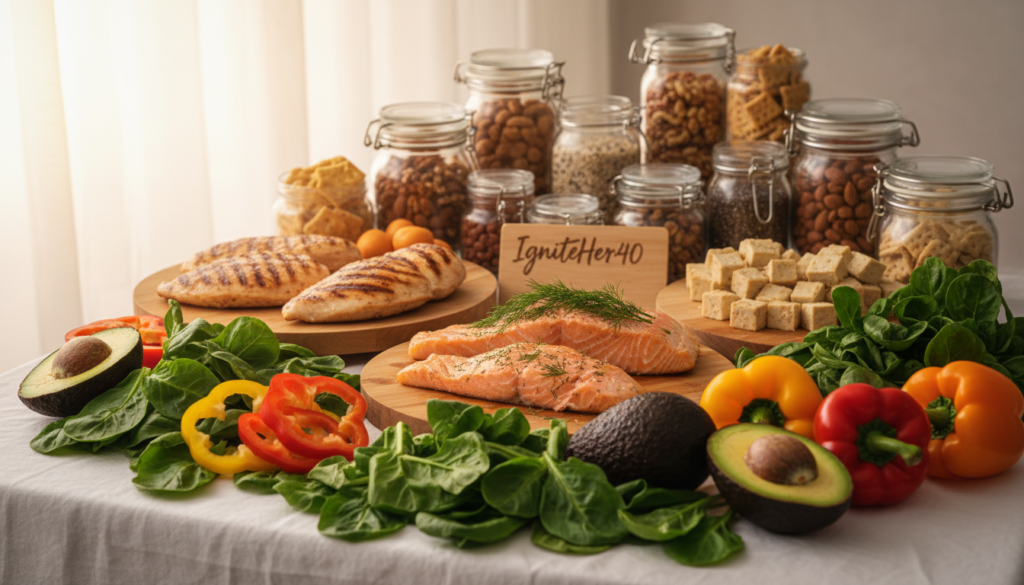
Let’s break down the categories so you understand what belongs on your plate:
| Food Category | Best Options | Net Carbs | Key Benefits for Women Over 40 |
|---|---|---|---|
| Lean Proteins | Chicken breast, turkey, salmon, eggs, Greek yogurt | 0-5g per serving | Preserves muscle mass, supports metabolism, provides essential amino acids |
| Healthy Fats | Avocado, olive oil, nuts, seeds, grass-fed butter | 2-6g per serving | Supports hormone production, reduces inflammation, improves satiety |
| Non-Starchy Vegetables | Spinach, kale, broccoli, cauliflower, zucchini, bell peppers | 2-5g per cup | High in fiber and vitamins, supports gut health, provides antioxidants |
| Low Glycemic Fruits | Strawberries, blueberries, raspberries, blackberries | 6-12g per cup | Rich in antioxidants, satisfies sweet cravings, supports cognitive function |
Editor’s Pick
Looking for a natural supplement designed specifically for women over 40?
★★★★★
Rated 4.8/5 by over 2,300 women — see why it’s our top pick this year.
Read Our CitrusBurn Review →Non-starchy vegetables are your best friends. They typically contain just 2-5 grams of net carbs per cup while delivering fiber, vitamins, and minerals your body needs.
Animal proteins like eggs, chicken, turkey, beef, pork, and fish contain zero carbs. That makes them perfect building blocks for your meals.
Avocados provide only 3 grams of net carbs per half fruit, plus healthy fats that support hormonal balance. Berries offer the lowest carb options among fruits, making them ideal when you want something sweet.
Hard aged cheeses contain minimal lactose, which means they’re naturally low in carbs. Think cheddar, parmesan, Swiss, and gouda.
Here’s the quality question you’re probably wondering about: not all low carb foods are created equal. A processed protein bar might technically be low carb, but it won’t support your health the way wild-caught salmon will.
Focus on whole, minimally processed options. Choose grass-fed beef over conventional when possible. Pick wild-caught fish instead of farmed. Buy organic vegetables when you can afford them, for the “dirty dozen” produce items.
The upcoming sections will dive deep into each category. You’ll learn exactly which proteins preserve muscle mass, which fats support hormone production, and which vegetables pack the most nutritional punch.
This list isn’t exhaustive or restrictive. It’s a starting point for building meals that work for your body right now.
You don’t need to eat perfectly from this list every single day. Consistency matters more than perfection. If you choose foods from these categories most of the time, you’re giving your body what it needs to thrive after 40.
Ready to explore the details? Let’s start with the protein choices that preserve your muscle mass and keep your metabolism strong.
Top Lean Protein Choices for Muscle Preservation
Lean protein is key for staying strong and satisfied, even as you age. Starting at 40, your body loses muscle mass naturally. Without enough protein, you could lose up to 8% of your muscle each decade.
This loss slows down your metabolism and makes it harder to manage your weight. Protein helps keep your muscles strong and your metabolism running smoothly. It’s even more crucial when you’re eating low carb, as it provides energy and strength.
Women over 40 should aim for 25-40 grams of protein per meal. This amount helps keep your muscles, keeps you full, and prevents energy crashes. Let’s explore the best low carb foods for women over 40 that offer complete amino acids without carbs.
Chicken Breast and Turkey
Chicken breast and turkey are staples for low carb diets. They’re lean, versatile, and affordable, with zero carbohydrates and 25-30 grams of protein per 4-ounce serving.
These proteins are great for many dishes—grilled, baked, sautéed, or slow-cooked. You can prep them on Sunday and use them all week in salads, wraps, or with roasted veggies.
Opt for organic or free-range options if you can. This is important after 40 to help balance your hormones and reduce exposure to added hormones and antibiotics in conventional poultry.
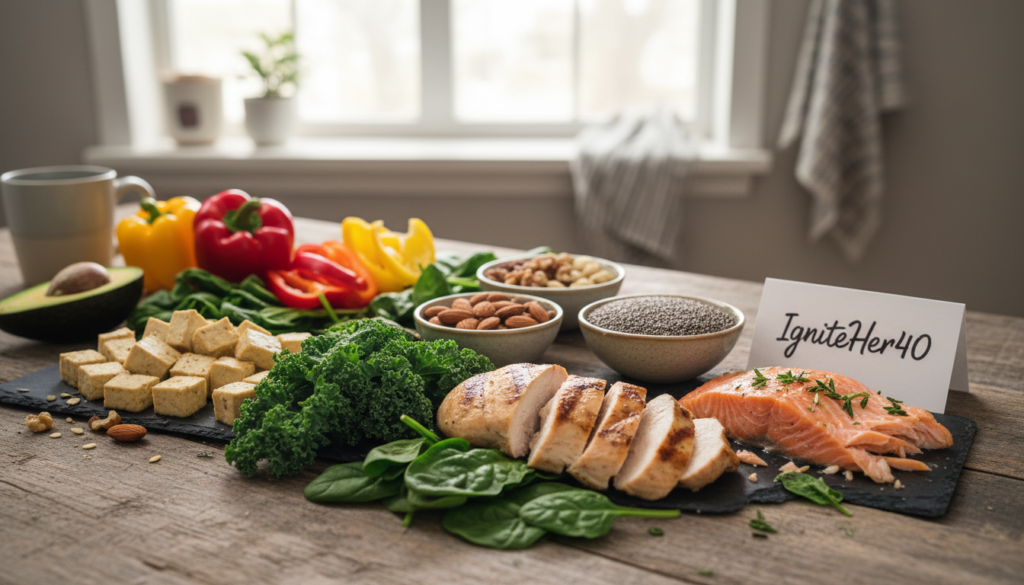
Salmon and Fatty Fish
Salmon is more than just protein—it’s a nutritional powerhouse. It has zero carbs but is rich in omega-3 fatty acids that fight inflammation in your body.
These omega-3s boost brain health, ease joint pain, and may reduce hot flashes during menopause. Mackerel, sardines, and trout offer similar benefits and keep you full for hours.
Wild-caught fish has more omega-3s than farmed varieties. Aim for 2-3 servings of fatty fish weekly to get 20-25 grams of complete protein and enjoy the anti-inflammatory benefits.
Quick tip: canned sardines and salmon are budget-friendly and packed with nutrients. Keep them in your pantry for quick protein-packed lunches.
Eggs and Egg Whites
Eggs are nature’s perfect protein package. One large egg has 6 grams of complete protein, zero carbs, and all nine essential amino acids your body can’t make.
Don’t worry about the cholesterol myth: eggs don’t raise blood cholesterol levels for most people. Whole eggs with the yolk provide the most nutrition, including choline for brain health, vitamin D for bones, and lutein for eyes.
Egg whites alone offer pure protein without fat, great for calorie-watchers. But the yolk has most of the vitamins and minerals your body needs. A three-egg omelet with veggies gives you about 18 grams of protein and keeps you full until lunch.
Eggs are versatile for any meal—scrambled for breakfast, hard-boiled as snacks, or turned into a quick dinner frittata. They’re affordable, quick to cook, and never boring when you vary the preparation.
Greek Yogurt and Cottage Cheese
Greek yogurt and cottage cheese are great for protein and gut health. They offer 15-20 grams of protein per serving and beneficial probiotics for digestion, which can slow down during perimenopause.
Be careful with flavored varieties, as they have 20+ grams of added sugar that can spike your blood sugar. Choose plain, full-fat versions instead, which have only 5-7 grams of naturally occurring carbs per cup.
Full-fat dairy keeps you full longer than low-fat versions and helps your body absorb fat-soluble vitamins. The healthy fats also support hormone production, which is important when estrogen levels are declining.
Make Greek yogurt more interesting by adding fresh berries, a sprinkle of cinnamon, or a tablespoon of ground flaxseed. Cottage cheese pairs well with sliced cucumber, cherry tomatoes, or a drizzle of olive oil and black pepper for a savory protein boost.
| Protein Source | Protein per Serving | Carbs per Serving | Key Benefit for Women 40+ |
|---|---|---|---|
| Chicken Breast (4 oz) | 25-30g | 0g | Lean, versatile, affordable |
| Salmon (4 oz) | 20-25g | 0g | Omega-3s reduce inflammation |
| Eggs (3 large) | 18g | 0g | Complete amino acids, brain health |
| Greek Yogurt (1 cup, plain) | 15-20g | 5-7g | Probiotics for gut health |
Your actionable takeaway: Prioritize protein at every meal to preserve muscle mass, support your metabolism, and stay satisfied throughout the day. Aim for that 25-40 gram range per meal, choose whole food sources over processed protein bars, and remember that the best low carb foods for women over 40 are the ones you’ll actually eat consistently. Your changing body needs this foundation—give it the fuel that works with your hormones, not against them.
Essential Healthy Fats for Hormone Support
Eating fat won’t make you fat, if you choose the right kinds. After 40, your body needs healthy fats for women over 40 for hormone production and cell health.
Low-fat diets often leave you hungry and unbalanced. They miss out on nutrients your body needs.
Your body uses fat to make hormones like estrogen and progesterone. Without enough fat, you’re working against your body. Fat also helps you absorb vitamins A, D, E, and K, which are key for bone health and immune function.
Quality fats keep you full between meals. They reduce cravings and stabilize your energy. These hormone balancing low carb foods fuel you without raising blood sugar.
Avocado and Avocado Oil
Avocados are creamy and low in carbs, with just 3g net carbs per half fruit. They’re full of monounsaturated fats that support heart health and hormone production.
One medium avocado has nearly 20 vitamins and minerals. The healthy fats help your body absorb nutrients from other foods.
Avocado oil is great for cooking at high temperatures. Use it for roasting veggies, sautéing proteins, or as a salad dressing base.
Add half an avocado to your morning eggs, blend it into smoothies, or slice it on salads. Your body will thank you for the nutrient-rich fuel.
Olive Oil and Coconut Oil
Extra virgin olive oil is a top anti-inflammatory fat. It has polyphenols that protect your cells and support heart health.
Use olive oil for salad dressings, drizzling over veggies, or light sautéing. Keep the heat moderate to preserve its benefits.
Coconut oil has medium-chain triglycerides (MCTs) that your body turns into energy quickly. It’s perfect for high-heat cooking and adds flavor to dishes.
Both oils have zero carbs and help you feel full after meals. Keep a bottle of each in your kitchen for different uses.
“Dietary fat is essential for hormone production and cellular function, specially during menopause when hormonal changes can affect health.”
Nuts and Seeds
Nuts and seeds are packed with fat, protein, and fiber. They’re great for snacking, adding crunch to salads, or in low carb baked goods.
Macadamia nuts have the lowest carb content at just 4g net carbs per ounce. Pecans, Brazil nuts, and walnuts follow with 4-7g net carbs per ounce.
Walnuts are special for their omega-3 fatty acids, which support brain health and reduce inflammation. Eating a handful daily offers big benefits.
Chia and flax seeds offer omega-3s with only 1-2g net carbs per tablespoon. They also support digestive health and blood sugar stability.
But, nuts are calorie-dense. Eat 1-2 ounces daily (about a small handful) to avoid too many calories while getting nutritional benefits. Pre-portion them to prevent overeating.
Grass-Fed Butter and Ghee
Grass-fed butter and ghee have zero carbs, fat-soluble vitamins, and beneficial fatty acids your body needs. They’ve been unfairly blamed for years.
Grass-fed sources have more omega-3s and conjugated linoleic acid (CLA) than conventional butter. CLA may help with healthy body composition.
Ghee is clarified butter without milk proteins, making it good for those sensitive to dairy. It has a rich flavor and a high smoke point for cooking.
Use butter or ghee for cooking eggs, adding richness to veggies, or melting over grilled proteins. A tablespoon adds flavor and satisfaction to your meals.
| Fat Source | Net Carbs (per serving) | Key Benefits | Best Uses |
|---|---|---|---|
| Avocado (1/2 fruit) | 3g | Monounsaturated fats, potassium, fiber | Salads, smoothies, snacks |
| Olive Oil (1 tbsp) | 0g | Anti-inflammatory, heart health | Dressings, low-heat cooking |
| Coconut Oil (1 tbsp) | 0g | MCTs for quick energy | High-heat cooking, baking |
| Macadamia Nuts (1 oz) | 4g | Lowest carb nut, satisfying | Snacking, salad topping |
| Grass-Fed Butter (1 tbsp) | 0g | Omega-3s, CLA, vitamins A, D, K | Cooking, adding richness |
Editor’s Pick
Looking for a natural supplement designed specifically for women over 40?
★★★★★
Rated 4.8/5 by over 2,300 women — see why it’s our top pick this year.
Read Our CitrusBurn Review →You’re not being told to eat sticks of butter or bottles of oil. You’re learning to include moderate amounts of quality fats for hormonal health during this transition.
Your body works best when you stop fearing fat and start embracing the right kinds. These healthy fats for women over 40 are essential for feeling your best after 40.
Best Non-Starchy Vegetables for Nutrient Density
Vegetables are key for women in midlife. They’re not just for filling your plate. Non-starchy veggies give you vitamins, minerals, antioxidants, and fiber, which are crucial during hormonal changes.
Most non-starchy veggies have only 2-5 grams of net carbs per cup. This means you can eat a lot without worrying about blood sugar spikes. They keep you full, support hormonal balance, and provide essential nutrients after 40.
It’s all about variety. Different colors mean different nutrients, each helping your body in unique ways. Let’s look at the top veggies for every meal.
Leafy Greens: Spinach, Kale, and Arugula
Leafy greens are nutritional powerhouses with 1-2 grams of net carbs per cup. Spinach, kale, and arugula are packed with more nutrition per calorie than almost any other food.
These greens are rich in magnesium, which many women over 40 lack. Magnesium helps with bone health, blood sugar regulation, and can reduce muscle cramps and sleep issues.
Kale and spinach are also great for bone density with vitamin K. Arugula adds a peppery flavor and supports liver detox. All three are low glycemic foods women should eat often.
“Dark leafy greens are among the most nutrient-dense foods available, providing exceptional amounts of vitamins A, C, and K, along with folate and minerals that support women’s health throughout life.”
Don’t just stick to salads. Try these easy ways to enjoy them:
- Sauté spinach with garlic and olive oil as a quick side dish
- Massage kale with lemon juice to soften for raw salads
- Add arugula to smoothies for a nutrient boost without strong flavor
- Wilt greens into scrambled eggs or omelets
Broccoli and Cauliflower
Broccoli and cauliflower are special for women over 40. They contain sulforaphane, which helps your liver break down estrogen better.
Better estrogen metabolism can reduce symptoms of hormonal imbalance. This is important during perimenopause and menopause when estrogen levels change a lot.
Both veggies have about 3-4 grams of net carbs per cup. They’re super versatile in the kitchen, making them great for replacing higher-carb foods.
Cauliflower has become the chameleon of low carb cooking. You can rice it, mash it, or even make pizza crust out of it. Broccoli roasted with olive oil gets crispy and nutty, winning over even the skeptics.
These veggies also feed good gut bacteria with their fiber. A healthy gut supports immune function and mood, both key for women in midlife.
Zucchini and Summer Squash
Zucchini and summer squash add volume to meals without many calories or carbs. Each has about 3 grams of net carbs per cup.
Their mild taste and soft texture make them great substitutes for pasta and grains. Zucchini noodles (or “zoodles”) are popular for keeping carbs low while satisfying pasta cravings.
You can use zucchini as lasagna layers, grate it into muffins or fritters, or roast it with herbs. Summer squash is great grilled or sautéed as a side dish.
The key advantage is volume. Eating a lot of them feels satisfying without too many carbs or calories. This is helpful when your metabolism slows down and portion control is key.
Bell Peppers, Asparagus, and Brussels Sprouts
Bell peppers are colorful and full of vitamin C and antioxidants that fight inflammation. Red, yellow, and orange peppers have 4-6 grams of net carbs per serving and add sweetness and crunch.
Asparagus is packed with folate, fiber, and compounds that help your kidneys and support detox. It has about 4 grams of net carbs per cup and tastes great roasted with olive oil and garlic.
Brussels sprouts support estrogen metabolism and have 5-6 grams of net carbs per cup when cooked. Roasting them until crispy changes their flavor, even for those who don’t like them.
| Vegetable | Net Carbs (per cup) | Key Nutrients | Primary Benefit |
|---|---|---|---|
| Spinach | 1g | Magnesium, Vitamin K, Iron | Bone health, energy production |
| Broccoli | 4g | Sulforaphane, Vitamin C, Fiber | Estrogen metabolism, detox support |
| Zucchini | 3g | Vitamin C, Potassium | Low-calorie volume, pasta substitute |
| Bell Peppers | 6g | Vitamin C, Carotenoids | Anti-inflammatory, antioxidant protection |
| Brussels Sprouts | 6g | Vitamin K, Folate, Fiber | Hormonal balance, gut health |
The beauty of these veggies is their versatility. Bell peppers are great raw in salads or roasted in fajitas. Asparagus can be grilled, steamed, or wrapped in prosciutto. Brussels sprouts become crispy and caramelized when roasted at high heat.
Eating different colored vegetables ensures you get a wide range of beneficial plant compounds. Each color represents different antioxidants and phytonutrients. Red and orange vegetables provide carotenoids. Green vegetables offer chlorophyll and various detoxifying compounds. Purple vegetables contain anthocyanins.
Don’t fall into a vegetable rut. Rotating your choices keeps meals interesting and provides your body with diverse nutrients. Your taste buds stay engaged, and your body gets comprehensive nutritional support.
Here’s your actionable takeaway: fill half your plate with non-starchy vegetables at every meal. This simple strategy ensures you get fiber, vitamins, minerals, and volume without excess carbs. Your blood sugar stays stable, your digestion improves, and you feel satisfied after meals.
These vegetables aren’t obligatory “health food” you force down. With proper preparation and seasoning, they become delicious centerpieces of meals you actually look forward to eating. That’s sustainable nutrition—and sustainability is what creates lasting results after 40.
Low Glycemic Food Options for Sustained Energy
Knowing about the glycemic index helps you pick better carbs. The glycemic index (GI) shows how fast a food raises your blood sugar. Foods with a GI under 55 digest slowly, giving you steady energy without the crash.
For women over 40 dealing with insulin resistance, choosing low glycemic foods helps keep blood sugar stable. You don’t need to follow a very low or ketogenic diet. Some foods with moderate carbs can fit your plan if eaten wisely.
This section introduces slightly higher-carb options that still support your metabolic health. Think of these as the best foods for blood sugar women over 40 can enjoy without derailing their progress. The key is portion control and smart pairing with protein and healthy fats.
Berries: Strawberries, Blueberries, and Raspberries
Berries are the most blood-sugar-friendly fruits you can eat. Unlike tropical fruits or bananas that spike insulin quickly, berries provide antioxidants and fiber while keeping carbs relatively low. Strawberries contain just 6 grams of net carbs per cup, making them an excellent choice for daily enjoyment.
Raspberries come in at about 7 grams of net carbs per cup and pack an impressive amount of fiber. Blueberries are slightly higher at 17 grams per cup, but they’re loaded with compounds that fight inflammation and support brain health. Research shows that the fiber in whole fruits slows digestion, making them less likely to cause blood sugar spikes compared to fruit juice or dried fruit.
The secret to including berries successfully is pairing them with fat or protein. Add a handful of strawberries to full-fat Greek yogurt for breakfast. Toss raspberries into a salad with goat cheese and walnuts. Mix blueberries with almond butter as an afternoon snack.
These combinations slow digestion even further and prevent any rapid rise in blood sugar. Berries also provide powerful antioxidants called anthocyanins that protect your cells from oxidative stress. For women over 40, this translates to better cognitive function, reduced inflammation, and potentially lower risk of chronic disease.
Legumes in Moderation
Beans, lentils, and chickpeas occupy a controversial space in low carb eating. They contain more carbs than most low carb foods—typically 15 to 20 grams of net carbs per half cup. But they also deliver substantial fiber and plant-based protein that many women find beneficial.
The fiber content in legumes significantly lowers their glycemic impact. Black beans have a GI of just 30, while lentils score around 32. This means they digest slowly and provide sustained energy without rapid blood sugar elevation. If you tolerate legumes well and stay within your daily carb budget, small portions can absolutely work.
Some low carb approaches avoid legumes entirely, while others include them occasionally. There’s no single right answer here. Listen to your body and monitor how you feel after eating them. If legumes leave you bloated or trigger cravings, they may not be your best choice.
If you do include legumes, keep portions modest and pair them with extra protein and non-starchy vegetables. A quarter cup of black beans mixed into a large salad with grilled chicken and avocado provides variety without overwhelming your carb limit. The combination of protein, fat, and fiber creates a satisfying meal that sustains your energy for hours.
Quinoa and Steel-Cut Oats (Small Portions)
Whole grains like quinoa and steel-cut oats have lower glycemic indexes than refined grains such as white rice or instant oatmeal. If you’re not following a strict ketogenic diet and want occasional grains, these are your better choices. A quarter cup of cooked quinoa contains about 17 grams of net carbs, while a quarter cup of steel-cut oats has roughly 12 grams.
Quinoa provides all nine essential amino acids, making it a complete protein source—rare for a plant food. Steel-cut oats offer beta-glucan fiber that supports heart health and helps regulate blood sugar. Both digest more slowly than their processed counterparts, providing steady energy rather than a quick spike followed by a crash.
Portion control matters tremendously with these foods. A quarter cup might seem small, but it goes further than you think when combined with protein, healthy fats, and plenty of vegetables. Try steel-cut oats cooked with unsweetened almond milk, topped with a tablespoon of almond butter and a handful of blueberries.
Or serve a small portion of quinoa alongside baked salmon and roasted broccoli for dinner. These pairings balance the higher carb content and prevent blood sugar spikes. The goal isn’t to make grains the foundation of your meals, but to include them strategically when they fit your personal carb tolerance and lifestyle preferences.
| Food | Serving Size | Net Carbs (grams) | Glycemic Index | Key Benefits |
|---|---|---|---|---|
| Strawberries | 1 cup | 6 | 40 | High vitamin C, antioxidants, lowest carb berry |
| Raspberries | 1 cup | 7 | 26 | Exceptional fiber, anti-inflammatory compounds |
| Blueberries | 1 cup | 17 | 53 | Brain health support, powerful antioxidants |
| Black Beans | 1/2 cup | 15 | 30 | High fiber and plant protein, heart healthy |
| Lentils | 1/2 cup | 18 | 32 | Folate, iron, excellent fiber source |
| Quinoa | 1/4 cup cooked | 17 | 53 | Complete protein, magnesium, B vitamins |
| Steel-Cut Oats | 1/4 cup dry | 12 | 55 | Beta-glucan fiber, sustained energy release |
Sustainable low carb eating has room for small amounts of these nutrient-dense, low glycemic foods if they work for your body and goals. You’re not following rigid rules handed down from some diet guru. You’re making informed choices based on how different foods affect your blood sugar, energy, and overall wellbeing.
The flexibility to include berries, occasional legumes, or small portions of whole grains makes low carb eating livable for the long term. Some days you might stick to 20 grams of carbs from vegetables and berries alone. Other days, you might enjoy a small serving of lentil soup or quinoa salad and consume 40 grams total.
What matters most is consistency over time, not perfection every single day. Pay attention to how your body responds to these foods. If your energy stays stable and your cravings remain manageable, you’ve found foods that support your metabolic health. If you notice blood sugar swings or increased hunger, you may need to adjust portions or choose different options.
The beauty of understanding low glycemic foods women can incorporate is that you gain control over your eating plan. You’re no longer guessing or following someone else’s template blindly. You have the knowledge to build a sustainable approach that nourishes your body, supports stable energy, and fits your real life.
Foods to Avoid on a Low Carb Diet After 40
Knowing what foods to avoid is key when you’re on a low carb diet after 40. This section isn’t about scaring you or making you feel trapped. It’s about knowing which foods don’t help your body after 40 and why.
Your body changes, and some foods that were okay before now work against you. Understanding the why helps you make better choices, not just follow rules.
Let’s look at foods that can stop your progress and find better options.
Refined Carbohydrates and White Flour Products
White bread, pasta, and other refined carbs raise your blood sugar fast. They offer little nutrition but lots of starch.
After 40, your body can’t handle these carbs as well. The refining process removes fiber and nutrients, leaving only starch. This starch quickly turns to glucose, which your body either uses right away or stores as fat.
Eating these carbs leads to a cycle. You eat, your blood sugar spikes, insulin rushes in, and you crash and crave more carbs. This is tough for women over 40 on a low carb diet because their metabolism can’t handle these changes.
Whole foods have fiber that slows digestion and keeps you full. Without it, you’re left with empty calories that make you hungry and tired.
Choosing whole foods gives your body what it needs without the blood sugar spikes. For more help on foods to avoid, evidence-based resources can guide you.
Added Sugars and Sweetened Beverages
Sugar is everywhere, and liquid sugar is very bad. Drinks like soda, sweet tea, and fruit juices have a lot of sugar.
Liquid sugar gets into your blood fast because there’s no fiber to slow it down. Your pancreas works hard to make insulin, and the extra sugar turns to fat, often around your waist.
But sugar isn’t just in obvious places. It’s also in ketchup, barbecue sauce, and even foods labeled “healthy.” One smoothie can have more sugar than a can of soda.
Sugar has many names on labels:
- High fructose corn syrup
- Agave nectar
- Cane juice or cane sugar
- Maltodextrin
- Dextrose
- Brown rice syrup
Reading labels is crucial. If sugar is in the first three ingredients, don’t buy it. Your body deserves better, now more than ever.
Processed Foods with Hidden Carbs
Many “diet” or “low-fat” foods use sugar and starch instead of fat. This is bad for insulin resistance and weight loss.
Low-fat yogurt often has more sugar than full-fat versions. Gluten-free products can have more carbs than regular ones. Some protein bars have more carbs than candy bars.
Processed meats like deli turkey and sausages may have hidden carbs. Sauces and gravies use starches that raise blood sugar.
The best strategy is to choose whole foods with few ingredients. If you can’t pronounce most of the ingredients or if the list is long, it’s probably too processed.
| Food Category | Common Examples | Carbs Per Serving | Why to Avoid |
|---|---|---|---|
| Refined Grains | White bread, pasta, crackers, white rice | 30-45g | Rapid blood sugar spikes, no fiber, triggers cravings |
| Sugary Beverages | Soda, fruit juice, sweetened coffee, smoothies | 30-60g | Liquid sugar absorbed quickly, insulin surge, belly fat storage |
| Processed “Diet” Foods | Low-fat yogurt, protein bars, gluten-free snacks | 20-35g | Hidden sugars and starches replace fat, inflammatory ingredients |
| High Glycemic Fruits | Bananas, grapes, pineapple, dried fruits | 20-30g | Fast blood sugar elevation, limited fiber in dried versions |
| Starchy Vegetables | Potatoes, sweet potatoes, corn, peas | 20-35g | High starch content raises glucose rapidly |
High Glycemic Fruits and Starchy Vegetables
Not all fruits and vegetables fit into a low carb diet, even for managing insulin resistance after 40. Some raise blood sugar quickly.
Bananas, grapes, and pineapple have 20 to 30 grams of carbs per serving. Dried fruits have even more sugar than candy bars.
Starchy vegetables like potatoes and corn also have a lot of carbs. A medium potato has about 35 grams, and corn on the cob has roughly 20 grams.
These foods aren’t bad for everyone. They have vitamins and minerals. But they don’t fit with your low carb goals right now.
You’re not cutting them out forever. You’re choosing foods that support your body now. When you’ve reached your health goals, you can add them back in small amounts.
Focus on low glycemic berries like strawberries and blueberries in moderation. Choose non-starchy vegetables like leafy greens and broccoli for nutrients without carbs.
Quick reference for smarter swaps:
- Instead of banana → choose berries (¼ cup)
- Instead of potato → choose cauliflower mash
- Instead of rice → choose riced cauliflower or broccoli
- Instead of pasta → choose zucchini noodles or spaghetti squash
- Instead of corn → choose green beans or asparagus
This isn’t about not eating anything. It’s about knowing how different foods affect your body and making choices that help your health.
Enjoying higher-carb foods occasionally is okay. What matters is your overall pattern, not one meal or day.
Your body is strong and can adapt. Eating foods that keep your blood sugar stable, hormones balanced, and energy up will make a big difference.
Sample Day of Low Carb Eating for Women Over 40
Seeing how low carb meals look in real life is key. This section shows you what a day of eating might be like on a low carb diet for women over.
This is just one example. You can change foods, adjust amounts, and pick times that work for you. The goal is to help you make balanced, tasty meals all day.
Breakfast: Protein-Packed Morning Meals
Starting with protein helps keep blood sugar stable and reduces hunger. Here are three breakfast ideas:
Option 1: Three-Egg Veggie Omelet
Cook three eggs with spinach, mushrooms, and feta cheese. Add half an avocado on the side. This gives you about 30g protein and 8g net carbs. The healthy fats keep you full until lunch.
Option 2: Greek Yogurt Bowl
Top full-fat plain Greek yogurt with a quarter cup of fresh berries, two tablespoons of chopped walnuts, and a sprinkle of cinnamon. You’ll get about 20g protein and 12g net carbs. Choose unsweetened yogurt to avoid hidden sugars.
Option 3: Leftover Salmon Plate
Enjoy leftover salmon from dinner with cucumber slices and cream cheese. This gives you roughly 28g protein and just 5g net carbs. It’s great for busy mornings when you need something quick.
Lunch: Satisfying Midday Options
Lunch should keep your energy up without causing blood sugar drops. These foods are great for women over 40:
Option 1: Grilled Chicken Salad
Make a big salad with mixed greens, grilled chicken breast, olive oil and vinegar dressing, cherry tomatoes, cucumber, and sliced almonds. This gives you 35g protein and 10g net carbs.
Option 2: Turkey Roll-Ups
Wrap turkey breast slices around cheese and avocado. Serve with raw bell pepper strips and ranch dip made from Greek yogurt. You’ll get about 28g protein and 9g net carbs. No bread needed.
Option 3: Beef Stir-Fry Over Cauliflower Rice
Use leftover beef and vegetable stir-fry served over cauliflower rice. This gives you about 32g protein and 11g net carbs. Meal prep makes this option easy.
Dinner: Balanced Evening Meals
Evening meals should be satisfying but not heavy. Here are some dinner ideas:
Lemon-Garlic Chicken Thighs with Roasted Broccoli
Season chicken thighs with lemon, garlic, and herbs, then bake until crispy. Serve with roasted broccoli drizzled in olive oil. This meal gives you 35-40g protein and 8-12g net carbs.
Salmon with Avocado Salsa and Cauliflower Rice
Bake or pan-sear salmon, top with fresh avocado salsa, and serve with cauliflower rice. You’ll get 30-40g protein and 10-15g net carbs. The omega-3 fats support hormone balance beautifully.
Turkey-Zucchini Meatballs with Marinara
Make meatballs using ground turkey and grated zucchini, serve with sugar-free marinara sauce over spaghetti squash. This gives you 30-35g protein and 12-18g net carbs.
Beef and Bell Pepper Stir-Fry Over Cabbage
Stir-fry grass-fed beef strips with colorful bell peppers and serve over shredded cabbage instead of rice. Expect 30-40g protein and 10-15g net carbs from this satisfying dish.
Shrimp Fajita Bowls with Cauliflower Rice
Sauté shrimp with fajita seasonings, bell peppers, and onions, serve in a bowl over cauliflower rice. This provides 25-35g protein and 10-15g net carbs.
Greek Chicken Salad
Combine grilled chicken with cucumbers, tomatoes, olives, feta cheese, and olive oil dressing. You’ll get 30-35g protein and 8-12g net carbs. It’s refreshing and packed with Mediterranean flavors.
Snacks: Smart Choices Between Meals
As you get used to low carb eating, you might need fewer snacks. But when you’re hungry between meals, choose wisely:
- Hard-boiled eggs – Quick protein with zero prep time
- Celery with almond butter – Crunchy, satisfying, nutrient-dense
- Small handful of macadamia nuts – Healthy fats, low carbs
- Sliced cheese with cucumber – Simple and refreshing
- Protein smoothie – Blend unsweetened almond milk, protein powder, spinach, and half a cup of berries
Keep portions reasonable. Snacks should bridge the gap between meals, not replace them.
| Meal | Sample Option | Protein (g) | Net Carbs (g) | Approx. Calories |
|---|---|---|---|---|
| Breakfast | Three-egg omelet with avocado | 30 | 8 | 420 |
| Lunch | Grilled chicken salad | 35 | 10 | 450 |
| Dinner | Salmon with cauliflower rice | 35 | 12 | 480 |
| Snack (optional) | Hard-boiled eggs (2) | 12 | 1 | 140 |
| Daily Total | — | 112 | 31 | 1,490 |
This sample day has about 100-120g protein and 50-60g net carbs—well within low carb guidelines. Your specific needs may vary based on activity level, body size, and individual metabolism.
The beauty of low carb meal plans for women over 40 is the flexibility. Swap chicken for turkey. Use spinach instead of kale. Prefer scrambled eggs over omelets? Go for it. The framework stays the same: prioritize protein, include healthy fats, fill your plate with non-starchy vegetables, and keep net carbs moderate.
Adjust portions based on your hunger and energy needs. Some days you’ll eat more, some days less. That’s completely normal. Listen to your body as it adapts to using fat for fuel instead of relying on constant carbohydrate intake.
This isn’t about perfection. It’s about creating sustainable eating patterns that support your changing body after 40.
Practical Tips for Low Carb Success After 40
Success with a low carb diet isn’t about being perfect. It’s about finding simple strategies that fit your daily life. You might have work, family, or aging parents to care for. You need easy meal plans, not complicated ones that take too much time.
This section offers real, doable strategies for everyday life. We know you don’t have endless time or energy. Instead, we’ll show you how to set up for success with minimal effort and big results.
Meal Planning and Preparation Strategies
Preparing food ahead of time is key for low carb success. When you’re hungry and tired, you’ll grab whatever is easy. If you don’t have healthy foods ready, you’ll choose the wrong ones.
Here’s a simple weekly routine. Spend one to two hours on your day off. Choose three to four dinner recipes for the week. Make a grocery list by store sections to save time.
Then, dedicate time to batch cooking. Roast a big pan of mixed vegetables on Sunday. Cook several chicken breasts or grab a rotissie chicken for easy protein. Hard-boil a dozen eggs for quick breakfast or snacks.
Pre-portion nuts and seeds into small containers to avoid overeating. Wash and chop salad ingredients and store them in mason jars. Keep frozen cauliflower rice for quick side dishes.
Use dinner leftovers for next-day lunches. This strategy eliminates the daily “what’s for lunch?” scramble. Even thirty minutes of Sunday prep makes weekdays easier and reduces takeout temptation.
Before buying packaged foods, read labels carefully. Many products marketed as “healthy” or “low fat” contain hidden sugars and starches that spike blood sugar and interfere with your progress.
Portion Control and Carb Counting Basics
You don’t need to obsessively weigh and measure everything. But having basic awareness helps a lot. Your hand provides a simple, portable measuring tool that’s always with you.
Use these guidelines: your palm represents your protein portion, your fist equals your vegetable portion, and your thumb measures your fat portion. Fill half your plate with non-starchy vegetables, a quarter with quality protein, and the remaining quarter with healthy fats and limited complex carbs if you include them.
Understanding net carbs helps you make informed choices. The formula is simple: net carbs equal total carbs minus fiber. Fiber doesn’t spike blood sugar the way other carbohydrates do, so you subtract it from the total. A food with 10 grams of total carbs and 5 grams of fiber has 5 grams of net carbs.
Some women prefer tracking macros using apps, while others do better eating intuitively from approved food lists. Both approaches work—choose what matches your personality and lifestyle. If tracking feels stressful or triggers obsessive behaviors, skip it and focus on consistent food choices instead.
The right carb level varies between individuals based on stress, sleep quality, activity level, and current hormonal state. A woman sleeping poorly or dealing with high stress may need slightly more carbs temporarily. Listen to your body and adjust portions based on genuine hunger and energy, not rigid rules.
Managing Cravings and Staying Consistent
Cravings happen for real physiological reasons: blood sugar swings, ingrained habits, stress responses, and hormonal fluctuations, including during perimenopause. The good news? Eating adequate protein and healthy fats significantly reduces cravings over time as your blood sugar stabilizes.
When a craving hits, try these practical strategies. First, drink a full glass of water—thirst often mimics hunger. Second, eat some protein; a few slices of turkey or a hard-boiled egg can satisfy you surprisingly well. Third, go for a short walk; movement shifts your mental state and often eliminates the urge entirely.
If the craving persists, have a small portion of something truly satisfying rather than white-knuckling restriction until you break down and overeat. A few squares of dark chocolate or a small handful of berries with whipped cream might be all you need.
Social situations, restaurants, and travel present challenges, but you can navigate them successfully. At restaurants, ask for vegetables instead of rice or potatoes, request dressings on the side, and don’t be shy about customizing your order. Most places are happy to accommodate.
When traveling, pack portable proteins like jerky, nuts, and protein bars. Seek out grocery stores at your destination for salads, rotisserie chicken, and ready-to-eat vegetables. You won’t eat perfectly on every trip, and that’s okay.
Apply the 80/20 approach to your perimenopause low carb diet: aim for consistency 80% of the time and give yourself flexibility 20% without guilt. Three mostly low carb days beat one perfect day followed by throwing in the towel. Consistency beats perfection every single time.
Low carb eating gets easier as your body adapts. Cravings diminish, energy stabilizes, and the foods that once felt essential lose their power over you. Give yourself grace during the learning curve—you’re building sustainable habits, not trying to be perfect starting tomorrow.
The Best Supplement to Support Weight Loss After 40
If you’re serious about supporting your metabolism after 40, we’ve done the research for you. After reviewing dozens of supplements, one stood out for women in this age group specifically. Read our full CitrusBurn Review to see exactly why we recommend it — including a full ingredient breakdown, real user experiences, and current pricing.
Conclusion
You now have the knowledge and tools to make choices that work with your changing body. A low carb approach addresses the metabolic and hormonal shifts that naturally occur after 40. This guide gives you a starting point, not a rigid rulebook.
Whether you explore keto for women over 40 or a moderate low carb approach, your body will tell you what works. Look for signs like better energy, improved sleep, reduced inflammation, and natural weight management. Some women thrive under 50g net carbs daily. Others feel best at 75-100g. Your ideal range may shift with stress, sleep quality, and where you are in perimenopause or menopause.
Low carb weight loss women experience isn’t about perfection. Start with the protein, healthy fats, and non-starchy vegetables you learned about. Skip the refined carbs and added sugars. Adjust based on how you feel. Energy, mood, hunger, and progress matter more than hitting exact numbers.
You’re not broken. You’re not lazy. You’re not imagining these changes. Your body is transitioning, and choosing foods that support this transition helps you feel like yourself again. Clear-headed, energized, confident.
This isn’t about deprivation or punishment. It’s about nourishing your body with what it needs right now. You don’t have to do it perfectly to see real benefits. Start where you are, use what you have, and adjust as you learn what works for your unique body.
Here’s to feeling better, one meal at a time.
FAQ
How many carbs should women over 40 eat per day on a low carb diet?
Women over 40 should aim for 50-100 grams of net carbs daily. For ketosis, stay under 50 grams. Moderate low carb is 75-100 grams. Your ideal range depends on activity, metabolic health, and body response.
Start with 75 grams and adjust based on energy, hunger, and how you feel. Remember, net carbs are what count because fiber doesn’t raise blood sugar.
What’s the difference between net carbs and total carbs, and which should I track?
Total carbs include sugars, starches, and fiber. Net carbs are what your body absorbs and uses for energy. You calculate them by subtracting fiber from total carbs.
Track net carbs for low carb eating because fiber doesn’t raise blood sugar or trigger insulin. For example, one cup of raspberries has 15g total carbs but 8g fiber, giving you only 7g net carbs.
Is keto the same as low carb, and do I need to go keto after 40?
Keto is a specific type of low carb eating where you limit net carbs to under 50 grams daily. Low carb is broader and includes any approach that reduces carbs below standard recommendations.
You don’t *need* to go keto after 40. Many women see excellent results with moderate low carb (50-100g net carbs) without the strict restrictions keto requires. Choose what fits your lifestyle and makes you feel best.
Can I eat fruit on a low carb diet for women over 40?
Yes, but choose low glycemic fruits and watch portions. Berries are your best friends—strawberries, raspberries, and blackberries contain only 6-7 grams of net carbs per cup. Blueberries are slightly higher at about 17g net carbs per cup, so stick to a half-cup serving.
Avoid high-sugar fruits like bananas, grapes, pineapple, and dried fruits—they spike blood sugar quickly and contain 20-30g carbs per serving. Pair fruit with protein or fat (like berries with Greek yogurt or nuts) to slow sugar absorption and keep blood sugar stable.
What are the best low carb foods for menopause weight loss?
Focus on protein-rich foods that preserve muscle and boost metabolism: salmon, chicken breast, eggs, and Greek yogurt. Add healthy fats that support hormone production: avocados, olive oil, nuts, and fatty fish rich in omega-3s.
Fill your plate with non-starchy vegetables like leafy greens, broccoli, cauliflower, and zucchini—they’re nutrient-dense, high in fiber, and keep you full with minimal carbs. These foods help with menopause weight loss by stabilizing insulin, providing steady energy, and delivering nutrients.
How does low carb eating help with hormonal balance during perimenopause?
Low carb eating helps by stabilizing insulin and reducing blood sugar swings. This creates a calmer hormonal environment when estrogen and progesterone are already fluctuating. High insulin worsens perimenopause symptoms by interfering with other hormones and increasing inflammation.
When you lower carbs, insulin levels drop, which reduces mood swings, anxiety, and sleep disruptions. Low carb also helps your body maintain better cortisol (stress hormone) balance. While it won’t replace declining estrogen, it supports your overall hormonal system and makes the transition smoother.
Will I lose muscle on a low carb diet after 40?
No—if you prioritize protein and strength training, you’ll actually preserve and build muscle better than on higher-carb diets. Women naturally lose muscle after 40 (sarcopenia), but eating 25-40 grams of protein per meal provides the amino acids your body needs to maintain muscle mass.
Low carb diets that include adequate protein (0.7-1 gram per pound of body weight) protect muscle while helping you lose fat. The key is eating enough protein from sources like chicken, fish, eggs, Greek yogurt, and grass-fed beef, not just focusing on cutting carbs. Pair this with resistance training twice weekly, and you’ll maintain strength and metabolism.
What low carb foods help reduce belly fat for women over 40?
Fatty fish like salmon, mackerel, and sardines provide omega-3s that reduce inflammation and support fat loss, including visceral belly fat. Eggs deliver complete protein and nutrients that boost metabolism. Leafy greens and cruciferous vegetables (broccoli, cauliflower, Brussels sprouts) are fiber-rich and help your liver metabolize estrogen more efficiently.
Avocados provide monounsaturated fats that improve insulin sensitivity. Greek yogurt offers protein and probiotics for gut health, which influences fat storage. These foods work together to lower insulin, reduce inflammation, and provide steady energy, targeting stubborn belly fat.
Can I do low carb if I’m vegetarian or plant-based?
Yes, but it requires more planning. Focus on plant-based proteins like tofu, tempeh, edamame, and seitan. Add low carb vegetables, nuts and seeds (almonds, walnuts, chia, flax, hemp seeds), avocados, olive oil, and coconut oil. Include eggs and Greek yogurt if you’re vegetarian (not vegan).
Small portions of legumes (chickpeas, black beans, lentils) provide protein but contain more carbs (15-20g net per half cup), so track carefully. Plant-based low carb is absolutely doable—prioritize variety to get complete amino acids, consider supplementing B12, and watch your protein intake to ensure you’re getting enough.
What are metabolism boosting low carb foods for midlife women?
Protein-rich foods boost metabolism the most because your body burns calories digesting them (thermic effect of food). Choose eggs, chicken, turkey, salmon, and Greek yogurt. Green tea and black coffee (unsweetened) provide caffeine and antioxidants that slightly increase metabolic rate.
Leafy greens and cruciferous vegetables are nutrient-dense and support thyroid function, which regulates metabolism. Fatty fish rich in omega-3s reduce inflammation that can slow metabolism. Nuts like almonds and walnuts provide protein, healthy fats, and magnesium (many midlife women are deficient, and low magnesium slows metabolism). Chia seeds and flax seeds offer fiber and omega-3s.
How long does it take to see results from low carb eating after 40?
Most women notice improved energy and reduced cravings within 3-7 days as blood sugar stabilizes. You might see initial weight loss (2-5 pounds) in the first week, mostly water weight as your body releases stored glycogen. Real fat loss typically becomes noticeable in weeks 2-4.
Hormonal benefits—better mood, improved sleep, reduced hot flashes—often appear within 2-4 weeks. Significant body composition changes (clothes fitting better, belly fat reduction) usually take 6-12 weeks of consistency. Remember, you’re over 40—your body may respond more slowly than in your 20s or 30s. Be patient and focus on how you feel (energy, sleep, mood, hunger) as much as the scale. Sustainable results take time, and that’s okay.
Are there specific anti-inflammatory low carb foods for women over 40?
Absolutely. Fatty fish (salmon, mackerel, sardines, anchovies) are the gold standard—omega-3 fatty acids directly reduce inflammation. Leafy greens (spinach, kale, Swiss chard) provide antioxidants and magnesium. Berries (strawberries, raspberries, blueberries) deliver powerful anti-inflammatory compounds.
Cruciferous vegetables (broccoli, cauliflower, Brussels sprouts) contain sulforaphane that fights inflammation. Extra virgin olive oil provides oleocanthal, which works similar to ibuprofen. Turmeric (add to scrambled eggs or roasted vegetables) contains curcumin, a potent anti-inflammatory. Walnuts offer omega-3s and polyphenols. Avocados reduce inflammatory markers.
Should I count calories on a low carb diet, or just carbs?
Start by focusing on net carbs and protein, not obsessing over calories. When you eat low carb with adequate protein and healthy fats, your appetite naturally regulates—you’ll likely eat fewer calories without trying because you’re more satisfied and blood sugar is stable.
If you’re not seeing results after 4-6 weeks, then consider tracking calories to ensure you’re in a modest deficit (your metabolism slows after 40, so you may need fewer calories than you think). But don’t start with strict calorie counting—it’s exhausting and often unnecessary. Focus on food quality, proper portions (palm-sized protein, fist-sized vegetables, thumb-sized fats), and listening to your hunger cues. Many women lose weight beautifully just by cutting carbs and eating real food without ever counting a calorie.
Can low carb eating affect my thyroid or hormone levels negatively?
Very low carb or long-term strict keto (under 30g daily for months) *can* slightly reduce T3 thyroid hormone in some women, but moderate low carb (50-100g net carbs) typically doesn’t cause problems and often *improves* hormonal balance by reducing insulin resistance. If you have diagnosed hypothyroidism, work with your doctor and consider staying at the higher end of low carb (75-100g) rather than strict keto.
Make sure you’re eating enough calories—extreme restriction combined with very low carb can stress your body and affect thyroid function. Include selenium-rich foods (Brazil nuts, fish) and iodine sources (seaweed, eggs) to support thyroid health. Most women thrive hormonally on moderate low carb; just avoid extreme approaches without medical supervision.
What are the best low carb meal plans for women over 40?
The best meal plan is one you’ll actually follow, but here’s a simple framework: Breakfast—focus on 25-30g protein: eggs with vegetables and avocado, Greek yogurt with berries and nuts, or leftover dinner protein with greens. Lunch—build around 30-35g protein: large salad with grilled chicken and olive oil dressing, turkey and cheese roll-ups with raw vegetables, or leftovers from dinner.
Dinner—plate method works perfectly: palm-sized portion of protein (salmon, chicken, beef), half your plate filled with non-starchy vegetables, and a thumb-sized portion of healthy fat (olive oil, avocado, butter). Snacks (if needed)—hard-boiled eggs, nuts, cheese, vegetables with guacamole. This flexible template lets you customize based on your preferences while hitting 100-120g protein and 50-75g net carbs daily—perfect for women over 40.
How do I handle eating out and social situations on a low carb diet?
It’s easier than you think once you know the strategies. At restaurants: order protein with double vegetables instead of rice or potatoes; ask for salad dressing on the side; swap the bun for lettuce wraps; choose grilled over breaded. Most places are happy to accommodate.
At social gatherings: eat protein first (meat, cheese, nuts) so you’re satisfied and less tempted by chips and bread; bring a low carb dish to share; hold a drink (sparkling water, dry wine, or spirits with club soda) so people don’t pressure you; remember you don’t owe anyone an explanation—”I’m focusing on eating more protein and vegetables” usually ends the conversation. The 80/20 rule helps—if you eat low carb most of the time, one higher-carb meal at a special occasion won’t derail your progress. Enjoy it without guilt, then return to your normal eating. Flexibility and planning beat perfection.
What low carb foods help with energy and reduce afternoon crashes?
Protein at every meal is your foundation—eggs, chicken, fish, Greek yogurt—because it provides sustained energy without spiking blood sugar. Healthy fats (avocado, nuts, olive oil, fatty fish) slow digestion and provide long-lasting fuel. Leafy greens deliver B vitamins and iron that support energy production.
Fatty fish high in omega-3s reduce inflammation that contributes to fatigue. Magnesium-rich foods (spinach, pumpkin seeds, almonds) help—low magnesium causes tiredness, and many women over 40 are deficient. Stay hydrated—dehydration feels like exhaustion; aim for half your body weight in ounces daily. The pattern that eliminates crashes: balanced meals with 25-35g protein, healthy fat, and non-starchy vegetables every 4-5 hours. Avoid eating carbs alone (fruit by itself, crackers without protein)—always pair with protein or fat to keep blood sugar stable. Most women notice dramatically better energy within one week of consistent low carb eating.