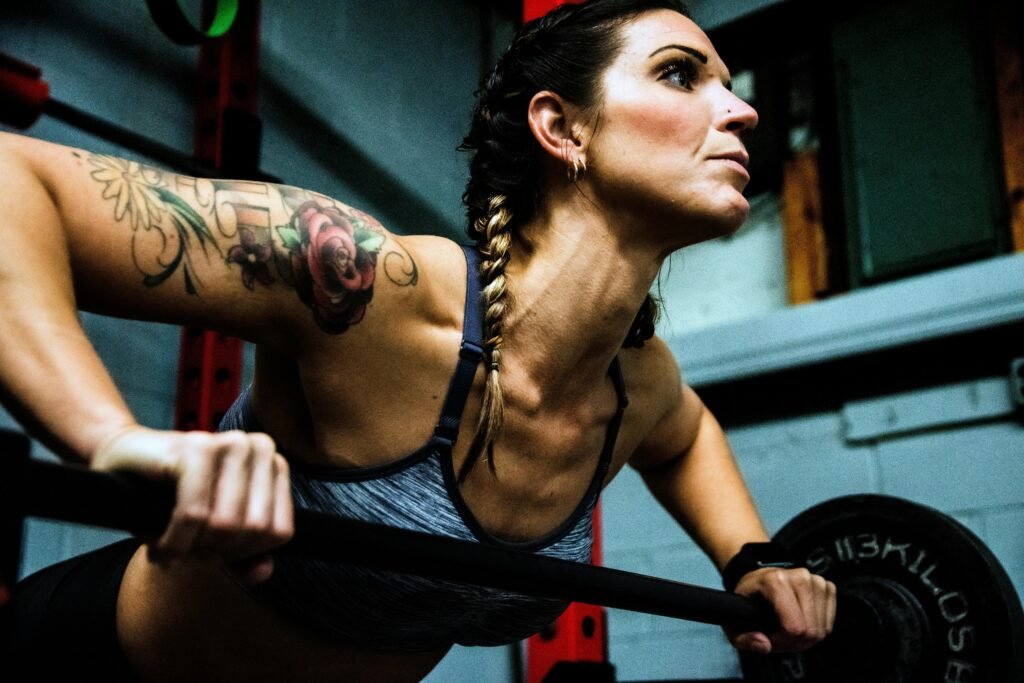
You’ve been doing everything “right.” You watch what you eat. You hit the treadmill faithfully. Maybe you’ve even tried cutting carbs. But your body isn’t responding the way it used to. Here’s what nobody tells you: strength training for women over 40 is the missing piece — and those dumbbells you’ve been avoiding are exactly what your body needs right now.
For decades, women over 40 have received confusing messages about resistance exercise. From Jane Fonda videos promising lean legs to fears about getting bulky, the advice has been all over the map. Now there’s a cultural shift happening—from “skinny” to “strong”—and it’s backed by science.
Here’s the truth: strength training isn’t just helpful for weight loss after 40. It’s the single most powerful tool you have. Not endless cardio. Not restrictive diets. Lifting weights builds the metabolic foundation your changing body desperately needs.
This article will show you exactly why resistance exercise transforms your body after 40, bust the myths holding you back, and give you a simple plan to start seeing real results. You deserve answers that actually work.
Key Takeaways
- Your metabolism changes after 40, making previous diet and exercise methods less effective
- Resistance exercise builds lean muscle that keeps your metabolism active around the clock
- The “bulky” fear is a myth—hormonal changes after 40 make building excessive muscle nearly impossible
- Cardio alone won’t address the metabolic shifts happening in your body
- Science-backed approaches have replaced outdated fitness advice from previous decades
- Building muscle is the metabolic foundation your body needs for sustainable results
Editor’s Pick
Looking for a natural supplement designed specifically for women over 40?
★★★★★
Rated 4.8/5 by over 2,300 women — see why it’s our top pick this year.
Read Our CitrusBurn Review →Why Strength Training for Women Over 40 Requires a Completely Different Strategy
If you feel like your body stopped responding to the same healthy habits that always worked, you’re absolutely right. Something fundamental has changed, and it’s not your imagination or lack of willpower.
The strategies that kept you lean and energized in your 30s—cutting calories, doing more cardio, pushing through fatigue—don’t just stop working after 40. They often backfire, leaving you exhausted, heavier, and completely frustrated.
What’s happening isn’t failure. It’s biology shifting in powerful ways that demand a smarter approach.
The Biological Shift That Changes Everything
Around age 40, your body enters perimenopause, the transition phase leading to menopause. This isn’t just about hot flashes or mood swings—it’s a complete hormonal reorganization that affects every aspect of how your body functions.
Estrogen and progesterone, two hormones that have quietly regulated your metabolism for decades, start fluctuating wildly. Some days they spike high, other days they plummet low. This unpredictability creates chaos throughout your system.
Here’s what these hormonal shifts actually do to your body:
- Metabolism slows down because estrogen helps regulate how efficiently you burn calories
- Fat storage increases, as your body tries to create backup estrogen from fat cells
- Muscle repair becomes harder since progesterone supports muscle recovery and growth
- Sleep quality decreases, disrupting the hormones that control hunger and fullness
- Energy production drops, making you feel tired even when you’re doing less
- Stress response intensifies, as cortisol (your stress hormone) becomes harder to control
The connection between hormonal changes and effective menopause weight training becomes crystal clear when you understand how these shifts affect muscle and metabolism women experience during this transition. Your body literally processes exercise, food, and stress differently than it did just five years ago.

But there’s another process happening simultaneously that makes everything worse: sarcopenia, the medical term for age-related muscle loss. Starting in your late 30s, you begin losing approximately 3-8% of your muscle mass per decade.
This might sound small, but it’s devastating to your metabolism. Muscle tissue burns calories even when you’re resting—it’s metabolically active tissue that keeps your engine running hot.
Every pound of muscle you lose is like removing a calorie-burning furnace from your body. Less muscle means fewer calories burned all day, every day.
Why the Methods That Worked in Your 30s Stop Working Now
You probably remember when you could drop five pounds in a week by eating less and running more. That version of weight loss relied on a younger body with stable hormones, abundant muscle mass, and a metabolism that responded predictably to calorie restriction.
That body doesn’t exist anymore. And trying to force the old methods creates three serious problems.
First, excessive cardio combined with lower calories triggers cortisol release. When you’re already dealing with hormonal chaos, adding more stress hormones makes your body cling to fat, making it harder to lose weight.
Second, calorie restriction without adequate protein and resistance training accelerates muscle loss. Your body needs building blocks to maintain muscle. When you drastically cut calories after 40, you lose muscle faster than fat. This tanks your metabolic rate even further, creating a vicious cycle where you need to eat less and less just to maintain your weight.
Third, ignoring recovery needs breaks down your body instead of building it up. Younger bodies bounce back quickly from intense exercise. After 40, your body needs more recovery time to repair and strengthen. Pushing through exhaustion doesn’t prove dedication—it elevates cortisol, disrupts sleep, and prevents the muscle growth that would actually boost your metabolism.
The harsh truth? The harder you push using outdated methods, the more your body fights back. You’re not weak or broken. You’re using the wrong strategy for your current biology.
What you need now is an approach that works with your changing hormones instead of fighting against them. An approach that builds metabolically active muscle tissue instead of breaking it down. An approach that recognizes your body’s new reality and uses it to your advantage.
That approach is strength training—and it’s not optional anymore. It’s essential.
Strength Training Women Over 40 Weight Loss: The Non-Negotiable Solution
After 40, your body needs a new way to lose weight. Strength training is the answer. It’s not about following trends but about science. It tackles the metabolic changes in your body.
Weight loss might seem harder after 40. But it’s not because you’re lazy. Your body needs a special solution to fight age and hormonal changes.
The Four Ways Strength Training Transforms Your Body After 40
Strength training does amazing things for women over 40. It works when other methods fail. It changes your body in four key ways to fight age-related changes.
First, it builds and preserves lean muscle mass. Muscle burns calories all the time, even when you’re sleeping. Every pound of muscle you gain raises your metabolism.
Second, it improves insulin sensitivity. This means your body uses carbs for energy, not fat. It stops the frustrating cycle of weight gain during perimenopause.
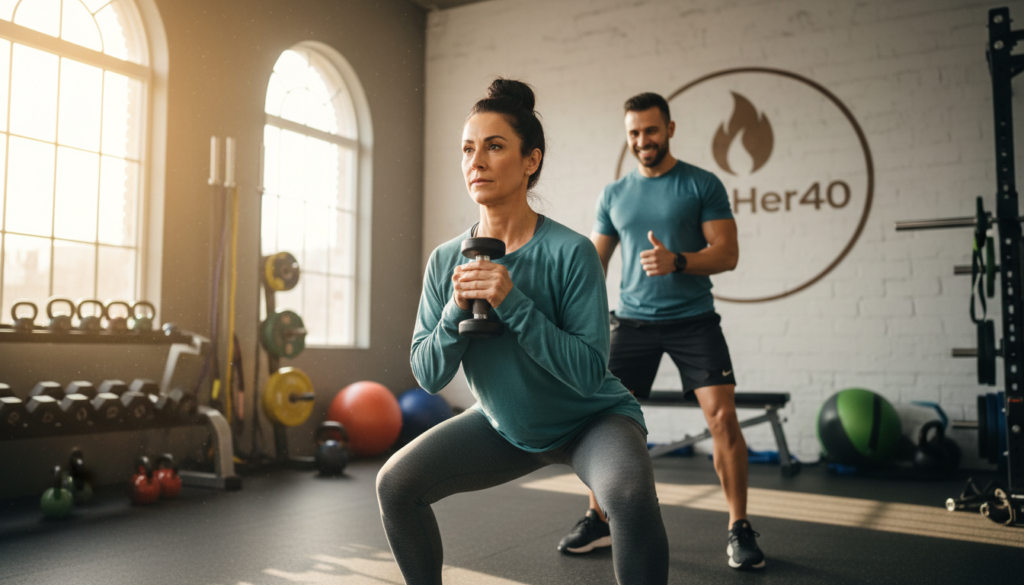
Third, it strengthens your bones when you need it most. As estrogen drops, bones weaken. Perimenopause strength exercises keep bones strong, fighting osteoporosis and boosting metabolism.
Fourth, strength training regulates hormonal chaos. It balances cortisol, supports estrogen and progesterone, and boosts growth hormone. These hormonal changes help with fat loss.
Research backs up these benefits. Women who lift regularly have better metabolism, fewer menopause symptoms, and lower death risk. Strength training also boosts mental health.
Why I Believe Lifting Weights Beats Cardio for Fat Loss
Cardio is good for your heart, but lifting weights is better for fat loss after 40. It’s not about cardio being bad. It’s about lifting weights being more effective.
Excessive cardio can make fat loss harder after 40. It raises cortisol, making your body hold onto belly fat. This is your body’s stress response.
Cardio doesn’t build muscle. Without muscle, your metabolism doesn’t increase. You burn calories during cardio, but not after.
Long cardio sessions also make you tired and hungry. This makes it hard to eat healthy. You might work out hard but eat more, canceling out your efforts.
Strength training is different. It builds fat-burning machinery that works long after you finish lifting. This is called excess post-exercise oxygen consumption.
Strength training energizes you, not drains you. It reshapes your body in ways cardio can’t. You’ll notice your clothes fitting better, even if the scale doesn’t change much.
Lifting weights is better for fat loss after 40. It’s not just about burning calories. It rebuilds your metabolism from the ground up.
Building Muscle Is Building a Fat-Burning Machine
Every pound of muscle you build makes your body burn fat more efficiently. This isn’t just a claim; it’s science. Muscle tissue needs energy to exist, which means more calories burned every day, even when you’re not moving.
Think of your muscles as an engine. The bigger and stronger it gets, the more fuel it needs. This is why strength training is key for women over 40 who want to lose weight.
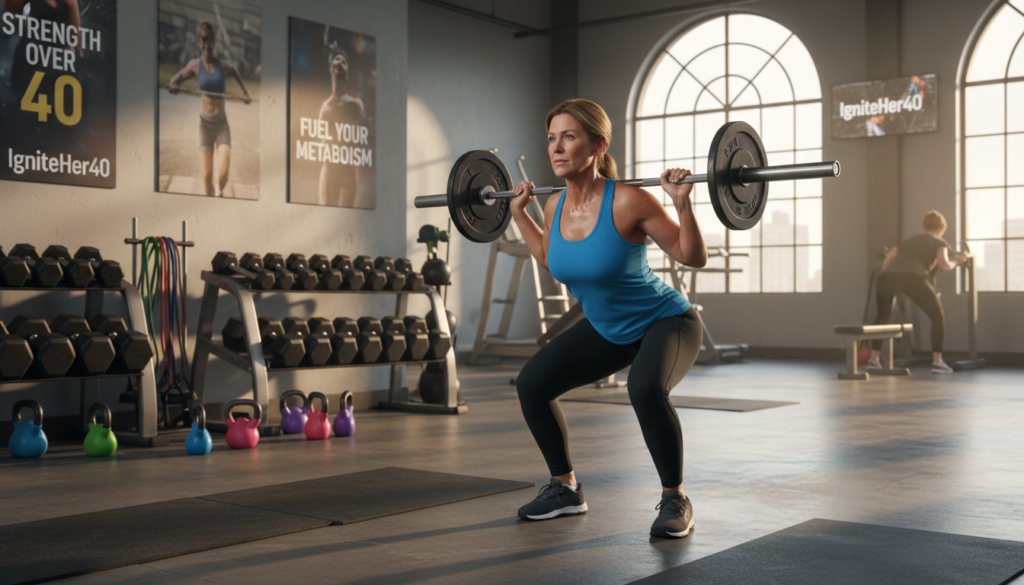
How Each Pound of Muscle Increases Your Daily Calorie Burn
Science gets exciting here. Your resting metabolic rate, or the calories you burn at rest, is linked to your muscle mass. You can control and increase this by building more muscle.
Studies show that nine months of resistance training can boost your resting metabolic rate by 5%. For most women over 40, this means burning an extra 50 to 100 calories daily without extra effort.
Over a year, this could mean losing 5 to 10 pounds without changing your diet. Unlike restrictive diets, this approach speeds up your metabolism. You’re working with your body, not against it.
Adding muscle is like upgrading your metabolism. You move away from the exhausting “making up for what you ate” mentality. Your body naturally burns more fuel throughout the day.
The Metabolic Advantage That Keeps Working While You Sleep
Strength training is different from cardio. Cardio burns calories only while you’re doing it. The moment you stop, the calorie burn stops too.
Strength training works differently. You burn calories during the workout, but the real magic happens after. Your body repairs and maintains the muscle, a process that never stops.
This means you’re burning calories while sitting, cooking, reading, or sleeping. Your muscles work for you 24/7. You get the strength training metabolism boost long after your workout.
Your metabolism stays elevated, not just for hours, but permanently, as long as you maintain that muscle mass. This is the sustainable advantage that makes strength training so powerful for long-term weight management after 40.
Why Muscle Mass Is Your Best Defense Against Weight Regain
If you’ve ever lost weight only to watch it creep back on, you know how frustrating it can be. Here’s what’s happening: when you lose weight through dieting or cardio alone, you lose both fat and muscle.
Losing muscle is a metabolic disaster. Every pound of muscle you lose decreases your resting metabolic rate. This makes it harder to keep weight off. Your body needs fewer calories to function, so eating the same amount now causes you to gain.
This is why traditional diets fail so spectacularly for women over 40. You end up trapped in a cycle of eating less and less just to stay in the same place. It’s exhausting and unsustainable.
Strength training breaks that cycle completely. When you lift weights while losing weight, you preserve your existing muscle and often build new muscle at the same time. This means you’re losing fat while keeping—or even increasing—your metabolic rate.
The result? The weight you lose actually stays off because your metabolism stays strong. You can eat more food, feel more satisfied, and maintain your results without constant restriction. Muscle mass becomes your insurance policy against weight regain, and that’s a game-changer for sustainable fat loss after 40.
Sarcopenia Is Quietly Destroying Your Metabolism
A silent thief is stealing your metabolism, and many women over 40 don’t know it. It’s called sarcopenia, or age-related muscle loss.
You might not have heard of sarcopenia before. But it explains why your body feels different now. It doesn’t just make you weaker. It changes how your body burns calories and stores fat.
Here’s the truth: your muscles are the engine of your metabolism. When you lose muscle, you lose your ability to burn calories efficiently. And after 40, that loss happens faster than you think.
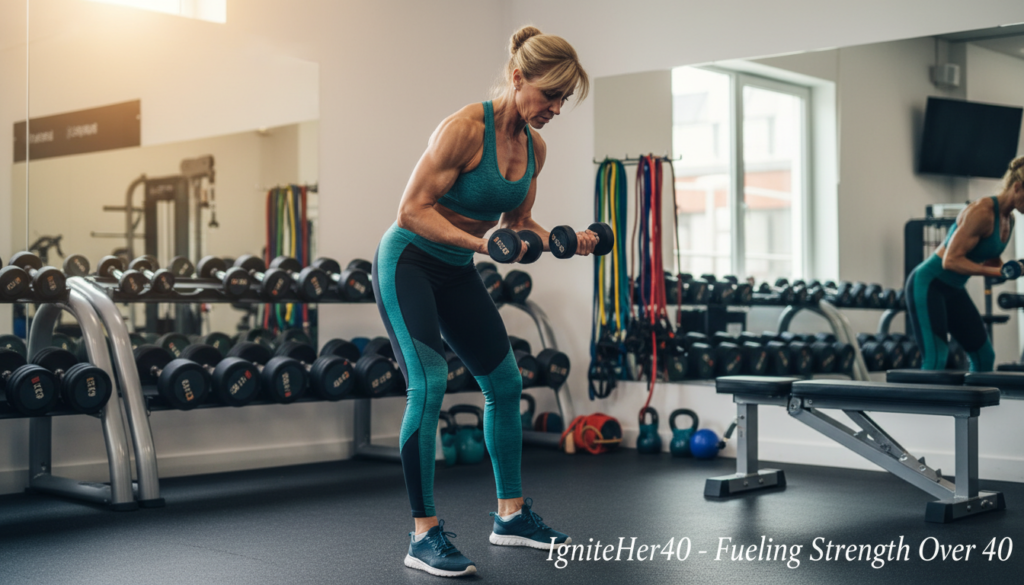
The Alarming Rate of Muscle Loss After 40
Sarcopenia starts earlier than most women realize. It begins in your late 30s, often before you notice any symptoms.
The numbers are sobering. Without intervention, you’ll lose 3-8% of your muscle mass every decade after 40. That might not sound like much at first, but it adds up fast.
And it gets worse. After you hit 50, that rate accelerates significantly. The muscle loss speeds up just when your hormones are already making weight management harder.
Think about what that means over time. A woman who’s 55 could have already lost 10-15% of the muscle she had at 35. By 65, she could be down 25% or more if she’s done nothing to stop it.
Personal trainer Leah Georges puts it bluntly: “As we age we naturally lose muscle, unless we actively do something about it.” That’s the key phrase—unless we actively do something. This isn’t inevitable destiny; it’s a process you can interrupt.
For women looking to build muscle over 40 women can achieve, resistance training becomes the primary solution. Studies prove that strength training doesn’t just slow this process—it can actually reverse muscle loss even in older adults.
How Losing Muscle Creates a Downward Spiral of Weight Gain
Here’s where sarcopenia becomes truly dangerous for your weight. Muscle loss triggers a vicious cycle that accelerates weight gain year after year.
Let me walk you through exactly how this downward spiral works:
- Step 1: You lose muscle tissue, which lowers your resting metabolic rate
- Step 2: With a slower metabolism, you burn fewer calories throughout the day
- Step 3: You start gaining fat even though you’re eating the same amount as before
- Step 4: The extra weight makes you feel more tired and less motivated to move
- Step 5: Less activity means you lose even more muscle mass
- Step 6: The cycle repeats, getting worse each year
This is why so many women over 40 feel like their bodies have betrayed them. You’re not eating more than you used to. You haven’t become lazy or undisciplined. Your body composition has fundamentally shifted.
The muscle you’ve lost was working for you 24/7, burning calories even while you slept. When it’s gone, those calories that used to fuel muscle maintenance now get stored as fat instead.
| Age Range | Average Muscle Loss Per Decade | Metabolic Rate Impact | Common Physical Changes |
|---|---|---|---|
| 40-49 | 3-5% | 50-70 fewer calories burned daily | Slight strength decline, minor fatigue |
| 50-59 | 5-8% | 100-150 fewer calories burned daily | Noticeable weakness, weight gain acceleration |
| 60+ | 8-10%+ | 150-200+ fewer calories burned daily | Difficulty with daily tasks, increased fall risk |
But sarcopenia affects more than just your weight. It makes everyday tasks harder—climbing stairs becomes exhausting, carrying groceries feels heavy, getting up from the floor takes effort. Playing with grandkids becomes physically challenging.
The consequences extend beyond vanity. Muscle loss increases your risk of falls, fractures, and loss of independence as you age. It’s directly connected to quality of life in your later decades.
Here’s the empowering truth, though: sarcopenia is not your inevitable future. Research shows that resistance training is the most effective intervention for treating sarcopenia in older adults. It facilitates significant gains in both muscle strength and muscle mass.
The focus on muscle-building after 40 becomes critical precisely because it’s the antidote to this metabolic destruction. You can rebuild what’s been lost. You can stop the downward spiral and reverse it.
The sooner you start strength training, the more muscle you preserve and the easier weight management becomes. But even if you’re reading this at 50, 60, or beyond, it’s never too late to begin rebuilding your metabolism through muscle.
Editor’s Pick
Looking for a natural supplement designed specifically for women over 40?
★★★★★
Rated 4.8/5 by over 2,300 women — see why it’s our top pick this year.
Read Our CitrusBurn Review →Strength Training Fixes the Hormonal Chaos Making You Gain Weight
If you’ve been blaming yourself for the extra weight, it’s time to stop—your hormones are the real culprit. The weight changes after 40 aren’t just about willpower or eating too much. Three major hormonal problems are working against you right now, and they’re making weight loss feel impossible.
Here’s the truth that changes everything: strength training directly fixes each of these hormonal issues. Let me show you exactly how resistance training menopause solutions work to rebalance your body from the inside out.
How Resistance Training Improves Insulin Sensitivity and Stops Fat Storage
Insulin is the hormone that controls how your body handles sugar. When you eat carbs, your blood sugar rises, and insulin tells your cells to absorb that sugar for energy. Simple enough, right?
But here’s what’s happening in your body after 40, during perimenopause. Your cells start ignoring insulin’s signals. This is called insulin resistance, and it’s probably the biggest reason you’re gaining weight around your middle.
When your cells resist insulin, your pancreas panics and pumps out more insulin to compensate. High insulin levels trigger your body to store fat instead of burning it. That stubborn belly fat? That’s insulin at work.
You’ll also notice energy crashes after meals, constant cravings for sweets and carbs, and feeling hungry even after eating. These are all signs your insulin isn’t working properly anymore.
Strength training changes this completely. When you lift weights, something remarkable happens in your muscle cells. They become hungry for glucose and start absorbing it without needing as much insulin.
Think of it this way: your muscles act like sponges after a workout. They soak up blood sugar to repair and rebuild, which means less sugar floating around to be stored as fat. This effect lasts for hours after your workout ends.
Studies show that hormone-balancing resistance training improves insulin sensitivity significantly, sometimes within just a few weeks of consistent training. Your body gets better at stabilizing blood sugar naturally, which is crucial during perimenopause when insulin sensitivity typically decreases.
The benefits you’ll actually feel include fewer energy crashes throughout the day, dramatically reduced cravings for sugar and junk food, and less fat storage around your belly and waist. Your body starts burning food for energy instead of storing it as fat.
Lowering Cortisol Levels Through Strategic Strength Work
Cortisol is your stress hormone, and if you’re over 40, yours is probably sky-high right now. Busy schedules, poor sleep, perimenopause itself—they all spike cortisol levels.
High cortisol is a disaster for weight loss. It tells your body to store belly fat, breaks down your hard-earned muscle tissue, increases cravings for comfort foods, and leaves you feeling wired but exhausted at the same time.
Here’s where most women make a critical mistake: they turn to long cardio sessions to “burn off stress.” But extended cardio actually increases cortisol levels, making the problem worse. You’re working harder and gaining more weight.
Resistance training menopause programs work differently. When done strategically—meaning 2-3 sessions per week with proper recovery—strength training actually lowers cortisol over time.
The key word is “strategic.” You’re not grinding yourself into the ground with daily workouts. You’re lifting weights intensely for short periods, then giving your body the rest it needs to adapt and rebalance.
This approach sends a completely different signal to your body. Instead of interpreting exercise as another stressor, your body recognizes it as a positive stimulus that builds strength and resilience.
Recovery days are just as important as training days for cortisol management. When you rest properly, cortisol levels drop, inflammation decreases, and your hormones start working with you instead of against you.
You’ll notice you sleep better at night, feel calmer during the day, and have fewer anxious, racing thoughts. The belly fat that cortisol caused will start melting away.
Balancing Estrogen Fluctuations for Better Body Composition
Estrogen and progesterone are bouncing all over the place during perimenopause. One week you’re fine, the next week you’re exhausted, bloated, and irritable. These wild fluctuations contribute directly to muscle loss, fat gain, mood swings, and terrible sleep.
Let me be clear: strength training won’t stop perimenopause or prevent estrogen from declining. That’s a natural process. But here’s what hormone-balancing resistance training does do—it helps your body adapt to lower estrogen levels.
Estrogen normally supports muscle mass and bone density. When it drops, you lose both rapidly. Strength training takes over that protective role by giving your body a powerful stimulus to maintain and build muscle despite lower hormone levels.
Think of lifting weights as a direct message to your body: “We still need this muscle and bone. Keep it.” Your body responds by adapting to the stress you’re placing on it, even without estrogen’s help.
There’s another benefit most women don’t know about. Regular strength training helps balance the ratio between estrogen and progesterone, which reduces many perimenopausal symptoms. You won’t feel quite as hijacked by your hormones anymore.
The positive effects create a powerful cycle. You feel more stable and energetic, so you sleep better. Better sleep means you have energy to work out consistently. Consistent workouts improve your body composition, which boosts your confidence and motivation.
Compare that to the negative cycle most women are stuck in: poor sleep leads to low energy, which means skipping workouts, which causes more muscle loss and fat gain, which creates worse sleep and lower energy. Strength training breaks that cycle and reverses it completely.
You’ll experience fewer dramatic mood swings, more consistent energy throughout your cycle, better sleep quality, and a body that actually responds to your efforts instead of fighting you every step of the way.
Your hormones may still fluctuate—that’s perimenopause—but your body becomes resilient enough to handle those fluctuations without derailing your progress or your life.
You Will Not Get Bulky: Here’s Why That Fear Is Unfounded
Many women over 40 worry about getting bulky from strength training. But this fear is not true. You won’t get bulky from lifting weights. This fear comes from not understanding how muscle growth works in women, after 40.
Images of female bodybuilders are often misleading. They train for hours every day and eat a lot of calories. This is not what happens when you lift weights 2-3 times a week and eat a normal diet.
Strength training will give you a lean, toned body. You’ll look and feel strong. The soft body you want to change comes from losing muscle and gaining fat. Strength training solves this problem.
The Testosterone Reality for Women Over 40
Testosterone is key for building big muscles. Men have much more testosterone than women. This is why men can build bigger muscles than women, even with the same training.
After 40, your testosterone levels drop. You can’t build big muscles even if you wanted to. Dr. Elizabeth Matzkin says, “Strength training doesn’t mean you have to bulk up.” This stops many women from starting age-defying strength routines that could change their bodies.
Lifting weights makes your muscles stronger and denser, but not bigger. You’ll get definition in your shoulders, arms, and legs. Your body will look different because muscle takes up less space than fat.
Your clothes might fit better, even if the scale doesn’t change. This is because muscle weighs more than fat but takes up less space.
What It Actually Takes to Build Large Muscles
Building big muscles requires specific conditions. You won’t find these in a typical strength training routine. Let’s look at what it takes so you can see how different it is from what you’ll be doing.
| Factor | What Bodybuilders Do | What You’ll Do for Fat Loss | Result Difference |
|---|---|---|---|
| Training Volume | 2-3 hours daily, 5-6 days per week, multiple exercises per muscle group | 30-45 minutes, 2-3 days per week, full-body compound movements | Your muscles get stronger and denser, not dramatically larger |
| Calorie Intake | Eating in large caloric surplus (500+ calories above maintenance), often 3,000-4,000 calories daily | Eating at maintenance or slight deficit for fat loss, typically 1,600-2,000 calories | You lose fat while building moderate muscle, creating lean definition |
| Progressive Overload | Constantly increasing to maximum weights, pushing to muscle failure regularly | Gradual increases focused on good form and sustainable progress | Strength gains without excessive muscle size |
| Time Investment | Years of dedicated training with singular focus on muscle building | Months of consistent training for health, strength, and fat loss | Noticeable toning and definition, not bodybuilder physique |
Building large muscles requires eating more than you burn—a caloric surplus. When you’re trying to lose weight, you eat at maintenance or a slight deficit. This nutritional difference alone makes building big muscles impossible.
Building substantial muscle mass takes years, not weeks or months. Even with the right training and testosterone levels, changes happen gradually. You can easily adjust your program if you feel you’re building too much muscle.
The Lean, Strong Look Comes From Lifting, Not Avoiding It
The body you want comes from lifting weights and losing fat through proper nutrition. This combination sculpts your body in a way that cardio and dieting alone can’t.
When you lose weight through diet and cardio only, you lose both fat and muscle. This results in a “skinny fat” look—you’re smaller but still soft and undefined. Your clothes fit better, but you don’t have the toned, firm appearance you’re after.
When you lose weight while doing strength training, you preserve and even build muscle while losing fat. The result is exactly what you want: visible muscle definition, firm arms, shaped shoulders, toned legs, and a strong, capable body.
The women you admire on social media with amazing arms and defined shoulders? They’re lifting heavy weights regularly. Their results come from embracing strength training, not avoiding it. Their programs focus on age-defying strength routines that build lean muscle while burning fat.
Think about what you’re really afraid of. Are you worried about being too strong? Too capable? Too defined? When you examine these fears, they don’t make sense. What you’re actually afraid of is a myth that has no basis in biological reality for women over 40.
The truth is this: strength training gives you control over how your body looks and feels. It creates the lean, toned, strong physique that makes you feel confident and powerful. The undefined, soft body composition you’re trying to change comes from losing muscle, not from building it.
Stop letting an unfounded fear keep you from the solution that actually works. Your body after 40 needs muscle to look and feel the way you want. Strength training builds that muscle while burning fat—creating exactly the transformation you’re seeking.
The Smart Strength Training Approach for Beginners Over 40
Building an age-defying strength routine starts with understanding that quality beats quantity every single time. Your body after 40 responds differently than it did at 30. It needs strategic rest, proper progression, and intelligent training frequency.
The good news? You don’t need to spend hours in the gym. You don’t need daily workouts. What you need is a smarter approach that works with your body, not against it.
The Optimal Training Frequency
If you’re just starting strength training, here’s what actually works: two to three sessions per week. That’s it. Not five days. Not every day. Two to three quality sessions.
Research shows that two to four strength sessions per week builds meaningful strength without overloading your body. More importantly, Dr. Matzkin emphasizes that more isn’t better when strength training in your 40s—focus on quality sessions with good form.
Why is this the sweet spot for a women’s midlife fitness program? Your muscles need stimulus to grow stronger, but they also need adequate recovery time. Training the same muscle groups too frequently doesn’t give them time to repair and rebuild.
Here’s what happens when you train more than three times per week as a beginner:
- Your body stays in a constant state of breakdown without proper repair
- Cortisol levels rise, making it harder to lose fat
- Injury risk increases dramatically
- You burn out mentally and physically
Your muscles don’t grow during your workout. They grow during rest when your body repairs the tiny tears created by lifting. Give them that time.
Understanding Progressive Overload
Progressive overload is the single most important principle for getting results. Without it, you’ll plateau fast. With it, you’ll keep seeing improvements month after month.
So what is progressive overload? Simply put, it means gradually increasing the challenge over time. Your muscles must be challenged beyond what they’re used to, or they won’t adapt and grow stronger.
You can apply progressive overload in several ways:
- Add more weight (even 2.5 pounds counts)
- Do more reps with the same weight
- Add another set to your exercise
- Slow down your tempo for more time under tension
- Decrease rest periods between sets
Start exactly where you are. If that’s 5-pound dumbbells or bodyweight squats, that’s perfect. Each week, try to do just a little bit more. Maybe you do 8 reps instead of 6. Maybe you add 2.5 pounds to the bar.
Small, consistent progress is what transforms your body—not heroic efforts that leave you injured. Progress gradually to reduce injury risk, because muscles adapt quickly, but tendons and ligaments take longer, specially during perimenopause.
Track your workouts. Write down the weight, sets, and reps. This gives you a clear target to beat next time and keeps you accountable to the progressive overload principle that drives age-defying strength routines.
Why Recovery Matters More Than You Think
Recovery is where the magic happens. This is where most women over 40 go wrong—they don’t rest enough. Your body recovers more slowly now than it did at 30, and that’s not a weakness. It’s biology.
You need 48 hours between strength sessions for the same muscle groups. This doesn’t mean sitting on the couch for two days. It means if you train your legs on Monday, you don’t train them again until Wednesday at the earliest.
Recovery involves several critical factors:
- Sleep: 7-9 hours per night is non-negotiable for muscle repair
- Protein: Your body needs amino acids to rebuild muscle tissue
- Stress management: Chronic stress blocks recovery and muscle growth
- Rest days: Complete days off from strength training each week
If you’re feeling constantly exhausted, sore for days, or like your workouts are getting harder instead of easier, you’re not recovering enough. These are warning signs your body is sending.
Rest days aren’t lazy. They’re when your body builds the muscle and strength you’ve been working for. During recovery, your body repairs muscle fibers, replenishes energy stores, and adapts to become stronger.
Think of it this way: the workout is the stimulus, but recovery is the response. Without proper recovery, you’re all stimulus and no growth. That’s a recipe for injury, exhaustion, and zero results.
Listen to your body. If you need an extra rest day, take it. The gym will be there tomorrow, but pushing through when your body needs rest will set you back weeks or even months.
The Compound Movements Every Woman Over 40 Should Master
Learning these four compound movements will give you better results than any trendy workout. They work many muscles at once, saving time and boosting fat-burning and strength.
You don’t need many complicated exercises. These four exercises are the base for transforming your body and boosting metabolism after 40.
Your Lower Body and Core Foundation
Squats are key for functional strength. They work your quads, hamstrings, glutes, and core at once. This gives you strong lower body development.
Squats are also essential for everyday life. They help with sitting, standing, climbing stairs, and playing with grandkids. These are life movements, not just gym ones.
Squats are great for your bones. They load your bones through your pelvis and spine. This helps keep your bones strong as estrogen levels drop.
Start with bodyweight squats or practice sitting back onto a chair and standing up. Focus on pushing your hips back like you’re reaching for a chair behind you.
Keep your chest lifted and your weight on your whole foot. Once you’re comfortable, add a dumbbell or kettlebell at your chest for more resistance.
“The squat is the most fundamental movement pattern in human history. If you can’t squat, you can’t function independently.”
The Ultimate Full-Body Strength and Posture Exercise
Deadlifts work your entire backside—glutes, hamstrings, lower back, upper back, and core. They’re the only exercise that works this many muscles or burns this many calories.
Deadlifts are great for boosting your metabolism. They burn calories during and after exercise. The muscle engagement is unmatched.
Deadlifts also protect your lower back. They teach you the hip hinge movement you use when picking things up. This strengthens your body instead of injuring it.
Deadlifts also improve your posture. They strengthen the muscles that keep you upright. This counteracts the slouch from sitting, driving, and screen time.
Start with light dumbbells held at your sides. Practice the hip hinge by pushing your hips back while keeping your spine long and neutral. Your shins should stay nearly vertical.
Think about pushing the floor away with your feet as you stand up. This helps engage your glutes and hamstrings properly instead of pulling with your back.
Editor’s Pick
Looking for a natural supplement designed specifically for women over 40?
★★★★★
Rated 4.8/5 by over 2,300 women — see why it’s our top pick this year.
Read Our CitrusBurn Review →Building a Strong Back and Burning Maximum Calories
Rows build a strong back to counteract rounded shoulders from desk work and phone use. They work your upper back, lats, and biceps while supporting shoulder stability.
A strong back is key for good posture and preventing shoulder pain. Without rows, your shoulders will keep rolling forward.
Rows burn a lot of calories because they engage big muscle groups in your back and core. The bigger the muscles working, the more energy your body uses.
You can use dumbbells, a barbell, resistance bands, or a suspension trainer for rows. The movement pattern stays the same no matter the equipment.
Pull your shoulder blades together first, then pull your elbows back toward your hips. Lead with your elbows, not your hands. Keep your core tight and avoid rotating your torso.
Think about squeezing a pencil between your shoulder blades at the top of each rep. This ensures you’re working your back muscles instead of just yanking with your arms.
Essential Upper Body Strength Without Equipment
Push-ups build crucial upper body strength—working your chest, shoulders, triceps, and core all at once. Upper body strength declines faster in women than lower body strength, but you need it for countless everyday tasks.
Pushing a heavy door open. Carrying groceries. Lifting a suitcase into an overhead bin. Getting up from the floor. These all require upper body pushing strength that you’re losing if you’re not training it.
The beauty of push-ups is that you can do them anywhere, anytime, without a single piece of equipment. They’re the ultimate accessible exercise for building real functional strength.
If standard push-ups feel too difficult right now, that’s completely normal. Start with your hands elevated on a bench, countertop, or even a wall.
The higher the surface, the easier the movement. Wall push-ups absolutely count as strength training—they’re building the foundation you need to progress.
Work your way down over time. Wall push-ups progress to counter push-ups, then bench push-ups, then knee push-ups, and eventually full push-ups. Every version builds strength.
Keep your body in a straight line from head to heels. Lower yourself until your elbows reach about 90 degrees, then push back up. Quality matters more than quantity—three perfect push-ups beat ten sloppy ones every time.
Your Complete Beginner Strength Training Workout Plan
No more wondering what to do at the gym—this beginner-friendly plan gives you the exact exercises, sets, and reps to start building muscle today. This is your complete roadmap designed for fat loss resistance training women over 40 need to see real results.
You don’t need complicated programs or fancy equipment. You need a solid foundation that works.
This plan focuses on the four compound movements we covered earlier. It’s simple, effective, and removes all the guesswork from your first month of strength training.
The Foundation Phase: Weeks 1-4
Your first four weeks are all about learning proper form and building base strength. This foundation phase sets you up for long-term success.
Start with two workout sessions per week. Schedule them with at least one rest day between sessions—Monday and Thursday works perfectly, or try Tuesday and Saturday.
Your workout includes these four essential exercises:
- Squats: Start with bodyweight squats or goblet squats holding one dumbbell
- Deadlifts: Use light dumbbells to learn the hip hinge movement
- Rows: Single-arm dumbbell rows or bent-over rows with light weights
- Push-Ups: Modified on your knees or with hands elevated on a bench
Each session should take about 30-40 minutes, including a 5-minute warm-up of light movement like walking or arm circles.
Here’s exactly how to structure your foundation phase to build muscle over 40 women can sustain long-term:
| Week | Sets Per Exercise | Reps Per Set | Rest Between Sets | Primary Focus |
|---|---|---|---|---|
| Weeks 1-2 | 2 sets | 8-10 reps | 60-90 seconds | Learning proper form with lighter weights |
| Weeks 3-4 | 3 sets | 8-10 reps | 60-90 seconds | Building strength with challenging weights |
| Week 5+ | 3 sets | 8-12 reps | 60-90 seconds | Progressive overload and weight increases |
During weeks 1-2, focus entirely on movement quality. The weight should feel manageable, not easy, but not crushing either.
By weeks 3-4, you’ll increase to three sets. The weight should feel challenging by the last two reps, but you should still maintain good form.
Sets, Reps, and Rest Periods for Maximum Fat Loss
For maximum fat loss, you need to lift weights that actually challenge your muscles. Here’s how to know you’ve got the right weight.
The last two to three reps of each set should feel hard but doable with proper form. If you could easily do five more reps, the weight is too light.
If you can’t complete eight reps with good form, the weight is too heavy. Scale back and build up gradually.
Your muscles need to feel worked, not destroyed. There’s a sweet spot between too easy and too much.
Rest periods matter for fat loss resistance training women should follow. Take 60-90 seconds between sets—enough to catch your breath but not so long that your heart rate drops completely.
This keeps your metabolism elevated throughout the workout. You’re building strength while also creating the metabolic stress that burns fat.
How to Progress and Increase Weight Safely
Progression is simple: add a little bit each week. Small, consistent increases create big results over time.
Each week, try to add one to two reps to each set OR add 2.5 to 5 pounds of weight. Don’t do both at once—that’s too much too fast.
If you increase weight and can only complete six reps, that’s perfectly fine. Work back up to 10 reps at that weight before increasing again.
Listen to your body carefully. If you’re excessively sore for three or more days, you went too hard—pull back slightly next session.
If you’re not sore at all and the workout feels easy, you need more challenge. Add weight or reps to keep progressing.
After four weeks on this foundation plan, you can add a third workout day per week. You might also start adding exercise variations like lunges or overhead presses.
But master these four movements first. They’ll take you farther than any complicated program ever could.
Ideally, you want to lift heavier weights, but what counts as heavy is not the same for everyone. It can be 10 pounds for me or 40 pounds for you. But you want to lift to the point where six to eight reps is challenging.
Start small with bite-sized goals. Pace yourself. You’re building something that lasts, not racing to an finish line.
This plan works because it’s sustainable. You can do this twice a week, every week, and see your body transform over the next three to six months.
The Best Supplement to Support Weight Loss After 40
If you’re serious about supporting your metabolism after 40, we’ve done the research for you. After reviewing dozens of supplements, one stood out for women in this age group specifically. Read our full CitrusBurn Review to see exactly why we recommend it — including a full ingredient breakdown, real user experiences, and current pricing.
Conclusion
Does strength training help women over 40 lose weight? Yes. But weight loss is just the beginning of what you gain.
Strength training women over 40 weight loss happens because you’re rebuilding your metabolic foundation from the ground up. You’re creating muscle that burns calories around the clock. You’re reversing sarcopenia before it steals more of your metabolism. You’re balancing the hormonal chaos that made every other diet fail.
Research confirms that exercise leads to significant weight and fat, with resistance training protecting your lean muscle while you shed pounds. The science backs what you’re about to experience firsthand.
This isn’t about chasing the body you had at 30. That chapter closed, and that’s perfectly okay. This is about building the body you want to live in for the next 30 years: strong, capable, independent, and resilient.
The connection between muscle and metabolism women over 40 need to understand is simple: more muscle means a faster metabolism, better insulin sensitivity, lower cortisol, stronger bones, and a body that actually works with you instead of against you.
You deserve to feel powerful in your own skin. You deserve a solution that actually works.
Start with one workout this week. Master a bodyweight squat. Try a few push-ups. Pick up dumbbells and deadlift them. Small steps create massive transformations.
The best time to start was 10 years ago. The second best time is right now.
FAQ
How often should women over 40 do strength training for weight loss?
Women over 40 should aim for 2 to 3 strength training sessions a week. This allows your muscles to grow stronger while giving your body enough time to recover. Remember, your muscles grow during rest, not during the workout itself.
Training too much can lead to burnout, injuries, and hormonal imbalances. Rest days are crucial for muscle growth and recovery, as your body gets older.
Can I lose weight with strength training alone, or do I need cardio too?
Strength training alone can help you lose weight by boosting your metabolism. While cardio is good for your heart, too much of it can hinder fat loss after 40. It can increase cortisol levels, leading to belly fat storage.
Strength training, on the other hand, builds muscle that burns calories continuously. It also improves insulin sensitivity and reshapes your body in ways cardio can’t.
Will lifting weights make me bulky or masculine-looking?
Lifting weights won’t make you bulky. Women don’t have enough testosterone to build large muscles, even after 40. What happens is your muscles get stronger and more defined.
Building big muscles requires years of training, eating more calories, and specific supplements. Lifting weights for fat loss and strength gives you a lean, toned look, not bulk.
What is sarcopenia and why does it matter for weight loss after 40?
Sarcopenia is age-related muscle loss. It starts in your late 30s and speeds up after 50. Losing muscle slows down your metabolism, making it harder to lose weight.
But, you can reverse sarcopenia with resistance training. It rebuilds muscle strength and mass, even in older adults.
How does strength training help with perimenopause and menopause weight gain?
Strength training fixes hormonal issues that cause weight gain during perimenopause and menopause. It improves insulin sensitivity, lowers cortisol levels, and helps your body adapt to lower estrogen levels.
It makes you feel more stable, sleep better, and have more energy. This creates a positive cycle instead of the frustrating one you’ve been stuck in.
How much weight should I lift to see results?
Lift weights that feel challenging. The last 2-3 reps of each set should be hard but doable. If you can easily do 5 more reps, the weight is too light.
Start with small, consistent progress. Add 1-2 reps to each set or 2.5-5 pounds of weight each week. Focus on proper form and recovery.
What are the best strength exercises for women over 40 trying to lose weight?
Focus on four compound movements: squats, deadlifts, rows, and push-ups. These exercises work multiple muscle groups at once, giving you the most results in the least time.
Mastering these movements will take you farther than any complicated program. You can do them at home with minimal equipment.
How long does it take to see weight loss results from strength training?
You’ll notice changes in how you feel within 2-3 weeks. Visual changes in your body composition usually appear around 6-8 weeks of consistent training.
Don’t get discouraged if the scale doesn’t move much at first. Focus on how your clothes fit, your measurements, and how you feel. Strength training can increase your resting metabolic rate by 5% over nine months, leading to weight loss.
Is it too late to start strength training if I’m already in my 50s or 60s?
It’s never too late to start strength training. Studies show it’s effective for treating age-related muscle loss, even in older adults. The sooner you start, the more muscle you preserve.
You can build strength at any age. Start with one workout this week. Small steps lead to big transformations.
Do I need a gym membership or can I do strength training at home?
You can do effective strength training at home without a gym membership. Start with your bodyweight and a set of dumbbells. Bodyweight squats, modified push-ups, and bodyweight exercises provide plenty of challenge.
As you get stronger, a set of resistance bands and adjustable dumbbells will take you far. Mastering the four compound movements—squats, deadlifts, rows, and push-ups—can be done at home with minimal equipment.
What should I eat to support muscle building and fat loss after 40?
Your body needs enough protein to build and maintain muscle, which becomes less efficient after 40. Aim for 0.7-1 gram of protein per pound of your goal body weight, spread throughout the day.
Good sources include chicken, fish, eggs, Greek yogurt, cottage cheese, lean beef, and plant-based options like legumes and tofu. Don’t severely restrict calories. Eat enough to fuel your workouts while creating a modest calorie deficit through increased metabolism.
How important is rest and recovery for strength training results after 40?
Recovery is where the magic happens, and it’s where most women over 40 go wrong—they don’t rest enough. Your muscles grow during rest, not during the workout itself.
Rest days are crucial for muscle growth and recovery, as your body gets older. Aim for 48 hours between strength sessions for the same muscle groups, 7-9 hours of sleep each night, and manage stress to avoid muscle breakdown.