You’re drenched again. It’s 2 a.m., your sheets are soaked, and you’re wide awake. You’re angry, exhausted, and wondering if this is just your life now.
Here’s the truth: up to 80% of women experience these temperature surges during menopause. For many, they last years, not months. The average woman deals with 7 to 10 episodes daily, each lasting up to five minutes. About one in four women describe their symptoms as severe.
But there’s good news. Real, evidence-based solutions exist that can genuinely reduce both frequency and intensity without prescription hormones.
This isn’t about wishful thinking or celebrity-endorsed powders. It’s about understanding what’s happening in your body and using science-backed strategies that work. You’ll discover specific remedies with clinical evidence behind them, including exact dosages and realistic expectations.
You deserve honest answers and solutions that respect both your intelligence and your frustration. Let’s get started.
Key Takeaways
- Hot flashes affect 75-80% of menopausal women and can persist for 4-10 years after the final period
- Nighttime temperature surges are physiologically identical to daytime episodes but disrupt critical sleep architecture
- Evidence-based solutions exist that reduce both frequency and intensity without hormone replacement therapy
- About 25% of women experience severe symptoms requiring targeted intervention strategies
- Science-backed approaches include specific dosages and realistic timelines for expected results
- Understanding the biological mechanisms behind symptoms empowers more effective treatment choices
Why Your Body Betrays You at Night: The Real Science Behind Hot Flashes
Hot flashes seem random and frustrating. But, there’s a clear reason why your body triggers this cooling response. Understanding what happens in your brain and body during a hot flash can help.
Your hypothalamus is a tiny part of your brain that acts as your body’s thermostat. It keeps your core temperature steady. Think of it like the buffer zone on a home thermostat.
How Declining Estrogen Confuses Your Hypothalamus
Before menopause, estrogen helps keep your hypothalamus comfortable. This zone is wide enough for normal temperature changes without alarms. Your body handles these changes smoothly.
As estrogen levels drop during perimenopause and menopause, that neutral zone shrinks. What used to be a forgiving temperature range becomes hypersensitive. Even small temperature increases now trigger a heat emergency.
Your hypothalamus panics and activates your body’s cooling system. Blood vessels near your skin dilate, causing a flush. Your heart rate spikes, and sweat pours out to cool you down fast.
The frustrating truth? You weren’t actually overheating in the first place. Your body is responding to a false alarm triggered by estrogen withdrawal. This is why understanding hot flashes matters—you’re not broken, and your body isn’t betraying you randomly.
The False Heat Alarm That Triggers Nighttime Sweating
Scientists have found the exact nerve cells responsible for triggering hot flashes. They’re called KNDy neurons, located in your hypothalamus. These neurons release neurokinin B, which directly activates your body’s heat-dissipation response.
This discovery explains why the newest prescription medications target neurokinin B receptors. But what about natural approaches to reduce hot flashes during menopause naturally?
Here’s the honest truth: Natural remedies work through different mechanisms than prescription drugs. They don’t replicate estrogen’s direct thermoregulatory role. Instead, they support your body through multiple pathways.
Some natural compounds act as weak phytoestrogens, gently nudging your system. Others calm your nervous system, reducing stress signals. Still others reduce inflammation or support neurotransmitter balance.
This is why hormone balance supplements over 40 often work better in combination. You’re addressing the false alarm from multiple angles.
Hot flashes strike more frequently at night for a specific reason. Your body’s natural temperature regulation dips during sleep. This normal nighttime temperature drop can easily trip your hypersensitive hypothalamic alarm. Add in warm bedding, room temperature, or hormonal fluctuations, and you’ve got the perfect storm for nighttime sweating.
The table below shows how different natural remedies work at the biological level:
| Natural Remedy | Primary Mechanism | Target System | Typical Timeframe |
|---|---|---|---|
| Black Cohosh | Serotonergic activity and possible dopamine modulation | Neurotransmitter balance in hypothalamus | 4-8 weeks for full effect |
| Phytoestrogens (Soy, Flax) | Weak estrogen receptor binding | Mimics estrogen at cellular level | 6-12 weeks for noticeable changes |
| Magnesium Glycinate | Nervous system calming and stress hormone reduction | GABA receptors and cortisol regulation | 2-4 weeks for improved sleep and fewer flashes |
| Sage Extract | Anti-inflammatory and neurotransmitter modulation | Reduces sweating response directly | 4-8 weeks for sweating reduction |
Understanding these mechanisms matters because it sets realistic expectations. You’re not getting instant estrogen replacement. You’re supporting your body’s ability to adapt to hormonal changes through gentler, multi-system approaches.
Your hypothalamus isn’t malfunctioning—it’s doing exactly what it’s designed to do with the hormonal signals it’s receiving. The goal of natural remedies is to give your body the resources it needs to recalibrate that hypersensitive thermostat. That takes time, consistency, and often a combination approach.
Now that you understand the why behind hot flashes, let’s look at the specific natural solutions that target these mechanisms effectively. The next sections will break down exactly what works, how much to take, and what the science actually says about results you can expect.
Black Cohosh: The Most Studied Herbal Solution for Nighttime Hot Flashes
Black cohosh is more than just a trendy herb. It’s backed by real science. Among all herbal remedies for nighttime hot flashes, this plant has earned its reputation through more than 16 high-quality randomized controlled trials. If you’re tired of guessing which supplements actually work, black cohosh deserves your attention first.
The research is clear. Women taking black cohosh for hot flashes experienced an average 26% reduction in episode frequency. That’s not a miracle cure, but it’s a meaningful difference that can transform unbearable nights into manageable ones.
Black cohosh (Cimicifuga racemosa) has been studied more thoroughly than any other plant for menopause symptoms. A Cochrane systematic review analyzed 16 randomized controlled trials and found measurable improvements in both frequency and severity of vasomotor symptoms.
What 40-80mg Daily Actually Does to Your Body
You might assume black cohosh works like estrogen replacement. It doesn’t. Despite early theories, researchers now understand that this herb operates through serotonergic pathways in your brain instead.
This matters tremendously if you have a history of hormone-sensitive breast cancer or can’t take estrogen therapy. Black cohosh won’t stimulate breast or uterine tissue the way estrogen does. It helps stabilize that overreactive hypothalamic thermostat without acting like a hormone.
The standard dose used in most clinical trials is precise: 20-40mg of standardized isopropanolic extract taken twice daily. That gives you a total of 40-80mg per day—morning and evening doses work best for round-the-clock relief.

Set realistic expectations about timing. You won’t wake up the next morning feeling completely different. Most women notice improvement after 4-6 weeks of consistent daily use.
The mechanism involves serotonin receptors in your central nervous system. By modulating these pathways, black cohosh helps calm the false heat alarms your body keeps sending. It’s working on the root cause, not just masking symptoms.
Clinical Evidence and Realistic Expectations
Let’s talk numbers. Across multiple studies, women experienced a 26% drop in hot flash episodes on average. Some women saw greater improvements; others noticed more modest changes.
Safety data looks solid for short- to medium-term use. Clinical trials have safely followed women for 6-12 months without significant adverse events. Most participants tolerated the herb well with minimal side effects.
But, there are cautions. Rare cases of liver damage have been reported with black cohosh use. If you have existing liver problems or take medications metabolized by your liver, talk to your doctor before starting.
Also avoid combining black cohosh with breast cancer drugs like tamoxifen or letrozole without your oncologist’s explicit approval. While the herb doesn’t act estrogenically, drug interactions remain a concern that requires professional guidance.
Some newer formulas combine black cohosh with soy isoflavones. Early evidence suggests this combination may deliver additive benefits—each ingredient working through different mechanisms for enhanced relief.
| Dosing Protocol | Standardized Extract | Frequency | Expected Timeline |
|---|---|---|---|
| Standard Dose | 20-40mg twice daily | Morning and evening | Results in 4-6 weeks |
| Total Daily Amount | 40-80mg per day | Split into 2 doses | Peak benefit at 8-12 weeks |
| Safe Duration | Standardized isopropanolic | Daily consistent use | 6-12 months studied |
| Combination Formula | Black cohosh + soy isoflavones | Follow product guidelines | May enhance effectiveness |
Your best approach? Commit to a full 6-week trial before deciding if black cohosh works for you. Keep a simple log of hot flash frequency and intensity so you can track real changes rather than relying on memory.
Look for products labeled with standardized isopropanolic extract. This ensures you’re getting the same type and concentration used in clinical research. Generic “black cohosh root” supplements may not deliver consistent results.
Bottom line: black cohosh stands out among herbal remedies for nighttime hot flashes because it’s earned scientific credibility through rigorous testing. It’s widely available, reasonably priced, and worth a serious trial if nighttime sweating is stealing your sleep. Just approach it with realistic expectations and appropriate medical guidance.
Phytoestrogens from Flaxseed and Soy: Weak Estrogen That Works
As estrogen levels drop, plant compounds can help fill the gap. They offer relief from hot flashes without needing medication. These phytoestrogens for hot flashes are like estrogen’s gentler cousin. They bind weakly to estrogen receptors, helping to calm your body’s temperature control.
The science behind this is compelling. Soy isoflavones and flaxseed lignans attach to estrogen receptors. They don’t create the full effect of natural estrogen. Instead, they send a softer signal that can reduce hot flash frequency by 20-45%.

How Plant Estrogens Mimic Your Declining Hormones
Soy contains two main isoflavones: genistein and daidzein. These compounds are similar to your body’s estrogen. They can dock onto estrogen receptors in your brain and body. When they bind, they act as partial agonists, turning down your hot flash response.
A meta-analysis of 19 clinical studies found that women taking 40-100mg of soy isoflavones daily experienced a 20-45% reduction in hot flash frequency. This is a significant improvement, offering meaningful relief.
Genetics play a role here. About 30-50% of Western women lack the gut bacteria needed to convert daidzein into equol, a more potent phytoestrogen. If you’re an equol producer, you’ll likely see better results from soy. If not, your response may be more modest, though you can still benefit from genistein and other isoflavones.
Flaxseed works differently. It provides lignans—another type of phytoestrogen that your gut bacteria convert into enterolactone. This compound also mimics estrogen weakly while delivering additional benefits like fiber and omega-3 fatty acids. Ground flaxseed is essential here; whole seeds pass through your digestive system undigested.
A 2022 study found that women who ate a low-fat diet with daily soybeans for 12 weeks reported fewer and less severe hot flashes. The combination of consistent phytoestrogen intake and overall dietary quality made the difference.
Best Food Sources and Daily Intake Guidelines
These plant-based menopause remedies work best when you get them from whole foods. Food sources provide additional nutrients, fiber, and compounds that support your overall health during menopause.
Here’s what you need to know about the best sources and how much to eat:
| Food Source | Serving Size | Isoflavone Content | Daily Frequency |
|---|---|---|---|
| Edamame (boiled soybeans) | 1 cup | 40-50mg | 1-2 servings |
| Tofu (firm) | 3-4 ounces | 20-30mg | 1-2 servings |
| Tempeh | 3 ounces | 30-40mg | 1 serving |
| Ground flaxseed | 2 tablespoons | 100mg lignans | 1-2 servings |
| Soy milk (fortified) | 1 cup | 15-25mg | 1-2 servings |
Your goal is to consume 40-100mg of isoflavones daily from food sources. This means about two servings of soy foods plus a couple tablespoons of ground flaxseed in your morning oatmeal or smoothie.
Start with whole-food options before considering supplements. A serving of tofu in your dinner stir-fry, a cup of edamame as an afternoon snack, or tempeh crumbled into your salad all count toward your daily intake.
- Breakfast: Add 2 tablespoons ground flaxseed to oatmeal, yogurt, or smoothies
- Lunch: Include chickpeas, lentils, or other legumes in salads or soups
- Dinner: Incorporate tofu, tempeh, or edamame into main dishes
- Snacks: Keep roasted edamame or soy nuts on hand
If you do choose a supplement, look for products standardized to 40-100mg of isoflavones. Give it at least 8-12 weeks to work—phytoestrogens build up gradually in your system and don’t provide instant relief like some medications might.
One reassuring note if you’re a breast cancer survivor: whole soy foods are considered safe and may even offer protective benefits. The research shows that moderate consumption of soy foods does not increase breast cancer risk and may actually improve outcomes. High-dose genistein supplements are less studied in this population, so discuss them with your oncologist before adding them to your regimen.
These plant-based menopause remedies won’t replace the power of prescription estrogen, but they can be a meaningful piece of your natural toolkit. When even a 20-30% reduction in hot flashes translates to better sleep and less nighttime disruption, you’ll notice the difference in how you feel the next day.
Evening Primrose Oil and Magnesium Glycinate: The Before-Bed Protocol
Waking up soaked at 2 a.m. can be a real challenge. But, there’s a simple two-supplement protocol you can take before bed to help. Evening primrose oil and magnesium glycinate are powerful sleep solutions for menopausal women dealing with nighttime hot flashes. They work together to offer double the benefit with minimal effort.
This isn’t about swallowing a dozen pills every night. It’s about choosing two specific supplements that science shows can actually make a difference when you take them at the right time. Let’s break down exactly what each one does and how to use them properly.
The Science Behind Evening Primrose Oil at Bedtime
Evening primrose oil for hot flashes works differently than the phytoestrogens we talked about earlier. This supplement is rich in gamma-linolenic acid (GLA), an omega-6 fatty acid that helps regulate inflammation throughout your body. GLA supports the production of prostaglandins—hormone-like substances involved in temperature regulation and your stress response.
Here’s the honest truth: the clinical evidence for evening primrose oil isn’t as strong as it is for black cohosh or soy. But the studies that do exist suggest that 500-1000mg taken daily can modestly reduce night sweats in some women. Think of it as a supporting player, not the star of the show.
The key is timing. Take your evening primrose oil with dinner or right before bed so it’s active during the night when you need it most. Hot flashes typically peak between midnight and 4 a.m., so having this supplement working in your system during those hours gives you the best chance at staying cooler.
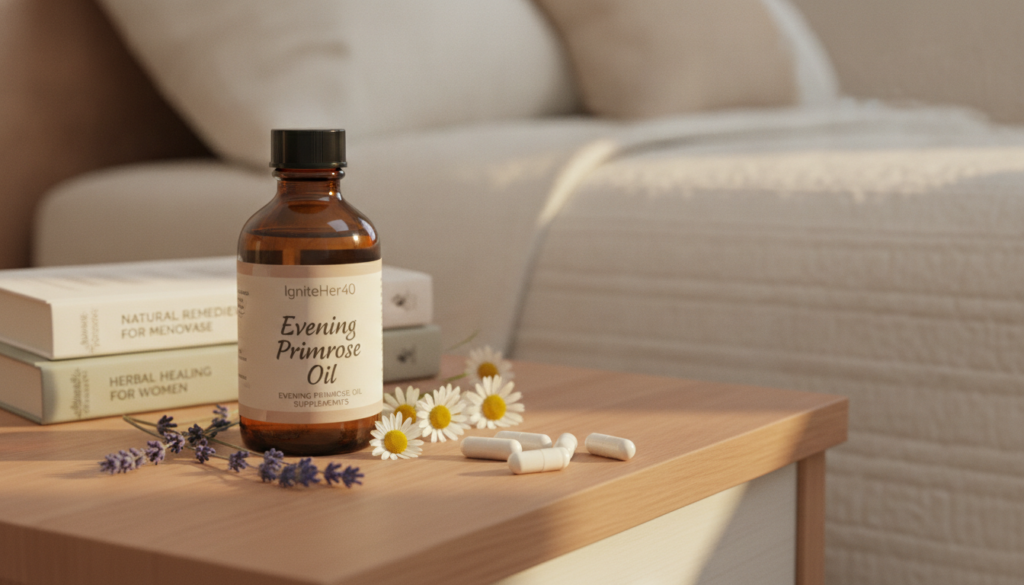
Most women won’t notice dramatic changes overnight. Give it 4-6 weeks of consistent use before you judge whether it’s helping. Some women report fewer night sweats, while others notice their hot flashes are less intense even if they still happen.
How Magnesium Glycinate Calms Your Nervous System
Magnesium glycinate deserves way more attention than it gets. This mineral is involved in over 300 enzymatic reactions in your body, including regulating your nervous system, relaxing your muscles, and producing calming neurotransmitters like GABA. Low magnesium levels are shockingly common in women over 40, and deficiency is linked to increased stress, poor sleep, and more frequent hot flashes.
Here’s why magnesium glycinate matters: it’s bound to glycine, an amino acid that promotes relaxation and deeper sleep. This form is also gentle on your digestive system, which means no late-night bathroom runs that other forms of magnesium can cause.
Studies show that magnesium supplementation can reduce both the frequency and intensity of hot flashes, likely by calming your nervous system and lowering baseline cortisol levels. When your stress hormones are lower, your hypothalamus—that internal thermostat we discussed—doesn’t trigger false heat alarms as often.
| Magnesium Form | Absorption Rate | Best For | Potential Side Effects |
|---|---|---|---|
| Magnesium Glycinate | High | Sleep quality and hot flash reduction | Very few, gentle on stomach |
| Magnesium Oxide | Low | Constipation relief | Digestive upset, diarrhea |
| Magnesium Citrate | Moderate | General supplementation | Loose stools in high doses |
| Magnesium Threonate | High | Cognitive function | More expensive, fewer studies on hot flashes |
Aim for 300-400mg of magnesium glycinate taken 30-60 minutes before bed. You might notice better sleep quality within a few days, but give it 4-6 weeks to see the full impact on hot flash frequency. Many women report that they not only have fewer hot flashes but also fall asleep faster and stay asleep longer.
Getting the Timing Right for Maximum Relief
Timing matters more than most women realize when it comes to supplement effectiveness. Taking magnesium glycinate at night maximizes its sleep-promoting benefits while your body repairs itself during rest. Evening primrose oil taken with your evening meal ensures it’s working during peak hot flash hours.
Here’s your simple before-bed protocol:
- With dinner (5-7 p.m.): Take 500-1000mg of evening primrose oil with food to improve absorption
- 30-60 minutes before bed: Take 300-400mg of magnesium glycinate on its own or with a small snack
- Consistency is key: Take both supplements at the same times every day for at least 4-6 weeks
- Track your results: Keep a simple log of hot flash frequency and intensity to see if they’re helping
A few important safety notes: Check with your doctor before starting these supplements if you’re on blood thinners, as evening primrose oil can increase bleeding risk. If you have kidney problems, you need medical guidance on magnesium supplementation since your kidneys regulate how your body clears this mineral.
Most women can safely use both supplements together without any interactions. They’re gentle, science-supported options that work best when combined with other strategies like dietary changes and environmental controls. Together, evening primrose oil and magnesium glycinate create a before-bed protocol that can help you stay cooler and sleep deeper—two things that feel like luxuries when you’re in the thick of menopause but are actually essentials for your long-term health.
Natural Remedies for Hot Flashes at Night Women Over 40: Environmental Controls
Changing your environment can help more than any supplement. It starts working right away. Before trying herbs or vitamins, make your bedroom cooler.
Simple changes to your bedroom can help a lot. These changes are cheap, safe, and work fast. Your bedroom should be cool and dark to stop hot flashes.
The Science Behind Optimal Bedroom Temperature
Keep your bedroom at 65-68°F (18-20°C). This isn’t just for comfort. It helps your body cool down naturally at night.
Studies show this temperature range helps avoid hot flashes. It lets your body cool down for deep sleep. A cold room stops small temperature rises that cause sweating.
It might feel cold at first. That’s the point. Your body cools down as you sleep. Cooling down hot flashes at night means working with your body, not against it.
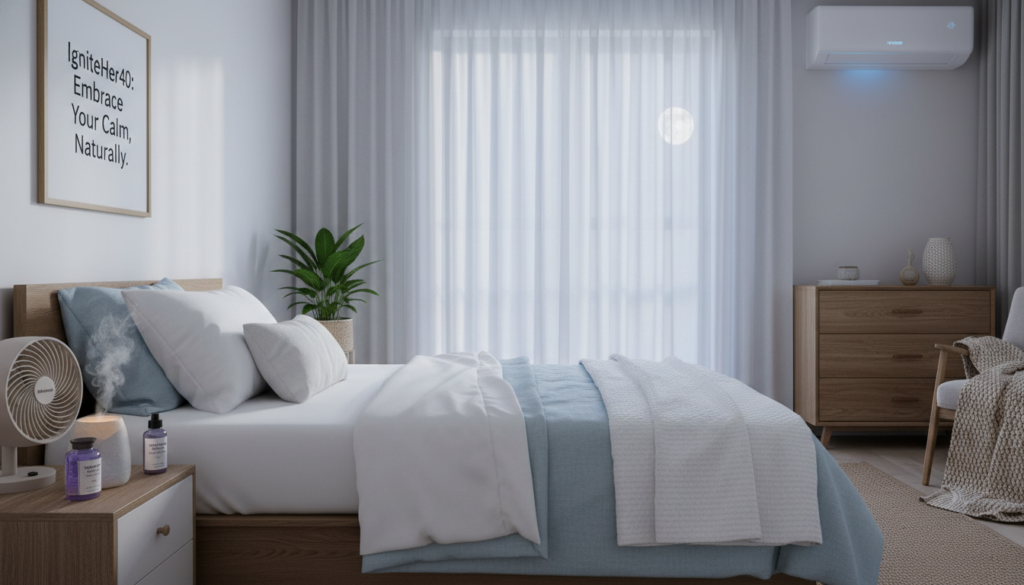
If your partner is cold, tell them to use extra blankets. A cooler room is better for everyone, not just those with hot flashes.
Use a fan to keep air moving. A ceiling fan or small clip-on fan aimed at you helps. Moving air makes sweat evaporate faster and hot flashes shorter.
In humid places, get a dehumidifier. Humidity stops sweat from evaporating. This makes your body work harder and hot flashes last longer.
Fabrics That Work With Your Body, Not Against It
What you wear to bed matters a lot. Synthetic fabrics like polyester trap heat and moisture. They are the worst choice for night sweats.
Switch to 100% cotton sheets and pillowcases. Cotton breathes and wicks moisture away. It feels cooler and is better for sleepwear.
Avoid silk, satin, wool, and flannel at night. They trap heat or don’t absorb moisture well. Your sleepwear should be loose to let air in.
Keep cotton pajamas and a towel by your bed. Changing quickly during a hot flash wakes you up less. Changing your pajamas takes 30 seconds—stripping your entire bed at 2 a.m. takes much longer.
Here’s what works and what doesn’t for moisture-wicking sleep materials:
- Best choices: 100% cotton, linen, bamboo-derived rayon, athletic moisture-wicking fabrics
- Avoid completely: Polyester, nylon, silk, satin, microfiber, flannel
- Bedding priority: Replace sheets first (most skin contact), then pillowcases, then comforter
- Sleepwear fit: Loose and layered beats tight and minimal—you want airflow
Take a lukewarm or cool shower before bed. This lowers your core temperature for better sleep. It’s an easy way to cool down hot flashes tonight.
Blackout curtains do more than block light. They keep your room cool and dark. Light affects your sleep and hot flashes.
These changes work within the first night. Unlike supplements, they give quick results. Your bedroom should help your body cool down, not fight it.
Start with temperature and bedding changes tonight. You’ll see fewer hot flashes and better sleep right away—no prescription needed.
Dinner Triggers That Sabotage Your Night: What to Avoid and What to Eat
If you wake up drenched in sweat every night, your dinner might be the culprit. What you eat for dinner can greatly affect your night. Some foods can trigger hot flashes, and avoiding them can help.
You don’t need to change your whole diet. Just find out what triggers your hot flashes and choose better foods instead.
Most women see big improvements in just one to two weeks after changing their dinner habits.
The Worst Offenders: Alcohol, Spicy Food, and Caffeine After Noon
Let’s talk about the big three dinner table culprits. Alcohol is the strongest hot flash trigger in surveys. Even a small amount can cause big problems.
Alcohol makes your blood vessels widen, raising your body temperature. This is bad news for your already confused body.
If you can’t give up alcohol, drink it earlier. Never have it close to bedtime.
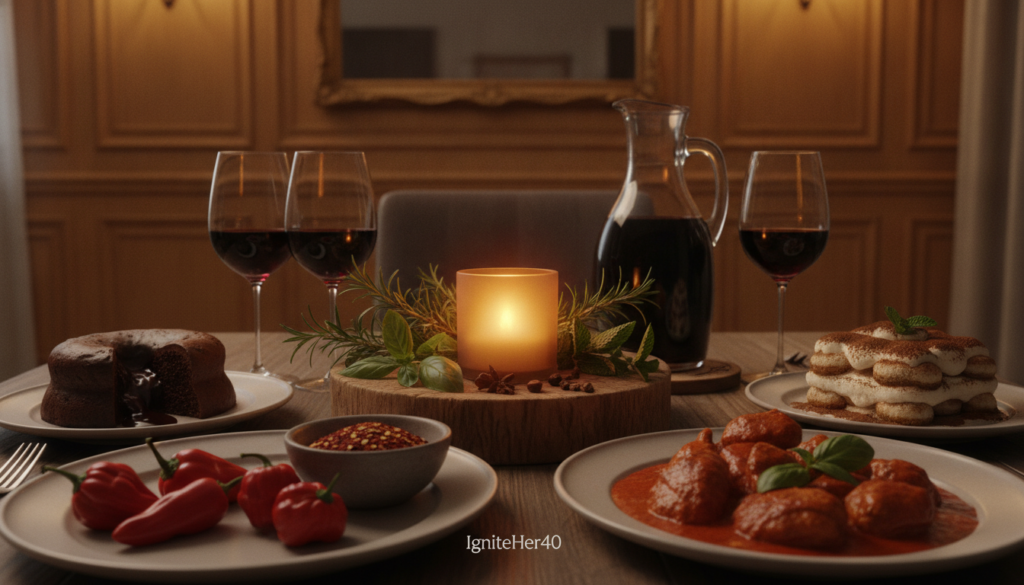
Caffeine is almost as bad. It raises your body temperature and stays in your system for hours. That coffee at 2 p.m.? It’s still affecting you at bedtime.
Stop drinking caffeine by noon. This includes coffee, tea, chocolate, energy drinks, and even decaf.
Spicy foods are also a warning sign. Capsaicin in peppers activates heat receptors in your brain—the same ones that cause hot flashes. Eat spicy food for lunch, not dinner.
How Sugar Amplifies Hot Flashes
High-sugar meals cause your blood sugar to spike and crash. Both can trigger hot flashes by increasing inflammation and stress hormones.
Desserts, sugary sauces, and processed snacks are bad for you at night. Sugar affects your temperature regulation system.
When your blood sugar drops after a high-sugar meal, your body gets stressed. Stress hormones can cause hot flashes.
Sugar also causes inflammation, making menopause symptoms worse. Cutting sugar from your evening meals can greatly reduce hot flashes.
Watch out for hidden sugars in foods like ketchup and salad dressings.
Foods That Cool You Down Instead
Now, let’s talk about what you should eat. Focus on foods that help balance hormones and regulate temperature.
Cold-water fish like salmon are full of omega-3s. These healthy fats can reduce hot flashes.
Leafy greens and colorful vegetables are full of antioxidants and fiber. They help stabilize blood sugar and reduce inflammation.
Whole grains like quinoa provide steady energy without blood sugar spikes. They keep your glucose levels stable at night.
Phytoestrogen-rich foods include tofu and flaxseed. These plant compounds can help reduce hot flashes.
One study found that a low-fat, plant-based diet with soy reduced hot flashes. This diet eliminated triggers and added nutrients.
| Food Category | Avoid These Triggers | Choose These Instead | Why It Helps |
|---|---|---|---|
| Beverages | Alcohol, caffeine after noon, hot drinks | Herbal tea, water, cold beverages | Prevents vasodilation and temperature spikes |
| Proteins | Spicy meat dishes, hot soups | Cold-water fish, tofu, tempeh, legumes | Provides omega-3s and phytoestrogens for hormone balance |
| Carbohydrates | White bread, pasta, sugary desserts | Quinoa, brown rice, sweet potatoes, oats | Stabilizes blood sugar to prevent cortisol spikes |
| Vegetables | Spicy preparations, hot peppers | Leafy greens, cruciferous vegetables, berries | Reduces inflammation with antioxidants and fiber |
Keep a food-and-symptom diary for two weeks. Write down what you eat and when hot flashes happen. You’ll find patterns.
Once you know your triggers, avoiding them isn’t hard. It’s taking control of your health.
Practical dinner strategy: Eat half your plate of veggies, a quarter of lean protein, and a quarter of whole grains. Use olive oil or flaxseed for flavor. Skip the wine and spicy sauce, and choose berries for dessert.
You’ll likely see fewer hot flashes in one to two weeks. Your body will thank you with cooler nights and better sleep.
The Breathing Technique Proven to Reduce Hot Flash Intensity by 50%
There’s a simple, drug-free way to cut hot flash intensity in half. It takes less than a minute to learn. When heat hits you at 2 a.m., you’re not helpless. You have a scientifically proven tool that works immediately.
Slow, deep, paced breathing has been shown to reduce hot flash intensity by up to 50%. This isn’t just wishful thinking. It’s a real intervention that calms your nervous system during a flash.
The best part? It costs nothing, has zero side effects, and you can use it anywhere. In bed, at your desk, or in a meeting. This breathing technique gives you instant control when you need it most.
Why Slow Deep Breathing Interrupts the Flash Cycle
When a hot flash strikes, your body goes into panic mode. Your heart rate spikes, blood vessels dilate, and sweating begins. It’s like your body thinks there’s a real threat, even when you’re just lying in bed.
Slow diaphragmatic breathing activates your body’s “rest and digest” mode. This counteracts the panic response and can interrupt the hot flash cycle mid-episode. You’re not just enduring the flash—you’re actively stopping it from escalating.
The mechanism works through your vagus nerve. Deep, slow breathing stimulates this nerve, sending calming signals back to your brain. This is why breathing can change your body’s response in real time.
Think of your autonomic nervous system like a seesaw. During a hot flash, the sympathetic side is slammed down hard. Paced breathing gently lifts the parasympathetic side back up, bringing balance when your body has lost it.
The Exact Protocol to Use During a Hot Flash
When you feel a hot flash starting, don’t panic—follow this simple, proven protocol:
- Breathe in slowly through your nose while counting to five in your head
- Breathe out slowly through your mouth while counting to five
- Focus on deep belly breaths—your abdomen should rise as you inhale, not just your chest
- Continue this 5-count-in, 5-count-out rhythm for the duration of the hot flash and for a minute or two after it subsides
This slow pace—about six breaths per minute—is the sweet spot for activating your vagus nerve. Faster breathing won’t work the same way. The deliberate slowness is what makes the technique effective.
Don’t wait until a hot flash strikes to try this. Practice paced breathing for 10-15 minutes every day, ideally in the morning or before bed. Daily practice trains your nervous system to respond more calmly overall, which can reduce both the frequency and intensity of future hot flashes.
Think of it as a rehearsal so the technique becomes automatic when you need it most at 3 a.m. You’re teaching your body a new response pattern—one that serves you instead of betraying you.
Women who practice this breathing technique regularly report not just shorter, less intense hot flashes, but also better sleep, lower anxiety, and an overall sense of control—which matters enormously when you’ve felt at the mercy of your body for months or years.
Systematic reviews of mind-body interventions consistently rate breathing exercises and mindfulness as high-evidence strategies for menopause symptom relief. This puts paced breathing in the same credibility category as many pharmaceutical options, but without the side effects or cost.
Slow deep breathing is one of the most underrated natural remedies for nighttime hot flashes. It can cut the intensity of an episode in half when you need relief right now. Learn it today, practice it daily, and keep it in your toolbox for every hot flash that comes your way.
Sage Tea and Sage Extract: Ancient Wisdom Meets Modern Evidence
Your grandmother might have known something doctors are just discovering: sage really works for night sweats. This humble herb has been used for centuries to treat excessive sweating and fever. Now, clinical research is backing up what traditional healers understood all along.
An 8-week clinical study in Switzerland tracked 71 menopausal women who took standardized sage extract daily. The results were impressive: hot flash frequency dropped by 64%, and night sweats decreased by 50%. These aren’t minor improvements—they’re clinically meaningful reductions that can transform your sleep quality and give you back your nights. For natural menopause night sweats relief, sage stands out as one of the most effective herbal options with solid scientific evidence behind it.
What makes sage special is its excellent safety profile combined with real effectiveness. Unlike some remedies that overpromise and underdeliver, sage has both traditional use spanning centuries and modern research confirming its benefits.
The Science Behind Sage’s Cooling Properties
Sage works through several biological pathways to reduce sweating and hot flashes. The active compounds in sage—including rosmarinic acid, thujone, and various polyphenols—appear to modulate your autonomic nervous system. That’s the same system responsible for triggering the sweating and flushing response during a hot flash.
Research suggests sage may also have mild estrogenic effects, though it’s not a powerful phytoestrogen like soy or flaxseed. More importantly, sage compounds can reduce the activity of sweat glands directly, which is why it’s effective for drenching night sweats rather than just daytime hot flashes.
Think of sage as working on the thermostat malfunction itself—it helps calm down the false heat alarm in your hypothalamus while also turning down the volume on your body’s sweating response. This dual action makes it one of the most effective night hot flashes perimenopause remedies available without a prescription.
How to Prepare and Use Sage for Night Sweats
You have two good options: sage tea or standardized sage extract capsules. Both can be effective, and your choice depends on whether you value convenience or ritual.
Sage tea preparation: Steep 1-2 teaspoons of dried sage leaves (or one sage tea bag) in 8 ounces of hot water for 5-10 minutes. Drink one cup in the late afternoon and another about an hour before bed. The evening ritual of making tea can become a calming signal to your body that it’s time to wind down—an added benefit beyond the herb’s direct effects. This approach offers gentle menopause night sweats relief while creating a soothing bedtime routine.
If you prefer the consistency and convenience of supplements, look for standardized sage extract capsules. The clinically studied dose starts at 300mg per day for the first two weeks, then increases to 600mg daily if well tolerated. Split this into two doses—morning and evening—for best results.
| Sage Form | Dosage | Timing | Best For |
|---|---|---|---|
| Dried Sage Tea | 1-2 tsp per cup, twice daily | Late afternoon + 1 hour before bed | Those who value ritual and gradual effect |
| Standardized Extract (Weeks 1-2) | 300mg daily | Split into morning and evening doses | Consistent dosing, easier to track |
| Standardized Extract (Week 3+) | 600mg daily | Split into morning and evening doses | Maximum clinically studied benefit |
| Fresh Sage Leaves | 5-6 leaves per cup | As needed throughout day | Home gardeners with fresh access |
Give sage at least 4-6 weeks before deciding whether it’s working for you. Like most herbal remedies for night hot flashes perimenopause, sage’s benefits build gradually rather than working overnight. You should notice a reduction in frequency and intensity of night sweats within the first month, with continued improvement over the following weeks.
Safety considerations: Sage is generally safe for short- to medium-term use, but long-term safety data beyond one year is limited. It’s smart to reassess every few months and consider taking periodic breaks. Avoid high-dose sage if you have a history of seizures, as thujone in very high amounts can be neurotoxic (though this isn’t a concern at recommended doses). If you’re pregnant or breastfeeding, skip sage supplements entirely.
Whether you choose the comforting ritual of tea or the convenience of capsules, sage offers scientifically supported relief that’s gentle enough to combine with most other strategies in this article. It’s time-tested, research-backed, and actually works—exactly what you need when you’re tired of waking up in soaked sheets.
Stress Reduction Through Yoga and Meditation: Lower Cortisol, Fewer Flashes
High cortisol levels can make hot flashes worse. Stress affects your body’s temperature and makes your hypothalamus more sensitive. This connection lets you control your nighttime sweating.
Women with more stress have more hot flashes. This cycle of stress and hot flashes needs to be broken. Making lifestyle changes for nighttime temperature regulation can help.
The Proven Link Between Stress Hormones and Hot Flash Frequency
Stress releases cortisol and adrenaline, raising your body temperature. Studies show women with high cortisol levels have more hot flashes. This is a clear link.
Chronic stress can increase hot flashes by 40-60%. Each hot flash episode triggers more cortisol, creating a cycle that disrupts sleep.
Stress activates your fight-or-flight system. This narrows your comfortable temperature range. Even small temperature changes can cause sweating.
Managing stress is crucial during menopause. Yoga and meditation can help by lowering cortisol and reducing hot flashes.
Evening Yoga Poses for Temperature Regulation
Gentle yoga 60-90 minutes before bed helps you sleep cooler. Avoid hot yoga or intense flows in the evening. Focus on calming poses.
Legs-up-the-wall pose (Viparita Karani) is great for hot flashes. It promotes blood flow away from your core. Lie on your back with legs up a wall for 5-10 minutes.
Child’s pose (Balasana) calms your nervous system. Kneel on the floor, sit back on your heels, and extend your arms forward. Hold for 3-5 minutes.
Reclining bound angle pose (Supta Baddha Konasana) opens your chest and hips. Lie on your back, bring your feet together, and let your knees fall open. Hold for 5-10 minutes.
Do 15-20 minutes of these poses each evening. Breathe slowly, inhaling for 4 counts and exhaling for 6. This lowers cortisol quickly.
Simple Meditation Practices Before Bed
Mindfulness meditation for 10 minutes a day can help. It makes hot flashes less distressing and improves sleep.
Try this before bed: Sit comfortably or lie down. Close your eyes and focus on your breath. When your mind wanders, gently bring it back to breathing.
Apps like Insight Timer, Calm, or Headspace offer guided meditations for sleep and menopause. Start with 5 minutes and increase as you get more comfortable.
If meditation feels hard, try a body scan technique. Mentally scan your body, noticing tension and relaxing each part. This takes 10-15 minutes and lowers cortisol.
| Stress-Reduction Practice | Time Required | Best Timing | Expected Impact |
|---|---|---|---|
| Restorative Yoga (3 poses) | 15-20 minutes | 60-90 minutes before bed | Reduces cortisol 25-40%, improves sleep onset |
| Mindfulness Meditation | 10-15 minutes | 30 minutes before bed | Decreases hot flash distress 40-50%, enhances sleep quality |
| Body Scan Technique | 10-15 minutes | In bed, lights off | Lowers nighttime cortisol, reduces flash intensity |
| Slow Deep Breathing | 5-10 minutes | During any hot flash or before sleep | Interrupts flash cycle, activates parasympathetic response |
Cognitive-behavioral therapy (CBT) is also effective. It won’t reduce hot flashes but makes them less stressful. This improves sleep and overall well-being.
Combine yoga, meditation, and stress management for better sleep. Notice a drop in cortisol and hot flashes in 2-4 weeks. Daily walks, journaling, and saying “no” to energy-draining activities also help.
Make stress reduction a key part of your evening routine. Your body will thank you with cooler nights and fewer wake-ups. These lifestyle changes for nighttime temperature regulation are simple and effective.
Conclusion: Building Your Personal Hot Flash Relief Strategy
You’ve learned ten natural remedies for hot flashes at night for women over 40. Now, it’s time to create your own relief plan.
First, make your bedroom comfortable. Keep the temperature between 65-68°F. Use moisture-wicking sheets and have a fan on.
Also, avoid big dietary triggers. No alcohol after dinner and no caffeine after noon. Skip spicy food at night too.
Practice the 5-count breathing technique every day. This way, it’s ready when a hot flash hits at 2 a.m.
Start taking supplements that research supports. Black cohosh, magnesium glycinate, flaxseed, and whole soy foods are good choices.
Keep track of what works for you. Use a simple diary for six weeks. Your body will show you what helps.
Here’s the truth: natural strategies work best for mild to moderate symptoms. If you’re waking up soaked or having 10+ hot flashes a day, see your doctor. There are effective medical treatments for severe night sweats.
Natural remedies can help a lot. They might not reduce symptoms as much as hormone therapy does. But for many, these strategies make sleep better.
You deserve good sleep and relief. Start with one change tonight. Add another next week. Give it six to eight weeks. Your sleep is worth it.
FAQ
How quickly can I expect natural remedies to reduce my nighttime hot flashes?
Most natural remedies take 4-6 weeks to show results. Black cohosh, soy isoflavones, and sage work slowly. They’re not quick fixes like drugs.
Changing your environment, like cooling your bedroom, can help sooner. Try using a fan or wearing light clothes. The breathing technique works right away but needs daily practice for better results.
If you’ve tried natural remedies for 8 weeks without relief, talk to your doctor. They might suggest prescription options. Remember, natural remedies take time and patience.
Can I take black cohosh if I’ve had breast cancer?
Black cohosh seems safe for breast cancer survivors. It works on serotonin pathways, not estrogen receptors. Studies show no increased risk of cancer recurrence.
Still, always check with your oncologist before starting black cohosh. They know your medical history and current treatments. Never assume a supplement is safe without approval.
What foods trigger hot flashes at night most consistently?
Alcohol, caffeine, and spicy foods are the top triggers. They can cause hot flashes at night. Even a small amount of alcohol can raise your body temperature.
Caffeine stays in your system for hours, affecting your sleep. Spicy foods can also trigger hot flashes. Sugar can increase inflammation, leading to hot flashes.
Keep a food diary to find your personal triggers. You’ll notice patterns quickly.
How much soy do I need to eat daily to reduce hot flashes?
Studies show 40-100mg of soy isoflavones daily is effective. A 3-4 ounce tofu serving has 20-30mg. A cup of edamame has 40-50mg.
So, you need 1-2 servings of soy-rich foods daily. Not all women produce equol, a gut bacteria metabolite that enhances soy’s effects. It takes 8-12 weeks to see results.
Choose whole soy foods like tofu and edamame. They come with fiber and nutrients that support health.
Is magnesium glycinate better than other forms of magnesium for hot flashes?
Magnesium glycinate is best for bedtime use. It’s gentle on your stomach and promotes relaxation. It’s also effective in reducing hot flashes.
Take 300-400mg about 30-60 minutes before bed. You might notice better sleep in a few days. It takes 4-6 weeks to see the full effect.
If you have kidney problems, talk to your doctor before taking magnesium.
Can I combine multiple natural remedies, or is that dangerous?
You can combine natural remedies for better results. Black cohosh, phytoestrogens, magnesium, and environmental controls work together. This multi-pronged approach is often more effective.
Start one new supplement at a time. This way, you can track what works and avoid side effects. Always check for interactions with medications, even if they’re natural.
What’s the best sleeping temperature to prevent hot flashes at night?
Keep your bedroom at 65-68°F (18-20°C) to prevent hot flashes. This temperature helps your body cool down naturally. Use breathable sheets and moisture-wicking pajamas for better comfort.
Keep a fan running for air circulation. If your partner is cold, remind them that extra blankets are available. A cooler room helps you both sleep better.
How effective is the slow breathing technique compared to supplements?
The slow breathing technique can reduce hot flash intensity by up to 50%. It works immediately, unlike supplements that take weeks. It’s a complementary strategy, not a replacement.
Practice the breathing technique daily. It activates your parasympathetic nervous system, calming your body. It’s free, safe, and can be used anywhere, anytime.
Should I avoid all caffeine, or can I have coffee in the morning?
You can have coffee in the morning, but stop caffeine by noon. Caffeine stays in your system for hours, raising your body temperature. This can trigger hot flashes at night.
Remember, caffeine is in more than just coffee. It’s in black tea, green tea, chocolate, and some medications. If you’re a heavy caffeine user, taper down gradually to avoid headaches.
How long can I safely take black cohosh or sage extract?
Black cohosh is safe for 6-12 months, based on clinical trials. Rare cases of liver damage have been reported. If you have liver problems or take liver-metabolized medications, get your doctor’s approval first.
Sage extract is safe for 8-12 weeks, with limited long-term data. Use it for a few months, reassess, and consider breaks if your symptoms improve. Always tell your doctor about supplements you’re taking.
What if I’m doing everything right and still getting hot flashes?
First, give natural remedies 6-8 weeks. Make sure you’re consistent with supplements, bedroom temperature, and stress management. Keep a symptom diary to track progress.
If you’ve tried everything for 8 weeks without relief, talk to your doctor. They might suggest prescription options. Natural remedies are not a one-size-fits-all solution.
Can stress really make my hot flashes worse, or is that just in my head?
Stress definitely makes hot flashes worse. It raises your body temperature and makes your hypothalamus more reactive. Studies show women with higher stress levels have more frequent and intense hot flashes.
Managing stress is crucial for reducing hot flashes. Try yoga, meditation, or deep breathing exercises. These can help within a few weeks.
Are phytoestrogens safe if I can’t take prescription estrogen?
Phytoestrogens from whole foods like soy and flaxseed are generally safe. They bind weakly to estrogen receptors and don’t stimulate breast or uterine tissue like pharmaceutical estrogen does. Studies show no increased risk of cancer recurrence.
Focus on whole food sources rather than high-dose isoflavone supplements. If you have a history of hormone-sensitive cancers, discuss phytoestrogens with your doctor before adding supplements. Whole soy foods are usually safe, but always check with your doctor.
What if I’m doing everything right and still getting hot flashes?
First, give natural remedies 6-8 weeks. Make sure you’re consistent with supplements, bedroom temperature, and stress management. Keep a symptom diary to track progress.
If you’ve tried everything for 8 weeks without relief, talk to your doctor. They might suggest prescription options. Natural remedies are not a one-size-fits-all solution.